
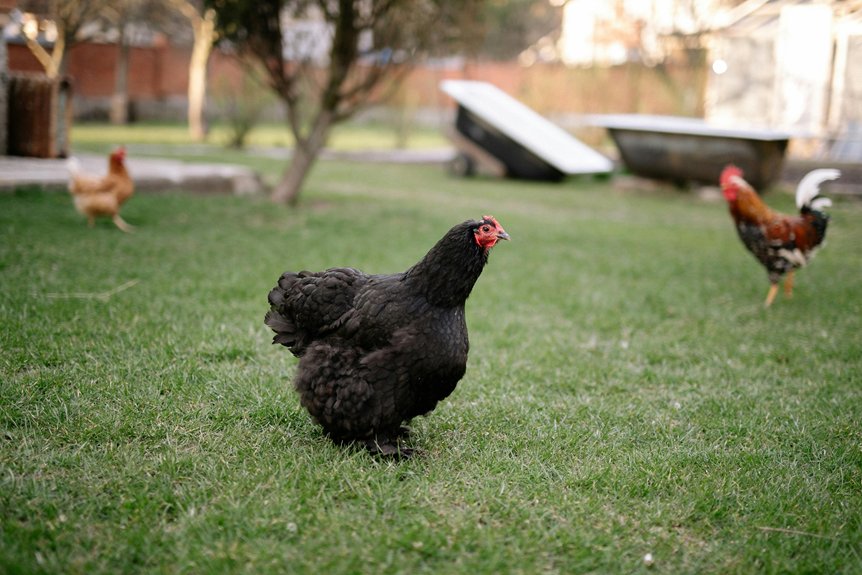
Before I got my chickens, I checked my city’s zoning laws first—some places ban them entirely. Then I contacted my county planning office for permit requirements and flock size limits. I confirmed roosters weren’t allowed in my residential zone, so I planned for hens only.
Next, I designed a predator-proof coop with hardware cloth and proper setbacks from property lines. I also talked with my neighbors early and got written approval.
Finally, I completed all inspections before bringing my birds home. There’s actually quite a bit more to know about getting this right.
Check Your Local Backyard Chicken Laws
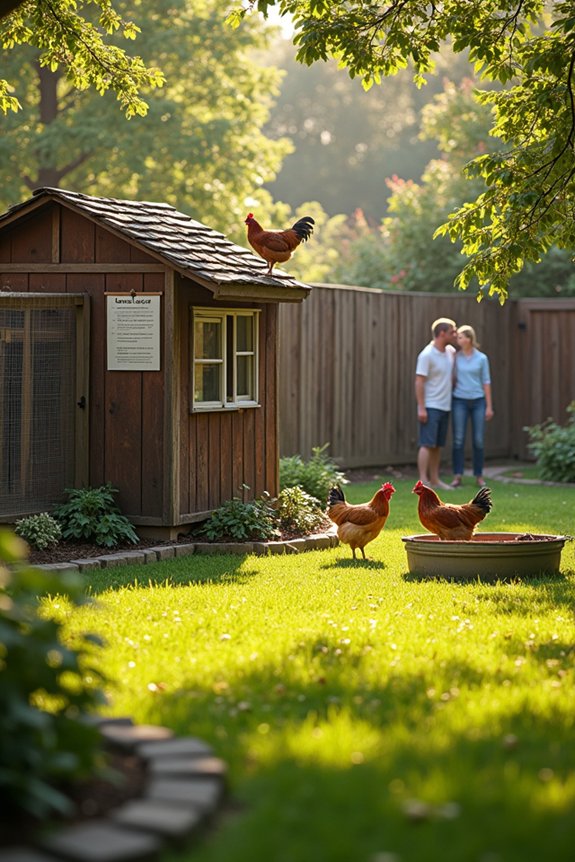
Before you get excited about raising chickens, the thing is: the rules aren’t the same everywhere. I learned this the hard way when I assumed my city allowed backyard coops. Turns out, I needed permits first.
Your local ordinances vary widely depending on where you live. Some cities embrace backyard chickens; others ban them entirely. You’ll need to check zoning regulations for your specific property type. Many areas prohibit roosters in residential zones due to noise concerns. Setbacks matter too—your coop might need distance from property lines and neighbors’ homes.
I’d recommend calling your city or county planning office directly. They’ll tell you exactly what you need: permits, licenses, bird limits, and coop requirements. It takes maybe thirty minutes but saves real headaches later. Starting here prevents costly mistakes down the road.
Confirm Your State’s Backyard Chicken Requirements
What’re the actual rules where you live? I’d be honestly lost without checking my local ordinances first. Backyard chickens aren’t regulated the same everywhere, so I need to dig into my specific city or county requirements.
Here’s what I’m researching:
- Permit requirements – Some places want a license; others let me keep a few hens free. Roosters? Usually banned in residential areas.
- Zoning setbacks – I’m checking how far my coop must sit from property lines and neighbors’ homes. Most jurisdictions demand containment and nuisance-free operation.
- Residential restrictions – Certain areas limit chickens to specific property types or minimum lot sizes.
I’m also contacting animal control about registration. Enforcement varies, but fines and inspections happen. Understanding these local ordinances upfront saves me real headaches later.
Confirm Flock Size Limits in Your Jurisdiction
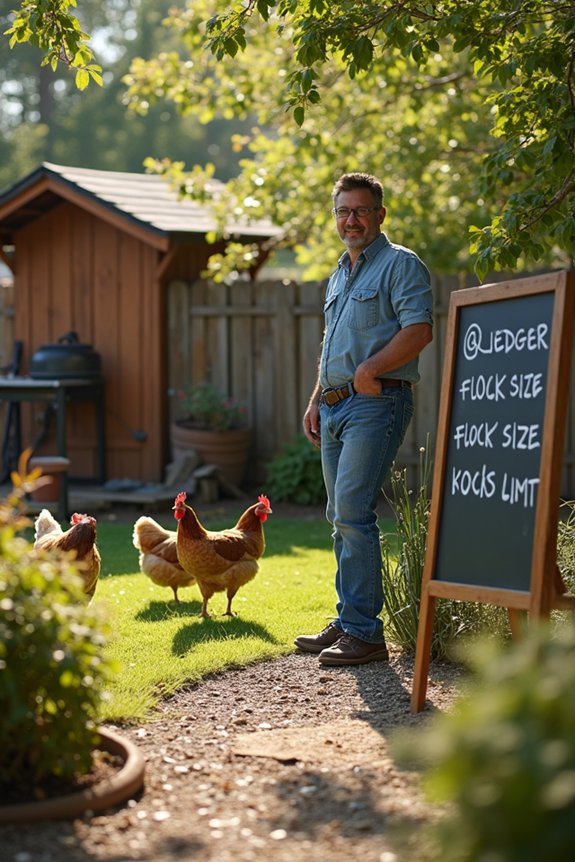
Now that you’ve confirmed your state allows backyard chickens, you’ll need to find out exactly how many you can keep—and this number varies widely depending on where you live. I’d recommend checking your city or county ordinances first, since that’s where the actual flock limits are spelled out, not at the state level. Once you’ve got that official number in hand, you can plan your coop setup accordingly.
Research Local Ordinances
Since chicken laws vary wildly depending on where you live, you’ll need to dig into your specific city or county rules before you buy a single bird. I learned this the hard way by almost missing essential details.
Here’s what you should research:
- Zoning regulations – Check whether your residential zone actually permits backyard chickens at all.
- Flock size limits – Your city might allow 5 chickens, while the neighboring county permits 32 on larger lots.
- Permits and setbacks – Some areas require licenses, minimum lot sizes, or specific distance requirements from property lines.
Contact your local zoning office directly. Don’t rely on what your neighbor said—rules differ within the same county. Getting these details straight upfront saves you from costly mistakes later.
Check Jurisdiction-Specific Limits
Once you’ve mapped out your local zoning rules, it’s time to nail down the specific numbers—how many chickens you’re actually allowed to keep. I learned this the hard way when I assumed my suburban lot could handle a dozen hens. Turns out, Oklahoma City caps residential flocks at six hens, and your area might differ considerably.
Flock size limits depend heavily on your lot size and zoning district. Some rural areas permit way more birds than urbanized neighborhoods do. Here’s the thing: many jurisdictions prohibit roosters entirely in residential zones, regardless of your total flock size.
Before you build that coop, contact your local code enforcement office directly. Ask about permits or licenses required for your specific address. Rules change, and even neighboring towns have different regulations. Getting official confirmation prevents discovering violations later.
Check Rooster Restrictions for Backyard Chickens
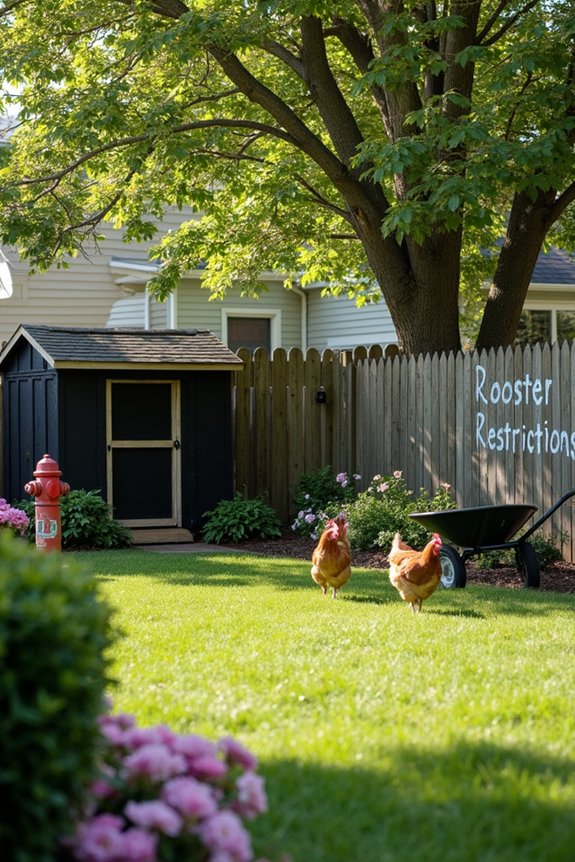
Why do roosters matter when you’re planning your backyard flock? They’re often the first thing regulators restrict. I learned this the hard way researching my own setup.
Here’s what you need to know about rooster restrictions:
- Many jurisdictions prohibit roosters entirely in residential zones, especially in Annapolis and Howard County, Maryland.
- Some permits allow hens only, so you’ll need to verify your specific zoning regulations before committing to a rooster.
- Nuisance rules about noise setbacks vary by location, meaning your neighbor’s tolerance matters legally.
Check your local backyard chicken ordinances directly. Call your county extension office or city planning department—they have the answers. Don’t assume roosters are allowed; most residential areas keep them off-limits to maintain neighborhood harmony.
Set Up Your Coop Location and Layout
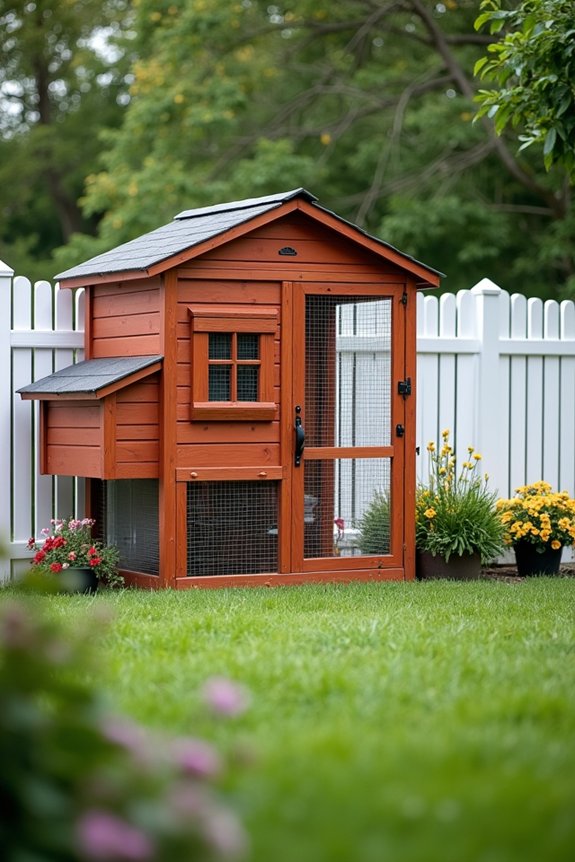
Once you’ve sorted out the rooster situation, it’s time to figure out where your coop actually goes—and location matters more than you’d think. You’ll need to check your local zoning rules for setback distances, plan your coop’s size based on how many chickens you’re keeping, and make sure everything fits your yard’s layout without violating HOA or neighborhood restrictions. Getting these basics right now saves you from having to move the whole setup later, which nobody wants to do.
Distance Requirements And Setbacks
Where you plop that coop matters way more than you’d think. I learned this the hard way when I almost placed mine too close to my neighbor’s fence. Your local zoning regulations and permitting requirements vary wildly depending on where you live, so checking first saves real headaches later.
Here’s what I’d research immediately:
- Setback distances – Some areas require 5 feet from property lines; others demand 50 feet from neighboring residences.
- Coop placement – Most jurisdictions want your secure enclosure in the backyard, hidden from street views.
- Lot size rules – Certain places mandate minimum yard space before you can legally keep chickens.
Call your county animal control or check your city’s website. Getting these details upfront means you’ll actually enjoy your flock instead of facing fines.
Local Zoning And Regulations
Now that you know where not to place your coop, it’s time to dig into the actual rules that govern your specific area. Here’s what I’ve learned matters most: your city or county sets specific zoning laws about permits and coop placement. They’ll dictate setbacks from property lines and your lot size requirements. Some jurisdictions cap how many chickens you can keep, while others prohibit roosters entirely in residential zones. Many areas enforce nuisance standards to protect your neighbors’ peace and property values. Before you buy supplies or dig a single post hole, contact your local planning department directly. They’ll give you the exact regulations for your address. This conversation prevents problems down the road.
Coop Design And Space Planning
Before you hammer a single nail, you’ll need to nail down exactly where your coop goes. I learned this the hard way when planning my setup.
Start by checking your local setback requirements—Annapolis residents, for example, need five feet from property lines. Then consider these essentials:
- Position your coop in the rear yard if local rules require it, keeping it away from front-facing areas.
- Verify your hen count limits and rooster restrictions before finalizing coop design and space planning.
- Obtain any necessary permits before breaking ground on construction or predator-proofing installations.
Your coop design should accommodate your allowed birds comfortably. Include weatherproof nesting areas and secure roosts. Make sure it’s predator-proof with sturdy materials. Most jurisdictions require permits, so confirm requirements early. Getting these details right upfront saves headaches later.
Design a Predator-Proof Backyard Chicken Coop
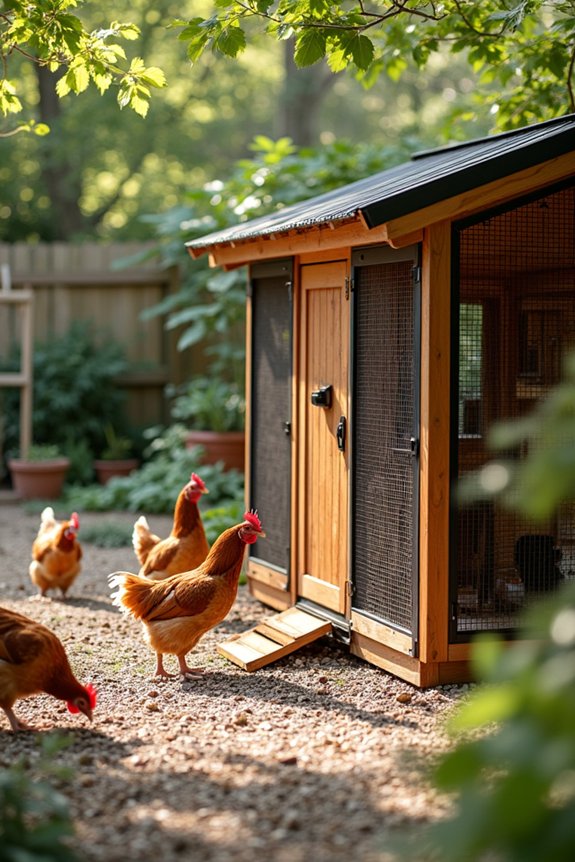
How do you keep your chickens safe from raccoons, foxes, and skunks? Building a predator-proof coop is absolutely necessary. You’ll want hardware cloth with ½-inch mesh—not chicken wire, which won’t work. I made that mistake my first year.
Your raised coop needs a secure latch on every door and vent. Predators are clever. Bury galvanized wire 12-18 inches underground around the perimeter, bending it outward to stop burrowing. An enclosed run prevents digging underneath fences entirely.
Pay attention to the nest box area—raise it off the floor to reduce rodent intrusion. Add proper ventilation and a removable, sanitized tray for cleanliness. These details matter more than you’d think.
Your predator prevention strategy protects your investment and gives you peace of mind.
Build a Coop With Proper Size and Airflow
Space and airflow—these two things’ll make or break your chicken setup. I learned this the hard way when my first coop got stuffy and damp.
Here’s what I focus on now:
- Coop size matters: I calculate at least three square feet per bird inside and eight square feet per bird in the run. Your jurisdiction’s limits might be stricter, so check those setback requirements first.
- Ventilation prevents problems: I position vents high on the coop walls. This reduces moisture and ammonia buildup without creating drafts that stress backyard chickens.
- Litter management: I use pine shavings and change them regularly. Good ventilation combined with proper litter management keeps everything fresh.
Getting these basics right means your predator-proof setup stays healthy and comfortable for everyone involved.
Set Up Predator-Proof Fencing and Enclosures
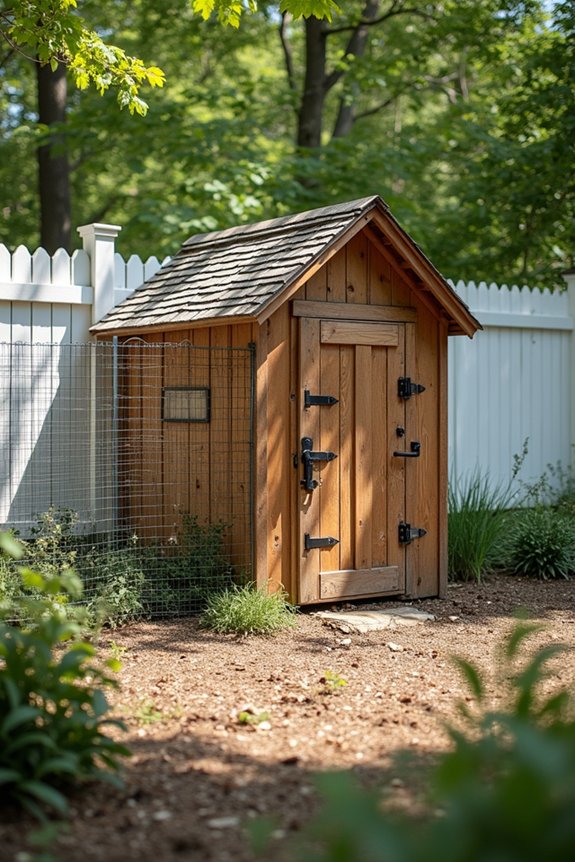
Now that you’ve built a solid coop, you’ll want to protect your chickens from the hungry predators lurking around your yard. I’ve learned the hard way that raccoons and foxes are remarkably clever, so you’ll need sturdy fencing and smart enclosure design to keep them out. Let me walk you through the predator protection strategies and enclosure standards that work.
Predator Protection Strategies
Once you’ve decided on a coop location, it’s time to think like a predator—because they’re already thinking like chicken dinner enthusiasts. Solid predator protection requires a multi-layered approach to coop security.
Here’s what works:
- Bury hardware cloth (1/8–1/4 inch mesh) 12–18 inches deep around your enclosure to stop burrowing from foxes and raccoons.
- Install lockable latches, elevated roost bars, and solid roofs for comprehensive secure enclosure design against aerial threats and climbing predators.
- Add a predator apron extending 12 inches outward to prevent diggers from undermining your defenses.
Use motion-activated lights and conduct daily checks. Tight door security is non-negotiable. Your predator-proofing efforts will result in peaceful chicken ownership.
Enclosure Design Standards
Your coop’s physical structure is where the rubber meets the road—all those predator-proofing strategies I mentioned won’t matter if your enclosure has weak spots.
Your predator-proof enclosure needs sturdy fencing, typically four to six feet tall. Hardware cloth or welded wire prevents both escapes and intrusions. Your local code probably requires coop setbacks from property lines—mine demanded twenty feet—so check yours first.
Inside, ventilation and nesting boxes keep your backyard chickens healthy and productive. Ground anchoring prevents clever predators from tunneling underneath. Sanitary compliance matters too; regular cleaning prevents disease and keeps neighbors happy.
These standards aren’t bureaucratic nonsense. They’re genuinely about protecting your flock and respecting your community. Getting this foundation right means you’ll actually enjoy raising backyard chickens long-term.
Avoid Nuisance Complaints With Backyard Chickens
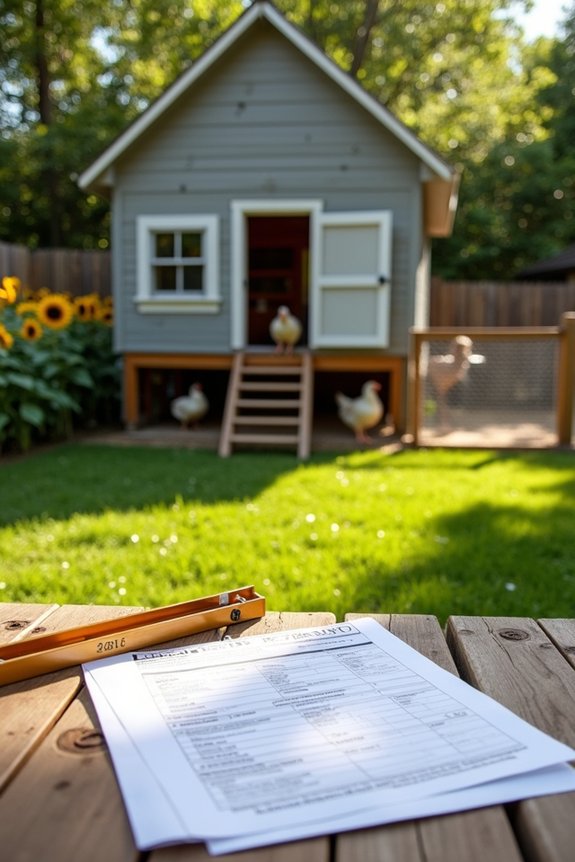
Because backyard chickens can quickly become your neighbors’ problem if you’re not careful, staying on their good side really matters.
Backyard chickens can quickly become your neighbors’ problem if you’re not careful, so staying on their good side really matters.
I’ve learned that preventing complaints starts with solid planning. You’ll want to:
- Build clean, secure coops with proper setbacks from property lines as your local ordinances require
- Get permits and pass inspections before bringing chickens home—it shows you’re serious
- Talk with neighbors early about your plans and address concerns about noise or odors
Check your jurisdiction’s nuisance definitions too. Some places care a lot about roosters; others focus on smell and pest issues.
Keep your chickens contained always. Free-ranging usually isn’t allowed anyway.
Honest communication prevents most problems. When neighbors feel included rather than surprised, they’re way less likely to complain. Document your maintenance efforts and quiet hours. That effort really pays off.
Manage Backyard Chicken Manure and Waste
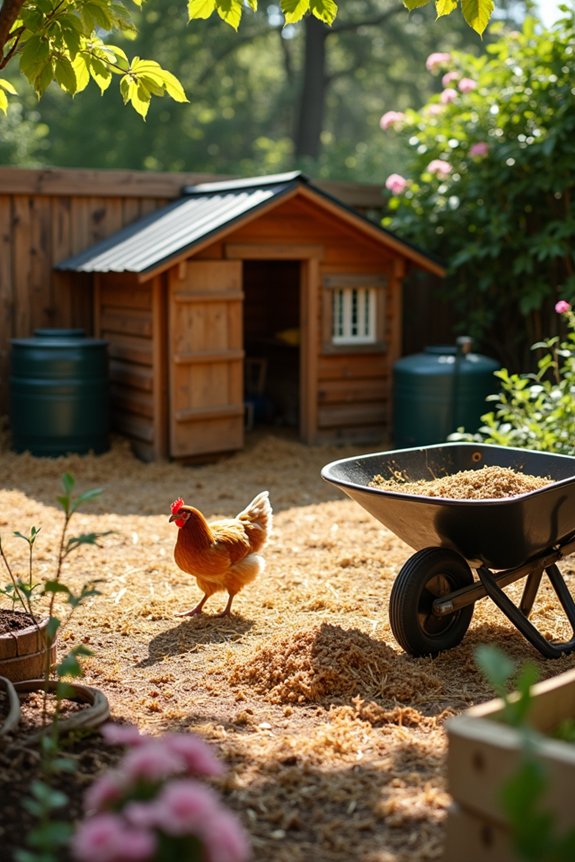
Chicken manure piles up fast—I’m talking daily—and if you don’t manage it, your neighbors will smell it before they see your coop. I’ve learned that establishing a solid manure management routine is necessary for legal backyard chicken keeping.
I maintain a deep litter system, turning materials regularly to control ammonia and reduce disease risk. Weekly coop sanitation keeps things fresh, and I monitor moisture carefully since wet litter attracts flies and pests. For waste disposal, I compost aggressively or bag manure until local pickup day—I check my local regulations first because rules vary.
Biosafety practices matter too. I keep my composting area contained and prevent anything from contaminating my neighbors’ properties. It’s honestly the difference between keeping chickens happily and facing complaints. Staying ahead of waste management means staying on good terms with everyone around you.
Check Sale Rules if You Plan to Sell Eggs
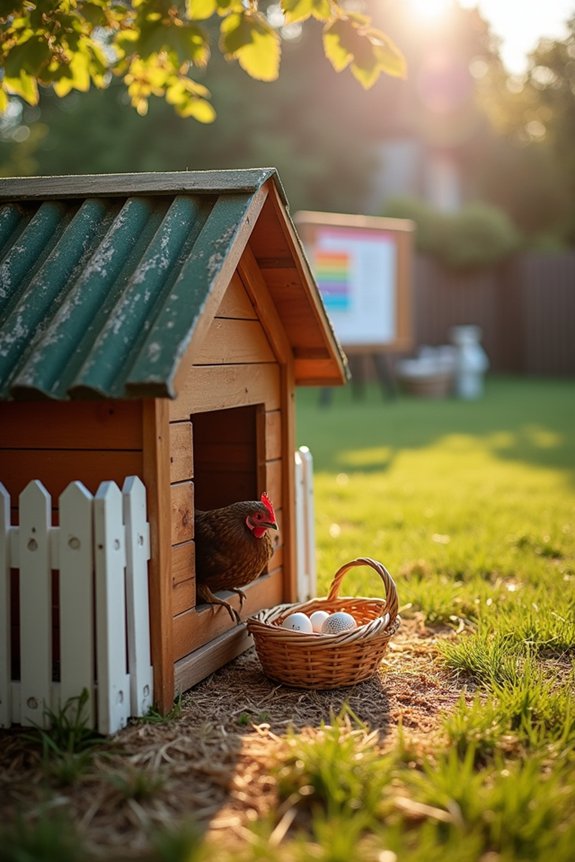
Once you’ve got your manure situation under control and your coop running smoothly, you might start thinking about selling eggs—I did. Before you sell a single dozen, though, you’ll need to understand your local egg laws and regulations.
Here’s what I learned matters:
- Check your zoning rules – Some areas allow backyard chicken egg sales; others don’t permit off-farm sales at all.
- Understand permit requirements – Selling graded eggs or supplying retailers typically requires licensing, while direct-to-consumer ungraded eggs often need less oversight.
- Know your city’s standards – Refrigeration, sanitation practices, and coop conditions vary by location and affect what you can legally sell.
I’d recommend calling your county extension office first. Rules differ wildly between neighborhoods, so verify everything locally before you start selling.
Get Neighbor Approval for Your Backyard Chickens
Have you thought about what your neighbors might think? Getting neighbor approval is honestly necessary before you build your backyard coop. I learned this the hard way—securing written consent prevents messy disputes later.
Many Maryland jurisdictions require formal permits and neighbor notification as part of approval. Your abutting properties matter significantly. Here’s what you’ll typically encounter:
| Requirement | What It Means | Why It Matters |
|---|---|---|
| Neighbor Approval | Written consent from adjacent homeowners | Legally required in most areas |
| Setback Rules | Distance requirements from property lines | Prevents nuisance complaints |
| Permits | Official documentation from your jurisdiction | Protects your backyard coop |
| Nuisance Regulations | Noise and odor standards | Keeps community harmony |
I’d recommend talking with neighbors early. Explain your backyard chicken plans, address their concerns, and share how you’ll maintain setback rules. Getting everyone on board makes everything smoother down the road.
Complete Inspections Before Bringing Chickens Home
Before you bring those fluffy birds home, you’ll want to do some homework—and I mean the official kind. I’ve learned that skipping inspections can create real headaches down the road.
Here’s what you need to tackle:
- Schedule your zoning permits inspection with your local building department to confirm your coop location meets setback requirements from property lines and neighbors’ homes.
- Request a pre-construction review so inspectors can approve your coop plans before you build, saving you from costly mistakes.
- Obtain any required licenses and nuisance compliance documentation your jurisdiction demands for keeping poultry legally.
Getting these inspections done first protects you. I’ve seen neighbors regret rushing into chicken ownership without proper paperwork. Spending time on this now prevents frustration later.
Prepare to Bring Your Chickens Home
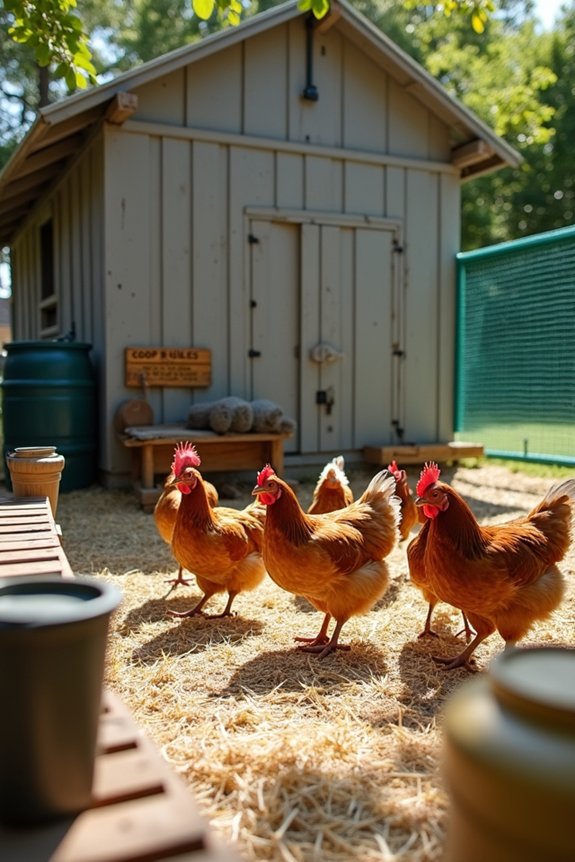
Now that you’ve got your inspections lined up and paperwork in motion, it’s time to actually figure out what your local rules allow. I learned this the hard way—skipping ahead costs you time and money.
Skipping ahead on local rules costs you time and money. Get the details straight upfront to avoid costly mistakes later.
Start by mapping your property against zoning restrictions and setbacks. Most areas require coops positioned a minimum distance from property lines and neighbors’ homes. Check your permits carefully; they’ll spell out exactly what you’re allowed to do.
Next, verify your flock size limit. Some municipalities allow six hens, others permit twenty. Rooster restrictions vary too—many ban them entirely.
Finally, review coop requirements. Your setup needs secure enclosures, proper ventilation, and drainage. Local inspections will confirm everything meets standards.
Getting these details straight upfront? That’s how you avoid costly mistakes later.