
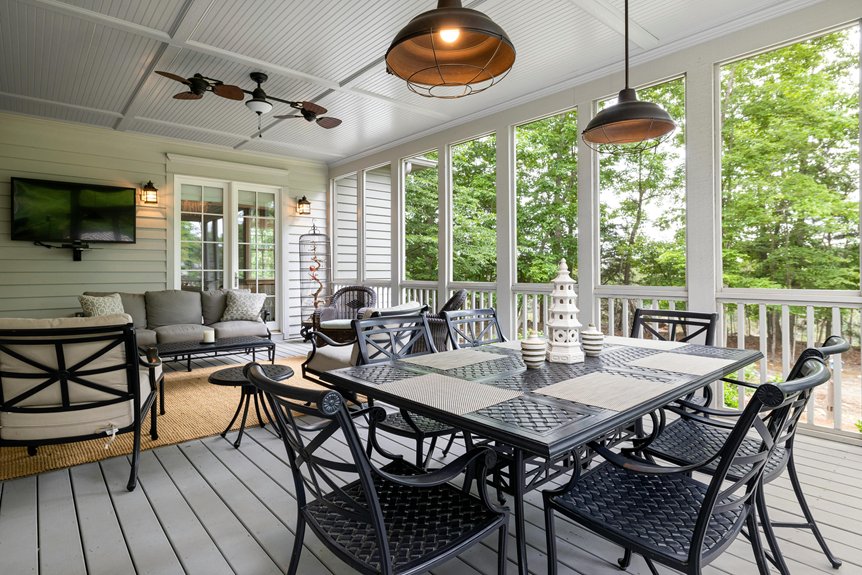
I’ve mixed these up too—turns out the main difference is straightforward. Porches have permanent roofs attached to your house; patios sit on the ground without one. Porches raise you above yard level and tie into your home’s structure, while patios rest independently on concrete or pavers. Porches work year-round and boost resale value, but patios cost less upfront and need lighter maintenance. Your choice depends on climate, budget, and whether you want formal entry appeal or casual backyard space. Continue reading to discover which option suits your situation.
Covered or Open: The Roofing Difference
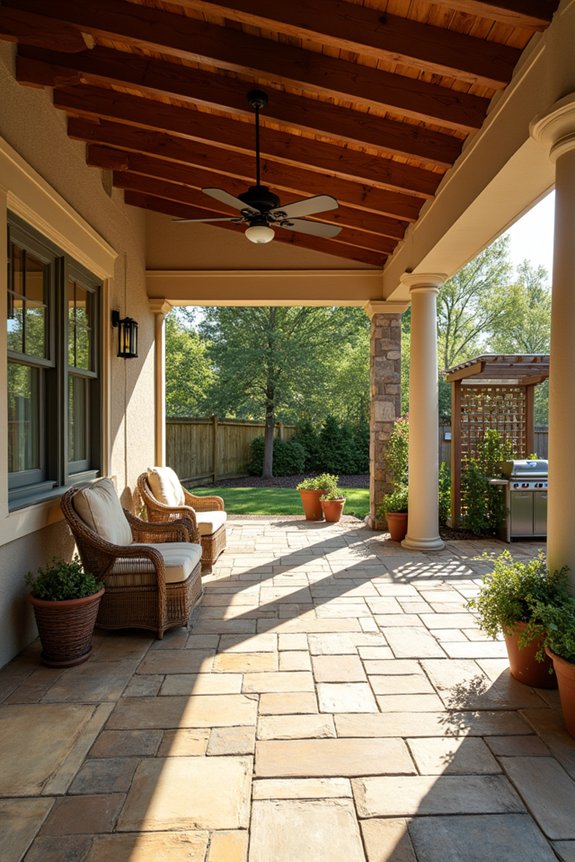
What’s the quickest way to tell a porch from a patio? Look up at the roof. The roofing difference is the main distinction between these two outdoor spaces.
A porch has a permanent roof integrated into your home’s structure. It’s attached to the house and offers genuine weather protection. Rain won’t drench you on a covered porch like it would elsewhere.
A patio, though? It sits directly on the ground without any roof overhead. You’ll need a covered alternative like an umbrella, awning, or shade structure for sun protection. I learned this the hard way when I got caught unprepared during an unexpected downpour.
That permanent roofing makes porches ideal for rainy or buggy climates. Patios work better in consistent, dry weather where you don’t mind open-sky exposure.
Attached or Standalone: How Integration Changes Everything
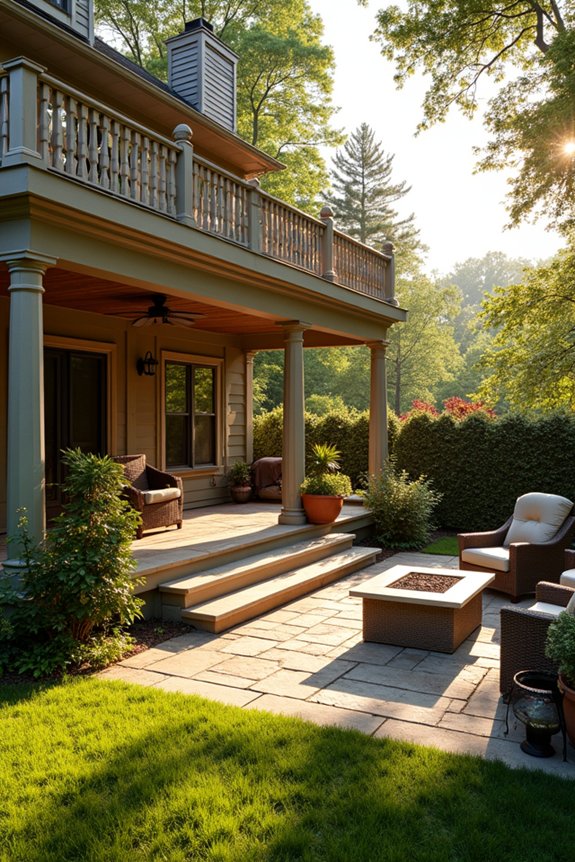
When I think about porches versus patios, I realize the biggest difference comes down to how they’re actually connected to your house. A porch is built right into your home’s structure—it’s got permanent foundations and ties directly to your house’s frame, while a patio just sits on the ground and can honestly go anywhere in your yard. Understanding these attachment differences really matters because they affect everything from how much work you’ll need to do to build them, to whether you’ll need permits, to how long they’ll actually last.
Architectural Integration With Home
Porch connections to your house matter more than you might realize.
When I first considered adding outdoor space, I understood porches and patios integrate completely differently with homes. A porch is architectural—it’s built right into your roofline and foundation. The structure literally extends from your house’s facade, sharing the same roof system. This integration means the porch becomes part of your home’s envelope.
Patios work differently. They sit independently on ground level, requiring their own foundation and drainage system. No structural connection needed.
Here’s what I’ve learned: porches blend with your home’s aesthetic and improve your home’s exterior appearance. Patios function as standalone outdoor rooms. Both approaches have merit—it just depends on what you’re after and how much you want your addition intertwined with your existing structure.
Structural Independence And Placement
The biggest difference between porches and patios comes down to how they’re built and where they live on your property. This structural independence matters when you’re deciding what’s right for your home.
Porches attach directly to your house—they’re part of your home’s framework. Patios sit independently on the ground, relying on yard-level support instead. Here’s what that means for you:
- Porches need permits tied to your home’s structure
- Patios require simpler ground-level construction
- Porch placement connects to entryways and rooflines
- Patio placement offers flexible yard positioning
Think of it this way: your porch is integrated, while your patio is standalone. That placement difference affects everything from installation to maintenance. Understanding this helps you choose what actually works for your lifestyle and property needs.
Foundation And Attachment Methods
Once you dig into how porches and patios actually connect to your property, you’ll see why this matters for your wallet and your home’s long-term health. A porch foundation ties directly into your home’s footing and load-bearing walls. This attachment means it’s architecturally part of your house, requiring permits and professional installation. Your patio, though, sits independently on the ground. It relies on a separate base—typically compact subgrade with gravel or sand—and edge restraints to stay put. I learned this difference the hard way when my neighbor’s patio shifted after heavy rains, while my porch remained solid. That structural integration makes porches more stable long-term investments. Your patio offers flexibility since it’s not permanently attached to your home’s structure.
Ground Level or Elevated: Where They Sit
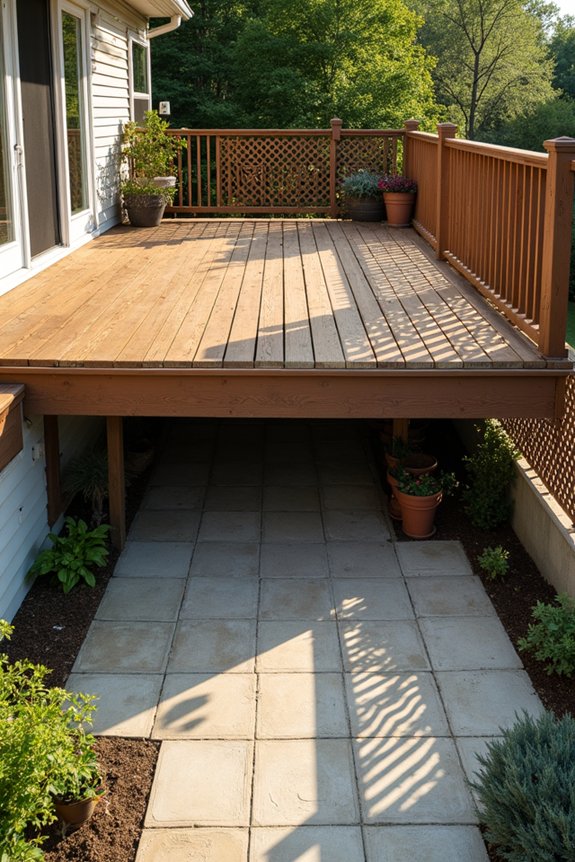
Where exactly does your outdoor structure sit on your property? This distinction really matters for maintenance and usability.
Where your outdoor structure sits on your property—elevated or ground-level—fundamentally shapes maintenance needs and daily usability.
Your porch sits elevated, usually aligned with your home’s entry door. Mine’s raised about a foot off the ground, which honestly saves my back when sweeping. Patios, though, rest flat at ground-level, blending smoothly with your yard.
What this means for you:
- Elevated porches require steps or ramps for accessibility
- Ground-level patios offer easy, direct yard access without elevation changes
- Porch elevation provides better water drainage away from foundations
- Patio flatness makes furniture placement and movement simpler
The elevation difference affects everything—from how you enter the space to how water behaves during rain. Understanding where yours sits helps you choose what works best for your lifestyle and property layout.
Year-Round Use: Which Space Works All Season
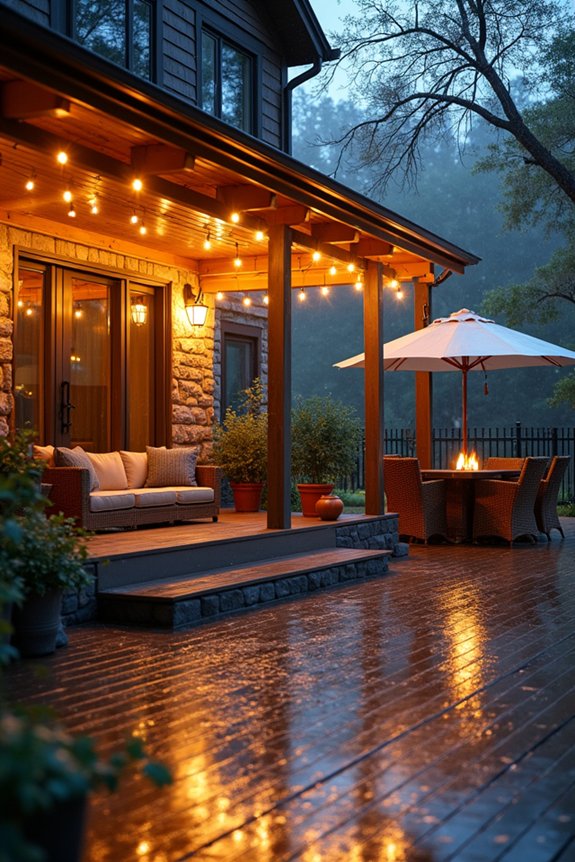
If you’re hoping to use your outdoor space year-round, your porch has a real advantage over a patio. A roofed porch with enclosure keeps you comfortable through every season. Your patio, sitting exposed at ground level, struggles when weather turns rough.
Patios need help staying usable. You’ll want portable shade, outdoor heaters, or temporary coverings to extend their season. A porch? It’s built right in. Its permanent roof and integrated design handle rain and humidity without extra gear.
Screened porches and lanais add full side screening for bug-free comfort. They’re basically weatherproof rooms. Your climate matters too—humid or insect-prone areas? A porch becomes necessary, not optional. That’s when year-round enclosure genuinely changes how you live outside.
Cost and ROI: Porch vs. Patio Budget Breakdown
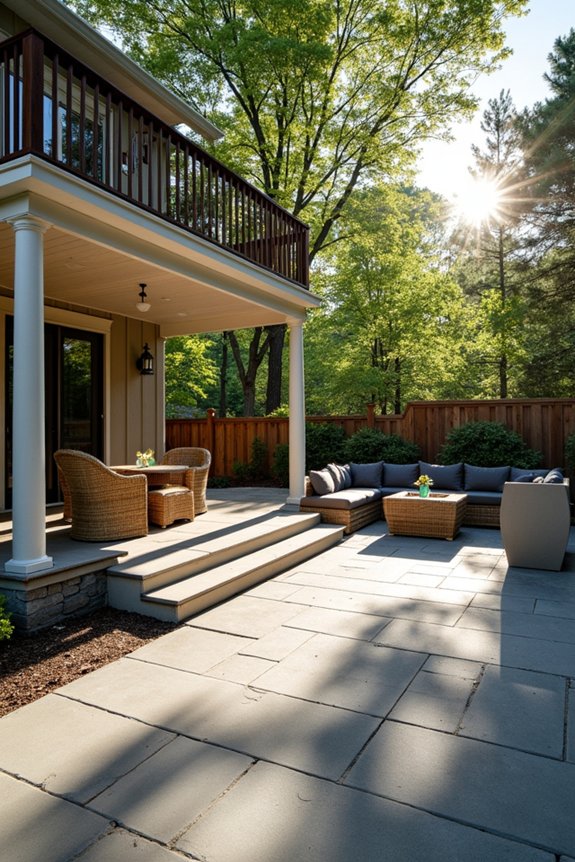
When I’m helping folks decide between a porch and patio, the budget conversation usually comes up first—and honestly, it’s where things get real. Porches demand a bigger upfront investment because you’re paying for a roof, structural framing, and connecting it all to your home, whereas patios sit flat on the ground and cost substantially less to build. Then there’s the payoff side: I’ve seen porches boost resale value in neighborhoods where exterior appearance matters, but patios often deliver stronger ROI for the money since they’re cheaper to install and maintain.
Initial Installation Expenses
The upfront cost difference between these two projects is significant.
When I started looking into both options, I realized porch costs run considerably higher than patio costs. Here’s what you’re typically looking at:
- Porches: $8,000 to $25,000+ due to roofing, foundations, and structural integration
- Patios: $5,000 to $15,000 for concrete, pavers, or stone surfaces
- Labor expenses: Both projects demand skilled work, but porches require additional permit and foundation fees
- Material selection: Your choices directly impact installation upfront expenses
Patios emphasize surface work and drainage, keeping initial investment lower. Porches, by contrast, involve permanent roofing and utility hookups that add considerable cost. The installation complexity matters too. If budget is tight initially, patios let you start smaller. If you’re planning long-term, porches may justify their higher upfront expenses through better resale value.
Long-Term Value Returns
Now that we’ve covered what you’ll spend upfront, let’s talk about what your investment actually returns over time.
A porch typically boosts your home’s resale value more than a patio does. Buyers respond to that front-facing appeal. However, porches demand higher maintenance costs—think roof repairs, railing upkeep, and potential enclosure work.
Patios offer better long-term value for your upfront cost. They’re simpler to maintain with just occasional surface cleaning and resurfacing. Your ROI comes from versatile usability without constant repairs.
The real difference? Porches give you stronger resale returns but hit harder on maintenance expenses. Patios deliver steadier, lower-maintenance value. Choose based on whether you want maximum home value or worry-free outdoor living. Both work—it depends on your priorities.
What They’re Made Of: Materials and Durability
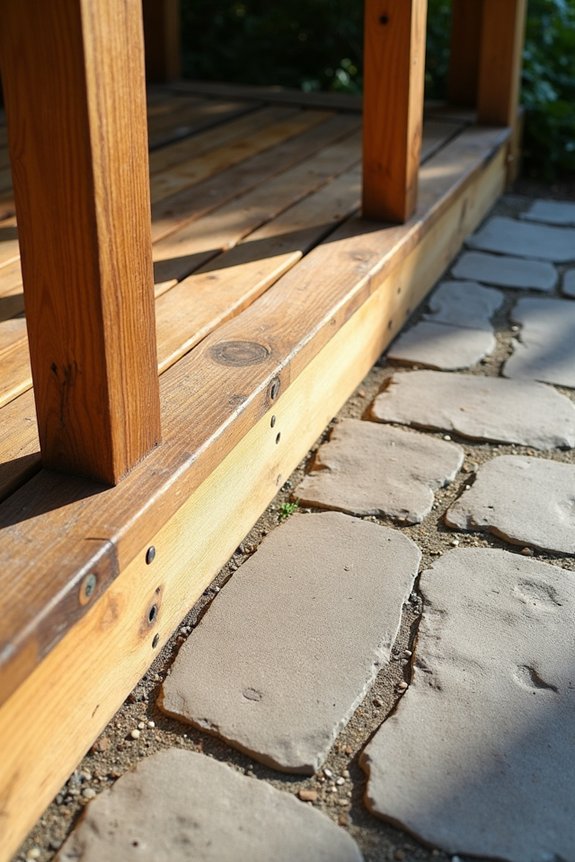
How do you decide which outdoor space needs what kind of surface?
I’ve learned that porch materials and patio paving serve different purposes. Porches use wood or composite flooring with weatherproofing integrated into your home’s structure. Patios, however, rely on durable ground-level surfaces like concrete, pavers, or stone.
Here’s what makes each unique:
- Porches need regular roof and railing maintenance for longevity
- Patios demand durable paving materials that resist foot traffic
- Porch materials prioritize weatherproofing and home integration
- Patio surfaces minimize structural support requirements
I’ve noticed porches require more upkeep because they’re connected to your house. Patios? They’re lower-maintenance once installed properly. If you’re building on a budget, patios offer better durability. But if you want a seamless home extension, porches deliver. Your choice depends on maintenance commitment and climate conditions.
Maintenance Burden: Which Demands More Work
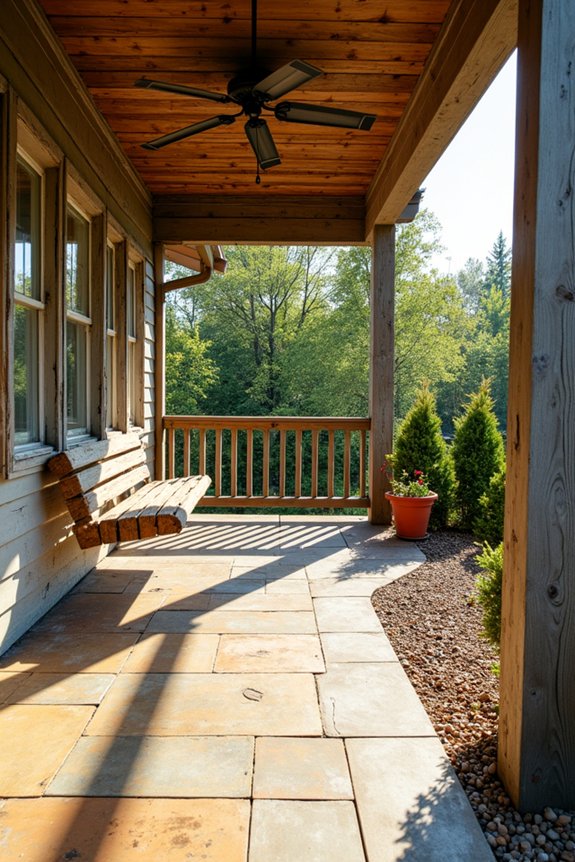
When I’m honest about maintenance, porches definitely win the “more work” category. You’ve got roofs and gutters demanding regular attention, which patios simply don’t have. I’ve learned that exterior upkeep on porches includes painting, staining, and dealing with screens that trap insects. Weather protection sounds appealing until you’re cleaning out gutters twice yearly.
Patios? They need surface cleaning and occasional weed control, but nothing structural. Your porch’s roofing requires inspections after storms, and leaks become real problems fast. Porches demand year-round maintenance efforts that keep you actively engaged with upkeep.
I won’t downplay it—if you’re choosing a porch, expect consistent work. But many of us find that trade-off worthwhile for the shelter and home integration porches provide.
Formal Entertaining or Casual Gathering: Which Space Fits Your Style
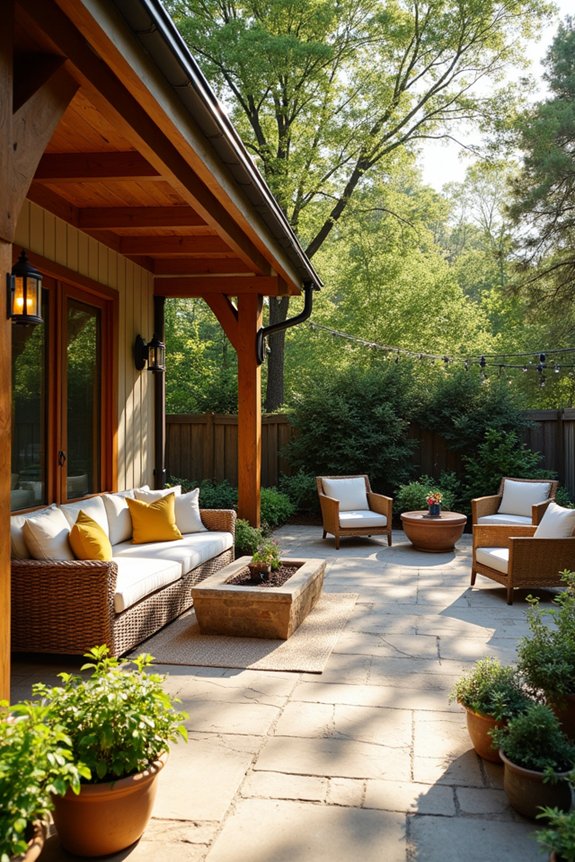
Where you entertain says a lot about what you’re really after.
I’ve learned that porches work beautifully for formal entertaining. They’re front-facing, so guests see your home’s best features immediately. Your porch becomes an extension of your home’s personality and appearance.
Patios, though? They’re my go-to for casual gatherings. I can set up tables, move furniture around, and nobody worries about tracking mud inside. The open-air vibe just feels relaxed.
Consider what matches your style:
- Porches offer shelter and a defined, intimate setting
- Patios provide flexibility for larger groups and spontaneous hangouts
- Screened porches work well for bug-free entertaining year-round
- Backyard patios feel separate from your main living space
I’d pick a porch if I wanted that formal impression. But honestly? For casual entertainment with friends, I’m choosing my patio every time.
Resale Value: Which Investment Pays Off Better
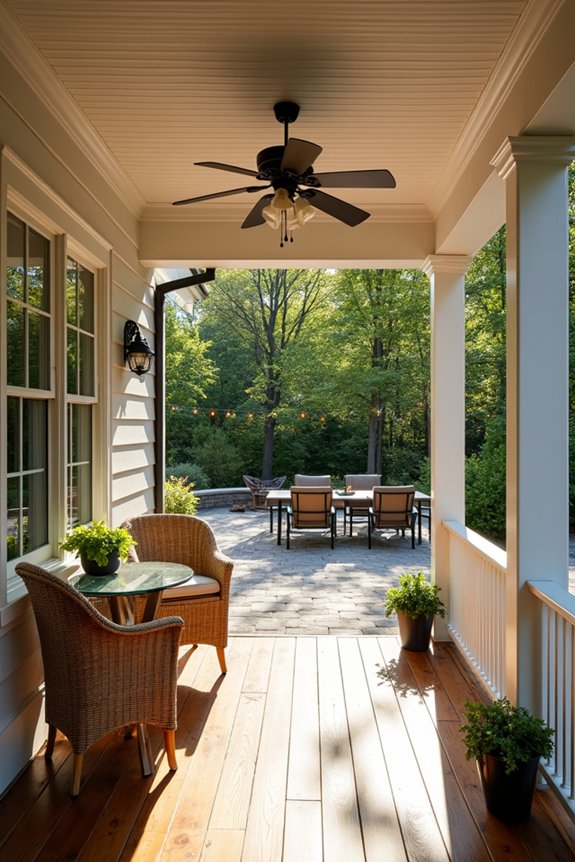
When you’re thinking about selling your home down the road, I’ve found that porches win points for front-of-house visibility—they’re right there, and buyers notice them immediately. But here’s where it gets interesting: patios can actually deliver better long-term returns if your backyard’s set up for entertaining, because they let families envision their own outdoor lifestyle without worrying about the home’s overall appearance. The real payoff depends on your neighborhood and climate, so I’d suggest checking what’s selling well in your area before you decide where to invest your money.
Porch’s Curb Appeal Investment
How much is that welcoming entrance worth to a potential buyer?
A porch isn’t just an entryway—it’s your home’s first impression. When I invested in my front porch, I found it boosted my curb appeal and resale value. Unlike a patio tucked in the backyard, a porch integrates with your home’s facade and signals quality to buyers walking up.
Here’s what makes a porch worth the investment:
- Permanent roofing and railings add architectural value
- Creates defined outdoor living space connected to entry
- Screened options extend usability in temperate climates
- Commands stronger return on investment than patios
Yes, construction costs run higher than patios. But I found that buyers gravitated toward homes with well-designed porches. That shelter and structure communicate permanence and care—qualities that translate directly into resale value.
Patio’s Long-Term ROI Potential
While a porch commands attention at the curb, a patio quietly builds value where most of your entertaining actually happens. I’ve found that patio ROI shines in neighborhoods where outdoor living matters most.
| Factor | Patio | Porch |
|---|---|---|
| Upfront Cost | Lower | Higher |
| Maintenance | Moderate | Higher |
| Buyer Appeal | Strong | Premium |
| Climate Dependent | Yes | Varies |
| ROI Potential | Good | Excellent |
Your at-grade patio creates flexible space for gatherings at a reasonable cost. Durable materials like stone or brick boost resale value substantially. I’ve watched well-designed patios make backyards more desirable for buyers.
The honest truth? Patio ROI depends on your neighborhood’s priorities. Where backyards reign supreme, you’ll recoup most costs. Your investment pays off best when entertaining space genuinely matters to future homeowners.
Choose Based on Your Yard, Climate, and Lifestyle
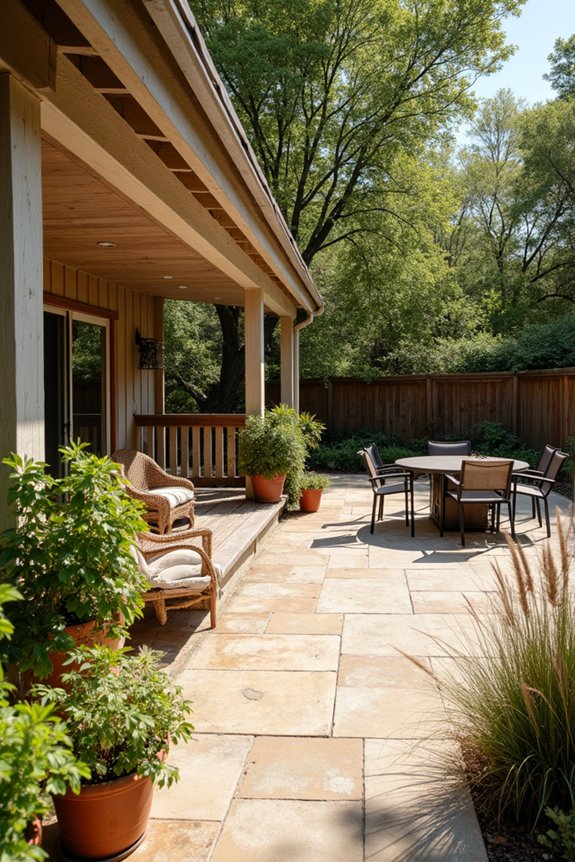
So you’re torn between a porch and a patio? Let me break down what actually matters for your specific situation.
Your decision hinges on three key factors:
Your porch vs patio decision hinges on three critical factors: climate, yard space, and lifestyle needs.
- Climate: Hot, buggy regions? A covered porch shields you year-round. Mild weather areas? Patios work well.
- Yard space: Front-facing home needing visual appeal? Consider a porch. Backyard entertaining space? Patios fit naturally.
- Lifestyle: Want formal entry transitions? Porches deliver. Prefer casual, low-maintenance lounging? Patios are your answer.
- Budget: Patios cost less upfront since they’re ground-level with no roof integration required.
Honest self-assessment beats trends every time. What’s your climate like? How much space do you actually have? What does your typical weekend look like? Answer these, and the porch vs patio choice becomes clear.