I’ve found five materials that’ll withstand whatever weather throws at them. Poly lumber doesn’t crack or need painting—it’s basically maintenance-free. Aluminum stays cool to touch and won’t rust. Teak wood naturally resists heat and develops character over time. Synthetic wicker and resin handle humidity without warping. Your best pick depends on your climate and budget. Stick around if you want specifics on which material works best for your situation.
Poly Lumber: Heat-Resistant and Maintenance-Free
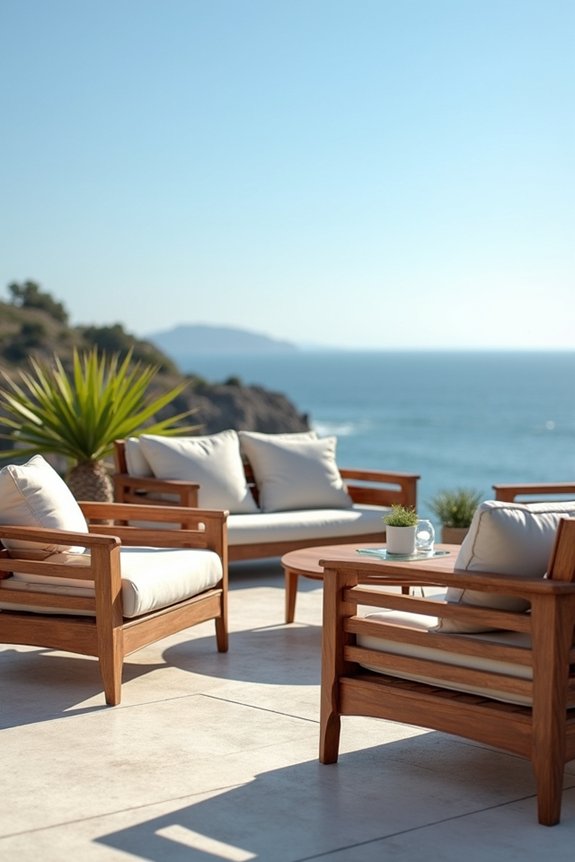
If you’re tired of constantly maintaining your outdoor furniture, poly lumber might be exactly what you need. I’ve found that HDPE recycled plastic furniture changes how you approach outdoor patio furniture durability.
Here’s what makes poly lumber so appealing: it’s waterproof and won’t absorb snow or ice, so cracking and splintering aren’t concerns. You won’t watch it fade under harsh sunlight either. UV protection comes standard, and marine-grade stainless steel fasteners resist corrosion.
The maintenance-free part? That’s the real win. No painting, staining, or constant repairs—it’s liberating. Many poly lumber pieces last over twenty years, with some manufacturers offering lifetime warranties.
The Heritage Adirondack Chair exemplifies this durability perfectly, even thriving in winter climates. With free shipping and a twenty-year warranty included, weather-resistant outdoor furniture doesn’t get much better than this.
Aluminum and Powder-Coated Metals: Lightweight, Rust-Proof Durability
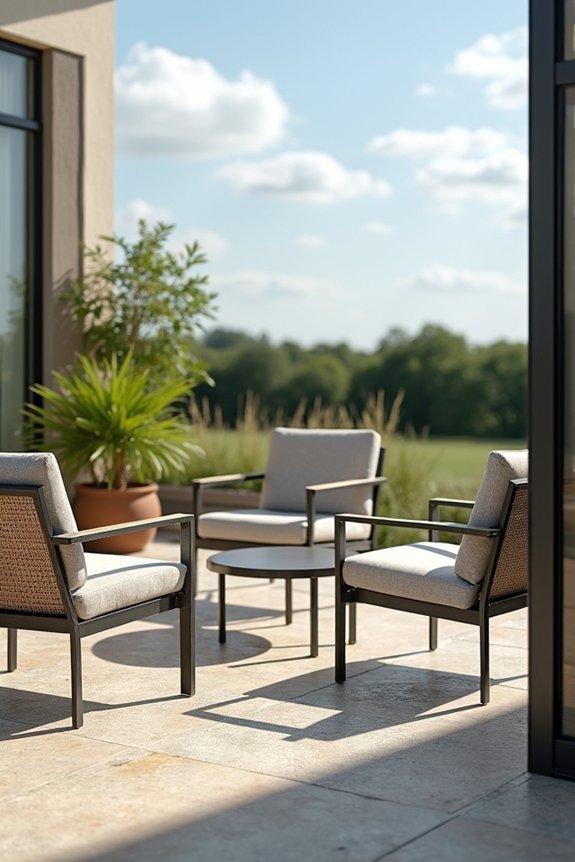
Aluminum furniture is where I’d turn next if poly lumber doesn’t fit your style. I’ve found that aluminum’s lightweight nature makes rearranging my patio layout effortless.
Aluminum furniture’s lightweight design makes rearranging your patio layout effortless and hassle-free.
What really sold me on aluminum is the powder-coated finish. This protective layer shields against UV exposure and moisture, so your pieces won’t fade or chip easily. You’re getting rust-proof durability without the constant maintenance that wrought iron demands.
Here’s what I appreciate most: aluminum stays cooler than darker metals in hot climates. I noticed my furniture’s actually comfortable to touch on scorching days.
For maximum longevity, I pair my aluminum outdoor furniture with weatherproof fabrics. This combination creates a weather-resistant setup that lasts. If you’re seeking low-maintenance durability without sacrificing style, aluminum is worth considering.
Teak Wood: Natural Heat and Fade Resistance
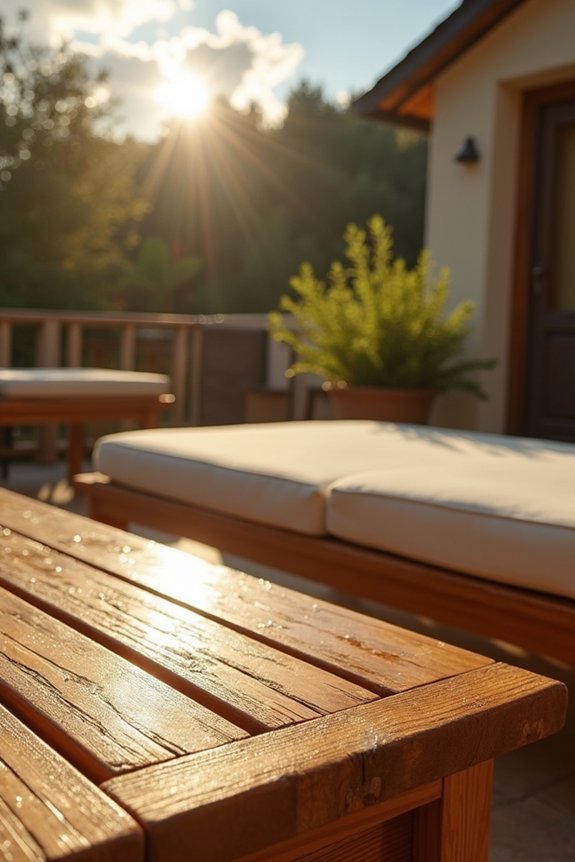
While aluminum’s low-maintenance appeal is hard to beat, teak wood offers something different that I’ve grown to really appreciate. Here’s what I’ve learned: teak wood’s natural oil content provides genuine weather resistance that actually improves with time. Unlike other materials, teak doesn’t crack or warp in extreme heat and sun exposure.
I’ve watched untreated teak develop that beautiful silver-gray patina, which honestly signals durability rather than decline. It’s weathered beauty you can trust. The oil content helps it handle moisture swings that’d wreck other wood types.
For longevity in outdoor furniture, teak delivers. I occasionally apply protective oil treatments to enhance color and extend its life further. It’s that rare material where doing less maintenance still gives you years of reliable performance. That’s the belonging story teak tells.
Wicker and Resin: Durable, Low-Maintenance Options
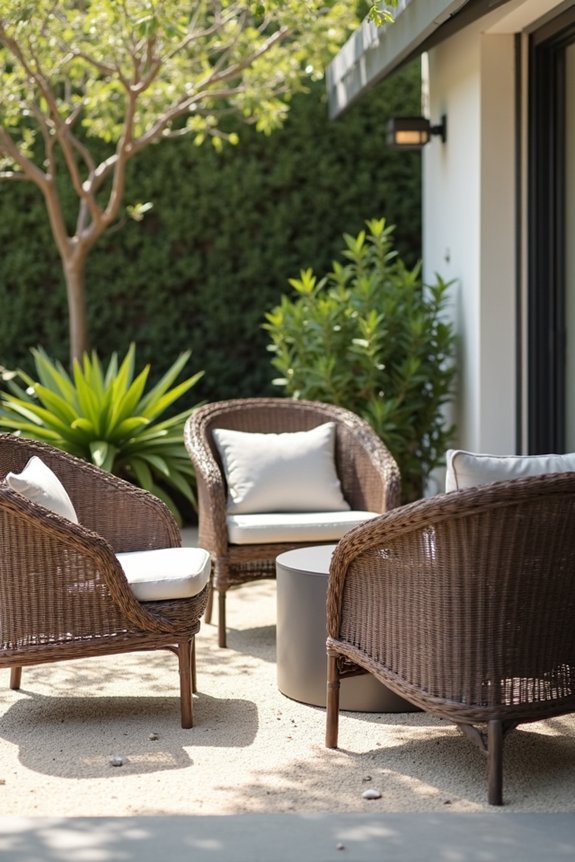
Most people don’t realize that synthetic wicker and resin furniture can outlast natural materials with half the effort. I’ve found HDPE wicker reliable for my patio setup. It won’t crack or fade, even under harsh sunlight, and maintenance is straightforward—just wipe it down with soapy water occasionally.
Synthetic wicker outlasts natural materials with half the maintenance effort—just occasional soapy water wipe-downs.
What I appreciate most is the durability. Resin furniture stays impervious to snow and humidity, so I don’t stress about seasonal changes. The material maintains its shape beautifully over time, thanks to its flexible yet sturdy composition.
For hot climates, pair your weather-resistant setup with UV-rated cushions and aluminum frames for extra stability. Since HDPE comes from recycled plastics, you’re getting an eco-friendly option that resists fading and temperature swings.
It’s low-maintenance patio furniture that actually works.
Best Materials by Climate and Budget
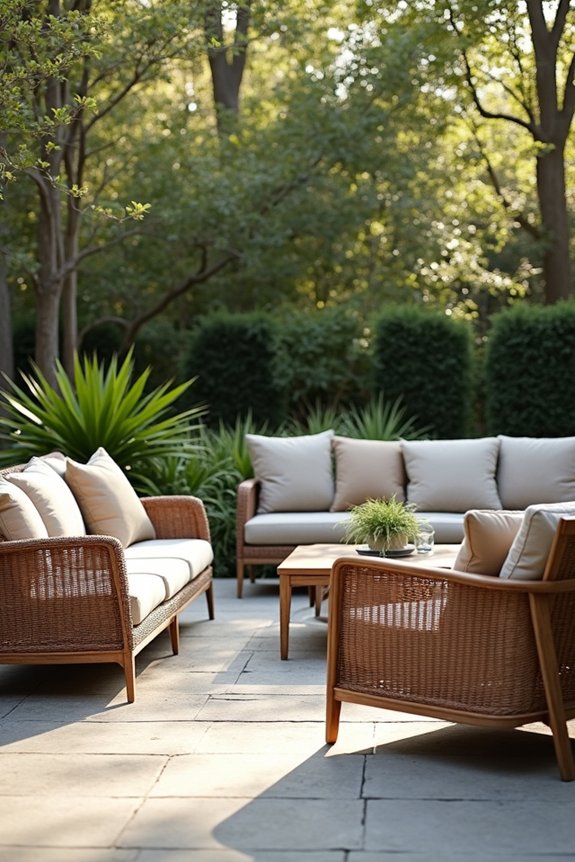
How do you pick furniture that’ll actually last in your climate without overspending? Matching materials to your weather is fundamental.
For hot climates, consider aluminum or HDPE poly lumber. Aluminum stays cooler to touch and resists rust effectively. HDPE poly lumber offers weatherproof durability—no cracking, no fading, year-round resilience.
Want quality on a tight budget? Aluminum frames paired with UV-rated fabrics like solution-dyed acrylics provide fade resistance at a reasonable cost.
If you can spend more, teak delivers natural heat resistance, though untreated pieces will patina silver-gray over time.
Selecting the right material for your climate means your furniture survives instead of becoming yard eyesores within seasons.