
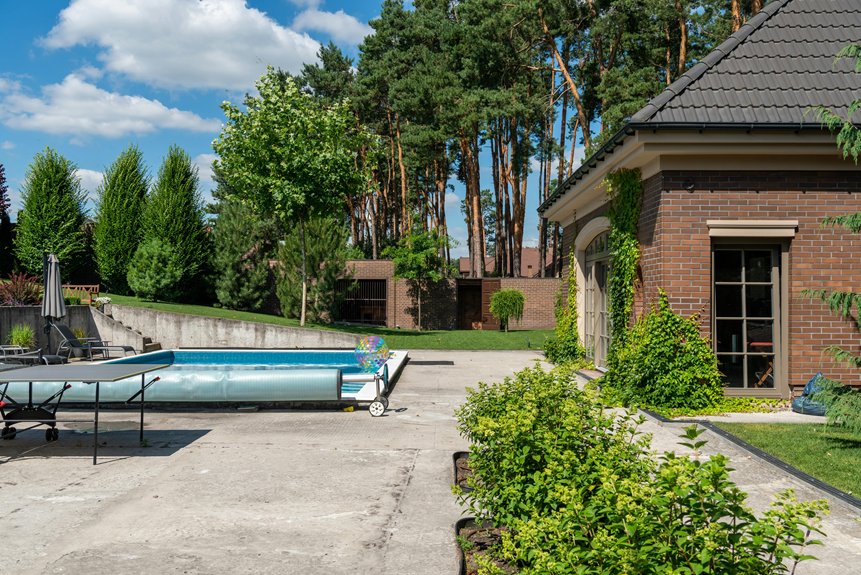
Four inches works great for a basic patio where you’re just walking around. But if you’re adding an outdoor kitchen or hot tub, bump it up to six inches for better weight support.
For driveways and serious installations, you’ll want eight inches or more with reinforced concrete. The thicker your slab, the longer it’ll last without cracking. Get your base right, space those control joints properly, and you’re set.
Stick around if you want the specifics on making each thickness work best.
4 Inches: Concrete Patios for Light Foot Traffic
When you’re planning a basic patio for your backyard, a 4-inch concrete slab works well for light foot traffic while staying cost-effective. You’ll want to start with a solid compacted gravel base of 3–6 inches beneath it. Skipping this step leads to problems later.
Here’s what I do: I add control joints every 4–6 feet to direct cracking naturally. Proper reinforcement with wire mesh or rebar keeps everything stable, and I always provide adequate drainage for weather and freeze-thaw tolerance.
The base preparation isn’t glamorous, but it matters. During the curing process, I protect the concrete from rain and temperature swings. Done right, your 4-inch patio becomes a reliable gathering spot for years ahead.
6 Inches: Concrete Patios for Heavier Loads
If you’re planning to add an outdoor kitchen or hot tub to your patio, a 4-inch slab just won’t cut it. I’d recommend going with a 6-inch slab instead. Here’s why it matters:
Planning an outdoor kitchen or hot tub? A 6-inch slab is essential—4 inches simply won’t handle the load.
- Higher compressive strength means your patio handles heavier loads without breaking down over time
- Better crack prevention through reinforcement like rebar or welded mesh, plus proper base preparation
- Longer control joint spacing (up to 8 feet apart) reduces maintenance headaches
A 6-inch slab thickness works especially well if you’re dealing with clay soils or areas prone to soil movement. I’ve found that adding thickened edges and a solid gravel subbase dramatically minimizes future issues. You’re basically future-proofing your investment. The upfront effort pays dividends.
8+ Inches: Concrete for Driveways and Hot Tubs
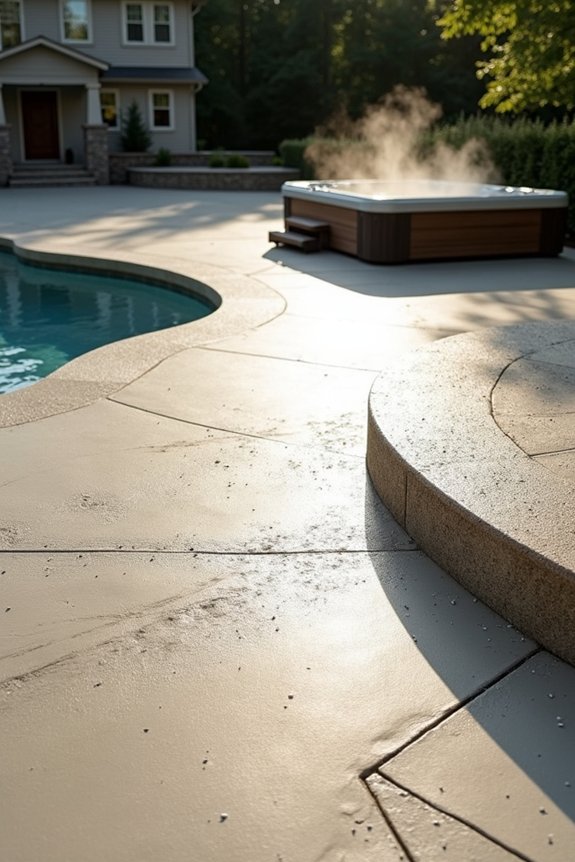
Ever wonder why your neighbor’s driveway cracked after just two winters while yours held strong? I’ve learned that driveway thickness really matters. You’ll want 8+ inches for driveways and hot tubs, and here’s why: these installations demand serious load bearing capacity.
I’ve discovered that reinforced concrete—using rebar or welded mesh—keeps thick slabs from cracking under pressure. Your base preparation can’t be skipped either; a solid foundation prevents settlement problems down the road.
High-strength concrete (4,000+ PSI) pairs perfectly with thicker slabs. Space your control joints further apart on 8+ inch pours, deepening them accordingly. Edge thickness or turndown beams reduce stress where concrete meets ground.
With proper slip-form pour techniques and freeze-thaw resistance planning, your investment’ll last decades, not seasons.