
Your bathroom’s sewer smell usually stems from four main culprits: a dried P-trap, compromised toilet wax seal, clogged drain, or blocked vent pipe. Start with quick fixes—run water through unused drains, inspect your toilet base for leaks, and clear any debris from roof vents. If odors persist despite these efforts, you’re likely dealing with hidden issues like cracked pipes or damaged seals that’ll need professional attention. Continue reading to discover exactly how to diagnose which problem you’re facing.
Quick Wins: The Easiest Fixes First
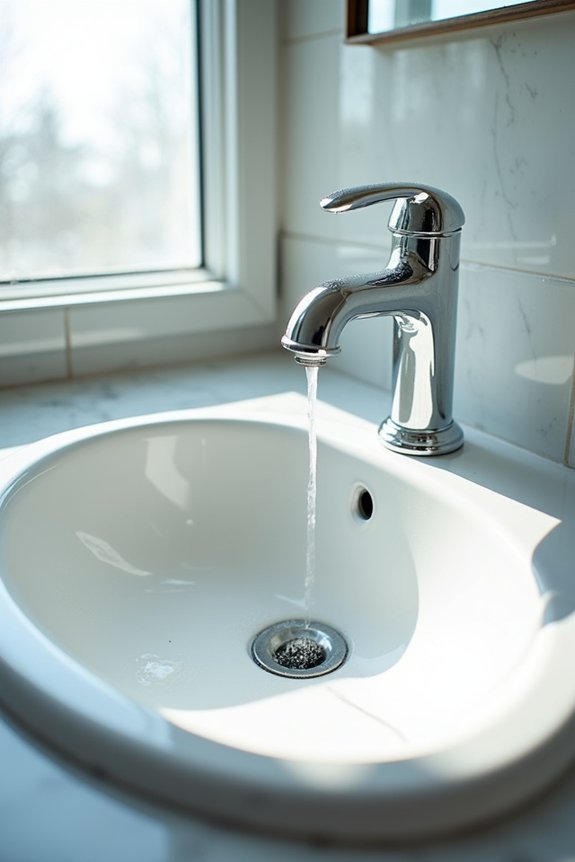
Let’s start with the stuff you can tackle right now—no plumber required. First, run water through drains you haven’t used lately. A dry P-trap loses its water seal, and that’s when sewer gases escape into your bathroom. Just let water run for about a minute. Next, check your toilet base for visible leaks or odors. A compromised wax seal can let those nasty gases enter your space. Minor clogs also cause problems by trapping bacteria that creates odors, so grab a drain snake if needed. Finally, make sure your venting system’s actually working. Clear vents prevent sewer gases from backing up into your home. These quick fixes often solve the problem before you’d ever need a professional plumber.
Diagnose the Smell: 4 Checks You Can Run Today
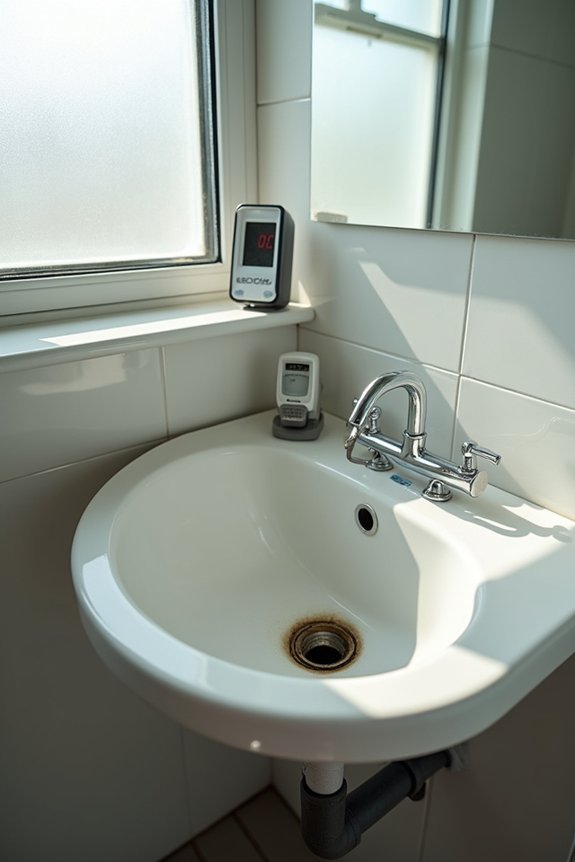
I’ve found that before you call a plumber, you can run a few quick checks yourself that often reveal the problem. Listen for dripping sounds under sinks and around the toilet base, then flush to spot any water pooling—a wet floor usually means a leak that’s creating that smell. Finally, if you can safely access your roof, peek at the vent pipes to make sure they’re not clogged with debris or nests, since a blocked vent forces gases back into your bathroom instead of letting them escape.
Listen For Dripping Sounds
When you’re standing in your bathroom trying to pinpoint that sewer smell, your ears can be just as helpful as your eyes. Listening for dripping sounds is one of the easiest leak detection methods you can try. Grab a flashlight and listen carefully around your toilet base, under sinks, and behind walls. That steady or intermittent dripping indicates moisture building up and encouraging bacterial growth, which creates that sewer-like smell you’re trying to eliminate.
Hidden leaks often accumulate moisture on cabinet floors or create telltale dampness around plumbing fittings. If you’re hearing dripping but can’t spot visible water, pay attention—moisture buildup behind walls is a serious problem. That’s when calling a plumber inspection becomes your best option. Catching these leaks early prevents larger problems down the road.
Check Toilet Base Leaks
Now that you’ve listened for dripping, your toilet deserves a closer look—it’s often the culprit behind bathroom sewer smells. I’ll walk you through what to check.
First, inspect your toilet base after flushing. Look for water pooling or damp spots, which signal a failing wax seal or loose connection. Gently rock the toilet side to side; noticeable movement means your wax ring’s compromised. That movement lets sewer gases escape, creating that persistent odor you’re working to eliminate.
| Issue | What to Look For |
|---|---|
| Water pooling | Wet spots around base |
| Toilet movement | Rocks easily when pushed |
| Corroded bolts | Brown, flaking hardware |
| Hidden leaks | Moisture behind flange |
If you find problems, you can fix them yourself. Resealing or replacing your toilet seal requires lifting the toilet and using a putty knife and shims—it’s a straightforward repair.
Inspect Roof Vent Blockages
Where’s that sewer smell actually coming from? I’d check your roof vent next.
Your plumbing system needs to breathe properly. A blocked vent traps sewer gases indoors instead of venting them outside. Leaves, dirt, and animal nests commonly cause these blockages.
When your vent’s clogged, you’ll notice slow drains and gurgling sounds. Bathroom odors get worse, especially near sinks and toilets. I’ve seen it happen countless times.
Safe inspection matters here. If you’re comfortable on roofs with proper safety gear, clear visible debris yourself. Otherwise, call a professional plumber—it’s worth it.
Simple blockages often disappear after clearing accessible openings. But if sewer smells persist, you might need a smoke test or camera inspection. These advanced checks reveal hidden vent issues your eyes can’t catch.
Clogged Drains: Why They Smell and How to Clear Them
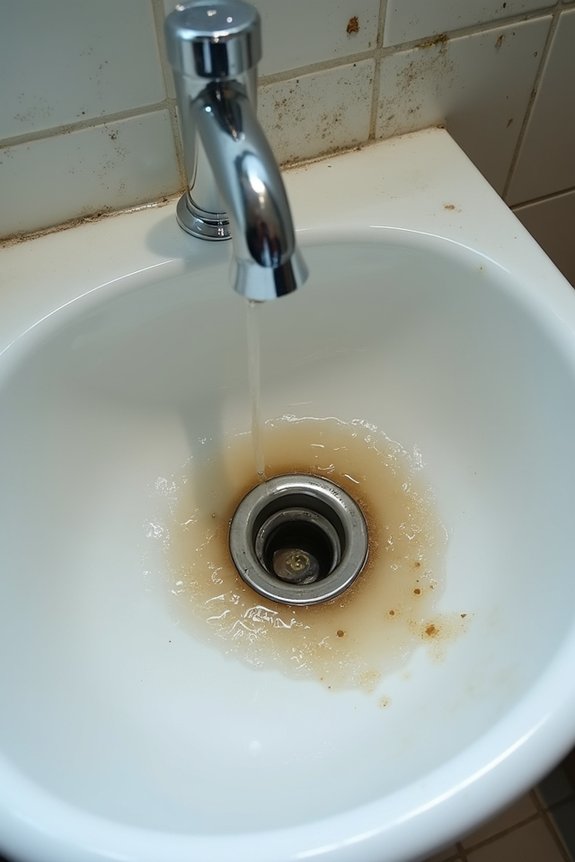
Clogged drains are often the culprit behind that nasty sewer smell in your bathroom, and here’s why: hair, soap, and debris pile up and trap bacteria in stagnant water, which then releases that unmistakable foul odor. Clearing the clog eliminates the smell, since you’re removing the bacteria’s breeding ground. Here are some practical methods to get your drains flowing freely again.
Buildup Traps Bacteria Growth
Buildup Traps Bacteria Growth
When you’ve got a sluggish drain, you’re dealing with a perfect storm for bathroom odors. Here’s what happens: hair buildup, soap scum, and debris trap moisture in your pipes. That stagnant environment is a breeding ground for bacteria growth.
| What Accumulates | Why It’s Bad | Result |
|---|---|---|
| Hair | Blocks water flow | Slow drainage |
| Soap scum | Traps moisture | Bacteria thrives |
| Debris | Creates barriers | Odor intensifies |
| Moisture | Feeds bacteria | Sewer smell |
| Buildup | Slows drainage | Longer stagnation |
The longer water sits in your bathroom drains, the worse that sewer odor gets. Ignoring a drain clog just makes everything worse. Regular drain cleaning and removing hair prevents this problem. Addressing a P-trap now beats dealing with that smell later.
Clearing Clogs Eliminates Odors
The good news? Clearing that drain clog actually eliminates the sewer odor pretty quickly. I’ve found that tackling the blockage stops bacterial growth right in its tracks.
Here’s what you can try:
- Use a plunger on your drain to dislodge hair buildup and debris
- Grab a drain snake to pull out stubborn clogs deeper in the pipe
- Consider hydro-jetting for serious blockages that won’t budge
When you remove the clog, water flows freely again. This prevents your P-trap from drying out, which stops sewer gases from creeping back into your bathroom. Sometimes you’ll need to remove the P-trap itself for thorough cleaning.
Regular drain maintenance keeps that bathroom smell fresh and stops bacterial growth before it starts. Staying on top of cleaning drains beats dealing with nasty odors later.
Sewer Odors From Vent Pipes and Toilet Seals
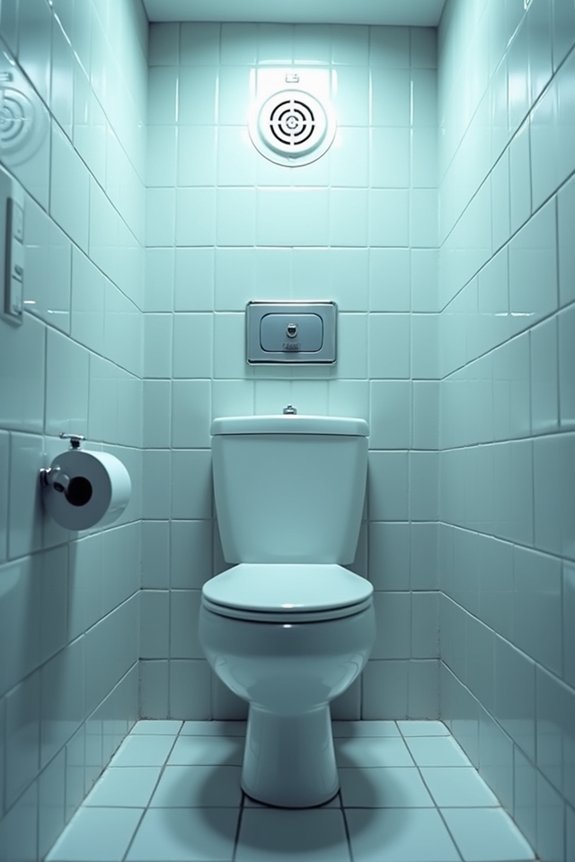
Ever wonder where those sewer gases actually go? They’re supposed to escape through your roof vent, but when vent blockages happen—from leaves, debris, or animal nests—those gases get trapped indoors instead.
A damaged toilet seal or broken vent pipes disrupt proper venting, creating stubborn odors. When your vent’s clogged, you’ll notice gurgling drains throughout your bathroom because gases push back through fixtures like your P-trap.
Here’s what to watch for: listen for slow drainage and that telltale gurgling sound. These signs point to vent issues. A professional plumber can locate blockages using a smoke machine, especially if your roof vent needs inspection.
Regular vent checks prevent these problems. It’s worth the effort to keep sewer gases outdoors where they belong.
Leaky Pipes and Sewer Line Problems: When Odors Spread
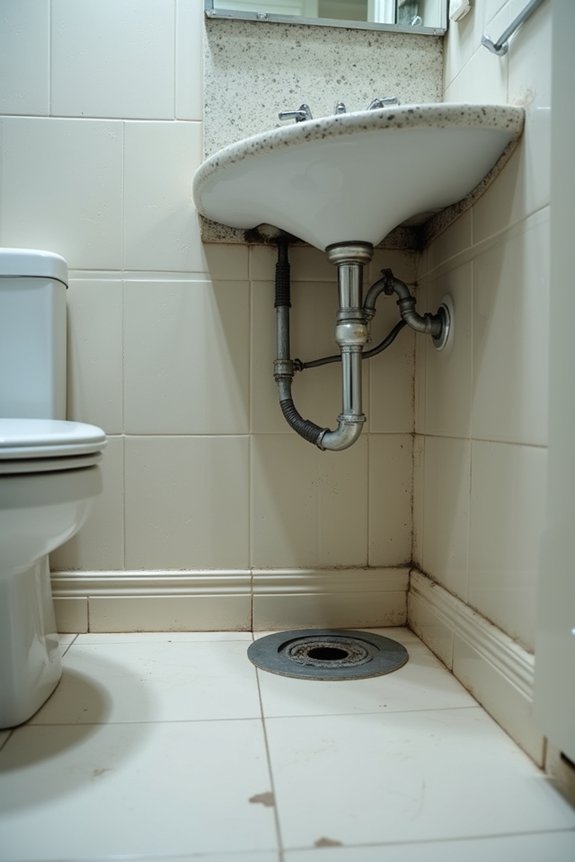
While vent blockages trap gases indoors, there’s another culprit that’s equally sneaky: leaky pipes hiding behind your walls and under your floors. I’ve seen how plumbing leaks can turn a bathroom into an odor problem zone fast.
Here’s what happens when pipe leaks go undetected:
- Hidden leaks worsen over time, spreading sewer gases throughout your home and creating structural damage behind walls.
- Cracks around fixtures allow odors to escape, signaling you need to seal or replace damaged pipe sections immediately.
- Moisture and puddling appear, indicating active sewer line problems requiring professional attention.
I recommend checking regularly for visible dampness and listening for dripping sounds. If you suspect hidden leaks, call a plumber soon. Prompt repairs stop sewer gases from spreading and restore your bathroom smell to normal, protecting both your comfort and your home’s integrity.
Why This Smell Won’t Quit: Hidden Leaks and Damaged Seals
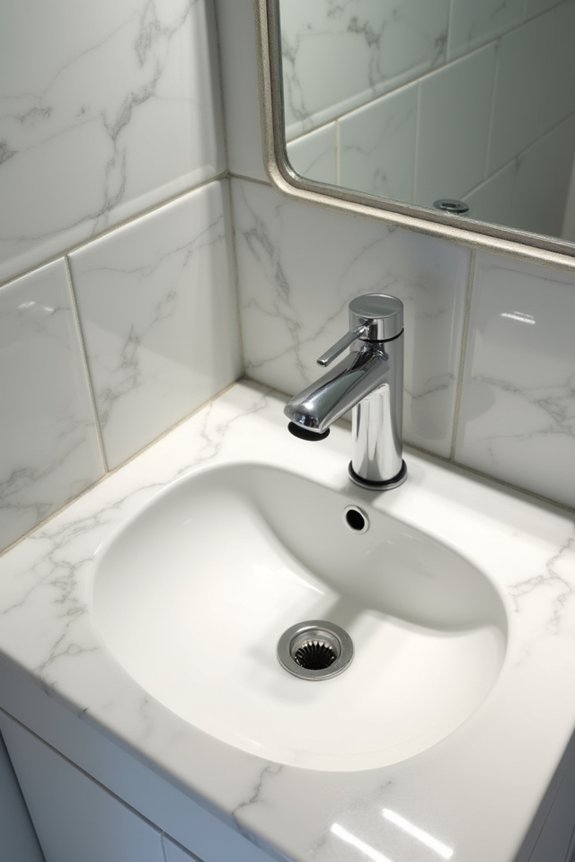
Why does that stubborn sewer smell keep hanging around even after you’ve checked the obvious culprits? I’ve been there, and honestly, hidden leaks are usually the sneaky culprits. They’re releasing sewer gases behind your walls or under flooring without any visible water pooling. Your toilet flange or wax seal might be compromised, letting odors escape directly from the base. Cracked pipes emit foul smells that spread through cabinets and adjacent rooms. If your toilet rocks slightly, that’s a red flag for seal integrity issues. I’d recommend having a professional inspection using leak-detection tools to locate hidden problems. They’ll use cameras to find what you can’t see. Sometimes you’ll need to lift the toilet and replace that wax seal yourself. Either way, addressing these hidden leaks stops the bathroom odor for good.
Know When to Call a Pro: Sewer Smells That Need a Plumber
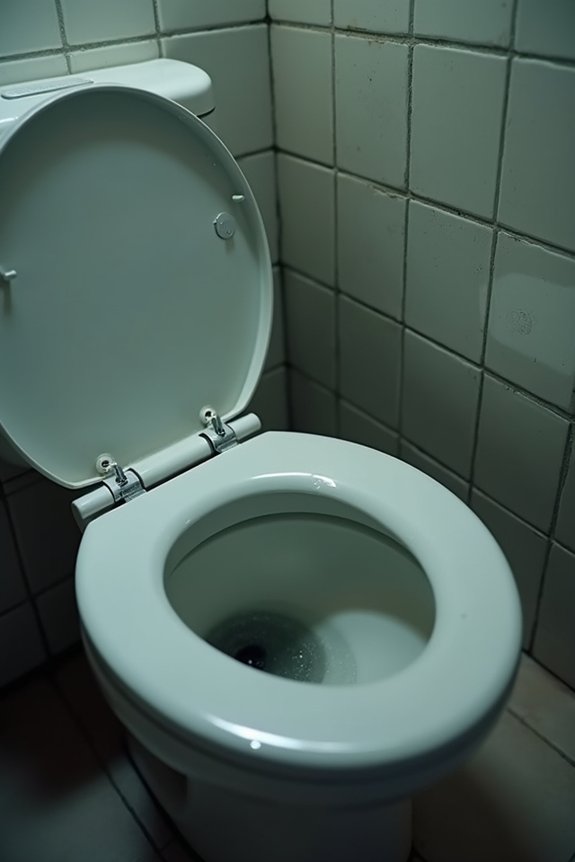
Some bathroom odors you can tackle yourself, but others demand professional help. Here’s when you’ll want to call in a professional plumber:
- Sewer gases escaping around your toilet base – A damaged toilet seal wax ring lets those nasty odors seep through, and you’ll need a pro to replace it properly.
- Your septic tank’s overdue for pumping – A full septic tank produces strong sewage smells and causes running water issues. Professional service restores proper function and odor control.
- Persistent smells despite your efforts – Blocked sewer lines, damaged P-trap connections, or faulty vent pipes require professional diagnosis.
Ignoring these signs only makes things worse. When sewer odors won’t budge after basic fixes, call a professional plumber. They’ll identify your odor source quickly and prevent costly plumbing failures down the road.