
That smell isn’t from dirt you missed—it’s hidden moisture feeding mold deep in your walls, floors, and carpet fibers. When humidity climbs above 60%, mold releases stinky gases that linger even after you’ve cleaned surfaces. Poor ventilation traps these odors inside, and damp fabrics keep releasing smells for days. The fix? Open your windows, grab a dehumidifier, and hunt for moisture sources like leaks or condensation. Stick around to discover exactly where that sneaky moisture hides.
Why Bedroom Smells Linger After Cleaning
Ever noticed how your bedroom still smells funky even after you’ve scrubbed everything?
Yeah, I’ve been there too. Here’s what’s actually happening. Hidden moisture in your walls or under floors keeps feeding mold growth. That mold releases something called MVOC—basically stinky gases that linger even after you’ve cleaned the visible stuff away.
Your porous stuff matters too. Carpets, mattresses, and upholstery absorb moisture like sponges. They’ll keep releasing odors long after your cleaning spray dries.
Poor ventilation makes it worse. Stale air just recycles those odor particles back into your space instead of pushing them out. Without proper airflow during and after cleaning, you’re basically trapping the smell inside.
The real culprit? Usually it’s moisture hiding somewhere—leaking pipes, roof damage, or condensation buildup. That’s when you need to dig deeper than surface cleaning can reach.
What’s Actually Causing the Odor: Moisture, Not Dirt

Why does your bedroom still stink after you’ve cleaned everything? You’re probably battling moisture, not dirt. I learned this the hard way.
Hidden moisture is your real enemy. Excess humidity traps odors from mold and mildew, even when you can’t see them. MVOCs—those nasty compounds mold releases—create musty smells all on their own, signaling moisture lurking somewhere you haven’t found yet.
Hidden moisture is your real enemy. Excess humidity traps odors from mold and mildew you can’t even see.
Your porous stuff matters too. Carpets, mattresses, and upholstery absorb moisture like sponges, then release those odors back when humidity fluctuates. Poor ventilation makes it worse by keeping damp air trapped inside.
Here’s what I discovered: if your humidity stays above 60%, you’re basically feeding the problem. Leaks and condensation in hidden spots keep feeding mold growth, so those odors return no matter how thoroughly you clean.
Quick Fixes That Work Before Deep Cleaning
Before you start ripping out carpet or replacing your mattress, try these quick wins—they’re effective and won’t drain your wallet.
I’ve found that tackling bedroom odors doesn’t always require extreme measures. Here’s what actually works:
- Open windows for cross-ventilation to dilute lingering smells fast
- Place baking soda in bowls near problem areas to absorb odors naturally
- Run a dehumidifier if humidity exceeds 60%—moisture feeds musty smells
- Wash sheets and bedding with white vinegar to eliminate residue buildup
- Vacuum and dust thoroughly from top to bottom, removing odor-holding particles
I’d skip scented candles; they often mask problems instead of solving them. Combine ventilation with cleaning, and you’ll notice real improvement within hours. These simple steps address moisture and particles that cause that stale smell after cleaning.
Finding Hidden Moisture in Your Bedroom
I’ve learned that hidden moisture is often the real culprit behind bedroom odors that refuse to disappear, even after you’ve cleaned everything in sight. You’ll want to hunt for telltale signs like discoloration on walls, warped paint, soft spots on floors, or that persistent musty smell that lingers no matter what you do. I’ll show you how to spot these dampness indicators so you can finally track down what’s actually causing your bedroom to smell.
Hidden Moisture Sources
When you’ve scrubbed every surface and the smell still lingers, you’re probably dealing with moisture you can’t see. I’ve been there, frustrated and confused about where that musty odor’s coming from.
Hidden moisture sources are sneaky culprits that fuel persistent bedroom smells:
- Slow leaks in pipes or roof damage creating damp spots behind walls
- Condensation forming on cool surfaces like windows during temperature changes
- Humidity levels exceeding 60%, which you can’t always feel
- Mold behind walls or under carpets releasing MVOCs (microbial volatile organic compounds)
- Poor ventilation trapping damp air that prevents moisture from drying
I learned that mold behind walls grows silently, even without visible growth. Stagnant air from inadequate ventilation keeps feeding these hidden moisture sources. That’s why cleaning alone won’t solve the problem—you need to find what’s actually causing it.
Detecting Dampness Indicators
How do you spot moisture that’s hiding behind walls and under surfaces? I’ve learned to look for telltale signs that reveal dampness lurking in my bedroom. Condensation on windows is usually my first clue. I also check for warped paint, soft wall spots, and discolored surfaces—places where mold thrives invisibly. Poor ventilation makes everything worse, trapping humidity above 60% and creating the ideal environment for dampness. I run my hand along walls feeling for clammy areas. Sometimes I notice a musty smell persists even after I’ve cleaned everything visible. That’s when I know hidden moisture is the real problem, not dirt. These indicators help me catch problems before they become serious mold situations that require professional help.
Mold and Mildew: Why They Hide and How to Spot Them
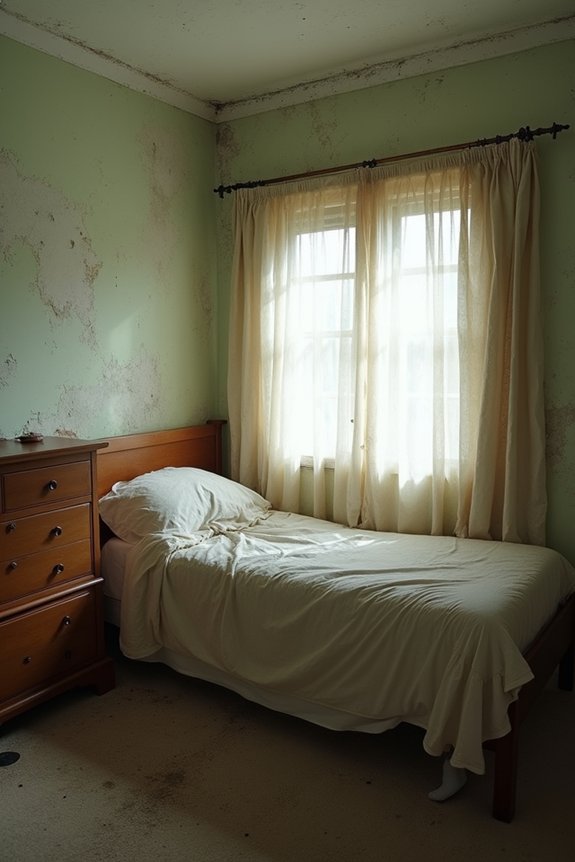
Ever noticed a musty smell in your bedroom that cleaning doesn’t quite fix? That’s likely mold or mildew releasing MVOCs—basically invisible odor particles. Here’s the tricky part: they hide.
Why they’re sneaky:
- Mildew sits on surfaces, but mold burrows deep into materials
- Hidden moisture behind walls feeds growth you can’t see
- MVOCs escape even when visible growth is absent
- High humidity above 60% creates perfect breeding conditions
- Odor lingers long after you’ve scrubbed everything clean
Spotting them requires looking beyond what’s obvious. Check for discoloration, warped paint, soft spots, and damp areas. If your bedroom smells musty despite cleaning, hidden moisture is likely sustaining growth somewhere. When coverage exceeds 10 square feet, professional help addresses the root cause effectively.
Porous Fabrics That Re-Emit Odors After Cleaning

I’ve learned the hard way that cleaning your bedroom isn’t enough if your fabrics are still holding onto smells. Carpets, mattresses, and upholstery are like odor sponges—they soak up moisture and funky smells, then release them right back into your room even after you’ve scrubbed everything down. So if your bedroom still smells bad after cleaning, your porous fabrics might be the culprit, and we need to tackle them differently than you’d think.
Fabric Absorption And Retention
Why do carpets and mattresses keep smelling bad even after you’ve cleaned them? Here’s what I’ve discovered: porous fabrics absorb odors deeply, trapping them in fibers where cleaners can’t reach.
When you clean surfaces, you’re only tackling what’s visible. But moisture and odor particles soak into fabric layers, hiding below the surface. Here’s what happens:
- Dust and skin oils feed bacteria in textile fibers
- Moisture gets trapped, preventing complete drying
- Off-gassing releases trapped odors days after cleaning
- Mold spores settle into carpet backing and padding
- Humidity causes absorbed smells to re-emerge gradually
I learned this the hard way. My bedroom smelled fresh for one day, then that stale odor crept back. The problem wasn’t my cleaning effort—it was odor absorption happening deep within the fabrics themselves.
Deep-Cleaning Porous Materials
Since surface cleaning alone won’t solve persistent odors, you’ll need to tackle what’s hidden deep in your fabrics. I’ve learned the hard way that deep-cleaning porous fabrics like carpets and mattresses requires serious drying afterward. Here’s the thing: water-based cleaning can actually push odors deeper into fibers rather than remove them. When moisture stays trapped, it creates the perfect environment for mold growth and keeps those musty smells circulating.
The key is using high-heat drying or low-moisture cleaning methods. I’ve found that leaving porous materials damp overnight practically guarantees re-emission of odors within days. If smells persist despite your efforts, inspect for hidden leaks or water damage inside your items. Sometimes professional remediation becomes necessary when moisture has settled deep within the material itself.
Poor Ventilation and How It Traps Stale Air
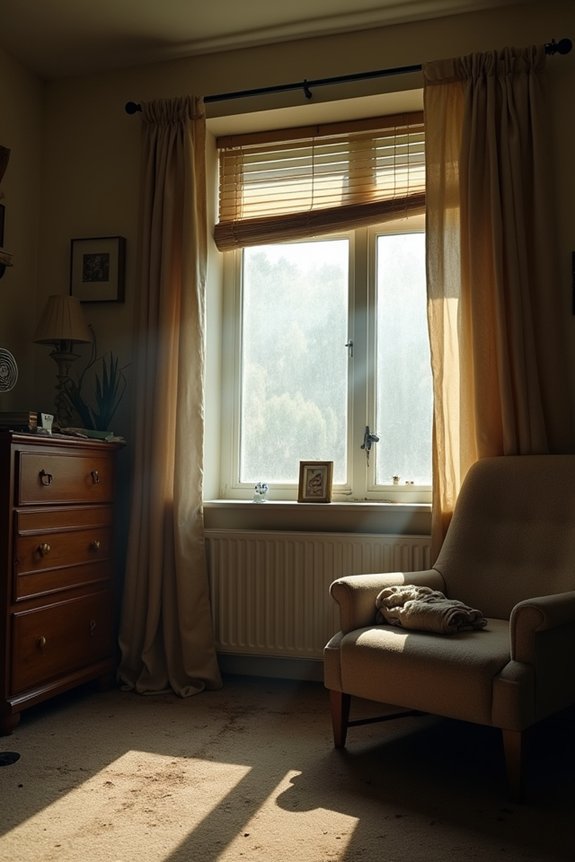
Have you ever noticed how a freshly cleaned room can still smell musty within hours? I’ve been there too, and I finally figured out why.
Poor ventilation is usually the culprit. Here’s what happens when your bedroom lacks fresh air exchange:
- Stale air gets trapped inside, accumulating indoor pollutants and odors
- Inadequate cross-ventilation prevents dilution of MVOCs (those cleaning chemical vapors)
- Moisture from cleaning lingers without airflow, promoting mold growth
- Dust particles settle instead of being carried away
- Sealed rooms create humid pockets where odors just sit around
I learned the hard way: opening windows or running fans helps considerably. Cross-ventilation removes odors far better than cleaning alone ever could. It’s the missing piece most of us fail to consider.
Your Action Plan: Eliminate Odors, Not Just Mask Them

So you’ve opened your windows and cleaned thoroughly, but that smell’s still hanging around? I get it—I’ve been there too. The truth is, masking odors with sprays doesn’t work. You need odor elimination that actually tackles the root cause.
Here’s what works for me:
| Step | Action |
|---|---|
| Find It | Locate hidden moisture or mold sources |
| Fix It | Remove the odor source completely |
| Freshen It | Deploy odor absorbers like baking soda |
| Maintain It | Run ventilation and dehumidifiers regularly |
Start by identifying what’s really causing the smell. Is it hidden moisture behind walls? Mold in forgotten corners? Once you’ve removed the source, use odor absorbers and improve ventilation. If odors persist, you might have compromised materials needing professional assessment. We’re solving this together—the right way.
Humidity Levels That Trigger Bedroom Mold (and How to Test)
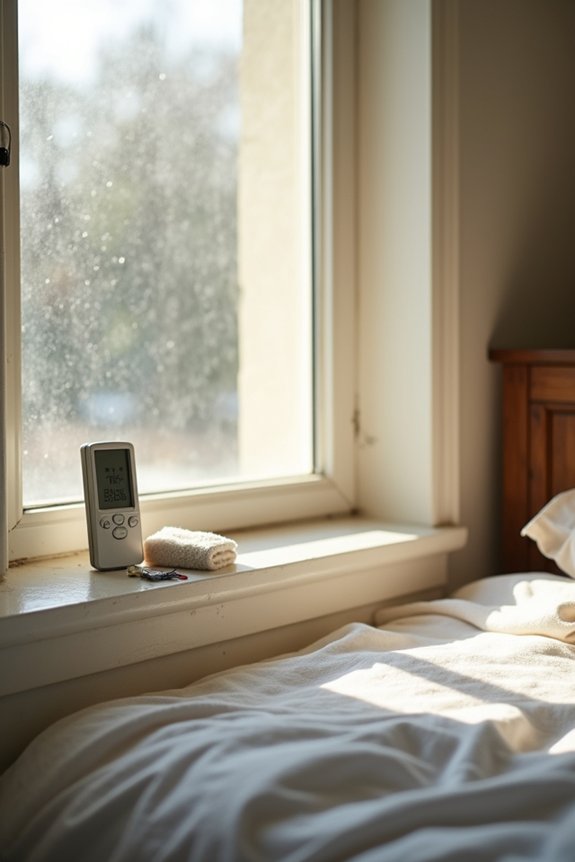
I’ve found that humidity’s the real culprit behind that stubborn musty smell, so let me show you what to look for. Your bedroom should ideally hover between 30–50% relative humidity, but anything above 60% practically invites mold to set up shop. Grab a cheap hygrometer from any hardware store, stick it in your room for a few hours, and you’ll know exactly whether moisture is your problem.
Ideal Humidity Range
What’s the sweet spot for keeping your bedroom fresh and mold-free? I’d aim for 30–50% humidity, with 40% as your target. Here’s what I’ve learned about maintaining solid indoor air quality:
- Test with a hygrometer—it’s your humidity detective and costs under $20
- Stay below 60%—anything higher invites mold risk and musty odors
- Grab a dehumidifier—it works well during humid seasons
- Watch for condensation—it signals excessive moisture on windows and walls
- Check consistently—readings below 30% cause dryness and discomfort instead
I used to ignore humidity levels, then my bedroom started smelling off even after cleaning. Once I invested in a dehumidifier and kept tabs on moisture, everything improved. You’ll notice fresher air and fewer mysterious odors when you hit that sweet spot.
Testing Moisture Levels
Now that you know where humidity should land, it’s time to actually measure what’s happening in your bedroom. I grabbed an inexpensive hygrometer—seriously, they’re cheap—and started checking my readings regularly. You’ll want humidity monitoring to catch problems before they become mold risks.
Here’s the thing: hidden moisture from leaks or window condensation can sustain odors even after you’ve cleaned everything. A moisture meter helps you spot damp spots in walls and flooring that aren’t visible to the naked eye. I’ve found moisture testing worth the investment for targeted remediation.
Test humidity during humid seasons and after water events. These readings tell you whether you need dehumidification. Regular monitoring moves you from guessing about musty smells to actually solving them.
When to Call a Professional for Hidden Moisture

Sometimes even your best cleaning efforts won’t banish that stubborn bedroom smell—and honestly, that’s when you know something deeper’s going on. I’ve learned that persistent odors signal hidden moisture you can’t see. Here’s when I’d call in the professionals:
- Mold keeps returning after you’ve cleaned it thoroughly
- Your air quality feels off despite opening windows regularly
- Structural damage appears, like warped wood or sagging floors
- Health symptoms worsen, such as unexplained allergies or asthma
- Contaminated water from sewage or other sources is involved
When mold exceeds 10 square feet, professionals become necessary. They have the tools and expertise to locate moisture sources hiding behind walls. I’d rather invest in expert help than let hidden problems worsen. Your bedroom’s health—and yours—depends on addressing root causes, not just masking symptoms.
Long-Term Moisture Control: Keeping Your Bedroom Fresh
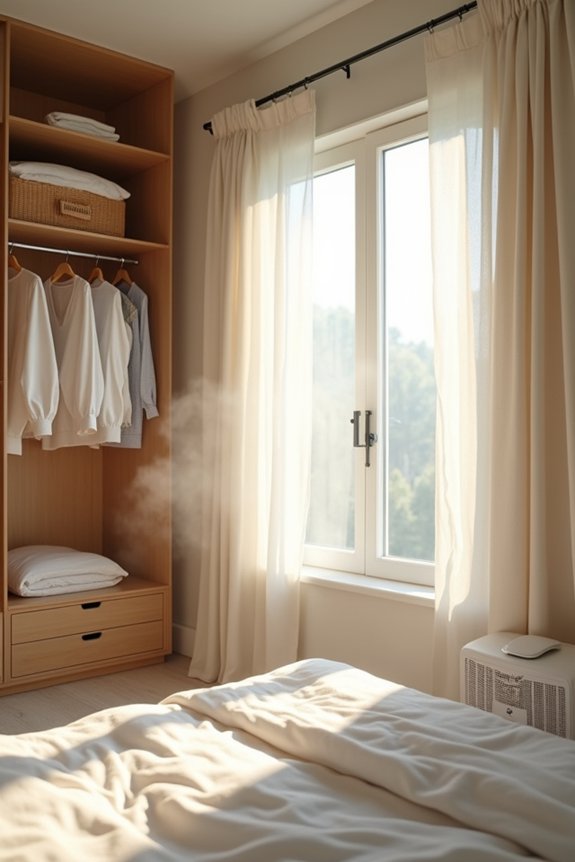
How do you keep that fresh bedroom smell from disappearing after you’ve done all the hard work? Long-term moisture control is an effective approach.
Long-term moisture control is the key to maintaining that fresh bedroom smell you’ve worked hard to achieve.
I started using a dehumidifier during humid months, and it made a noticeable difference. Keeping humidity between 30% and 50% prevents mold from creeping back in. Above 60%, and mustiness will return.
Ventilation matters too. I crack windows when weather permits and run fans regularly to keep air moving. Stagnant air just recycles odors.
I also monitor my bedroom for moisture damage signs—discoloration, warped paint, soft spots. Catching these early stops hidden leaks before they become problems. Regular vigilance beats dealing with recurring smells.
Maintenance Checklist: Prevent Odors From Coming Back
What keeps your bedroom smelling fresh long-term? It comes down to staying consistent with a few key habits.
Here’s what works to prevent musty odor from returning:
- Fix leaks promptly – Check under furniture and closets regularly for hidden moisture
- Run a dehumidifier – Keeping humidity below 60% makes a real difference
- Improve ventilation – Crack windows daily and keep HVAC filters clean
- Dust and vacuum weekly – HEPA filters catch what causes odors to linger
- Air out fabrics between uses – Let blankets and curtains breathe
Skipping these steps once lets musty smells return fast. But when you stay on top of moisture control and cleanliness, your bedroom stays fresh.