
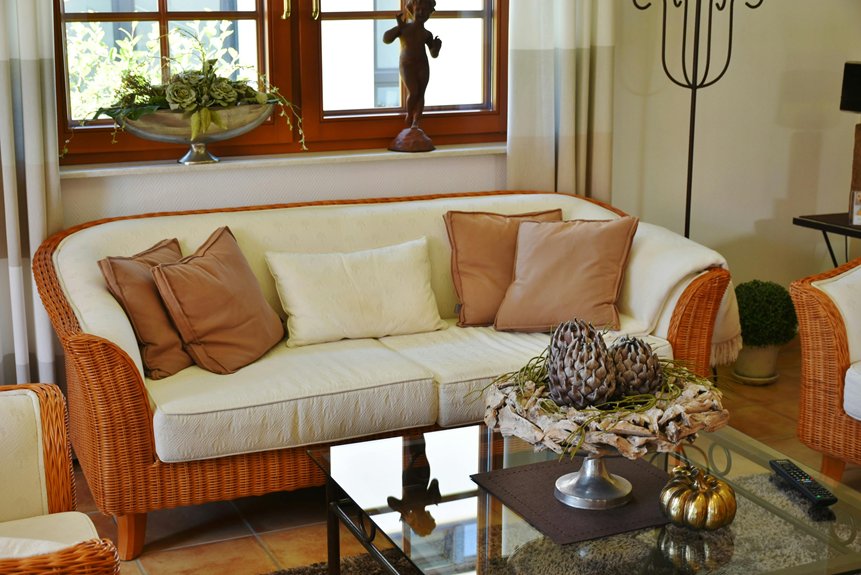
Start by picking two or three main colors plus an accent shade—this blueprint guides every purchase. Ground your space with an 8×10 rug, then float your couch to encourage face-to-face conversation. Layer different light sources so it’s not harsh and flat. Mix textures like knits and velvets with natural wood and greenery for warmth. Tuck storage into ottomans and benches to hide clutter. Finally, display pieces you actually love on shelves and surfaces.
These seven moves create a room that feels like yours.
Choose Your Color Palette First: It Sets Everything Else
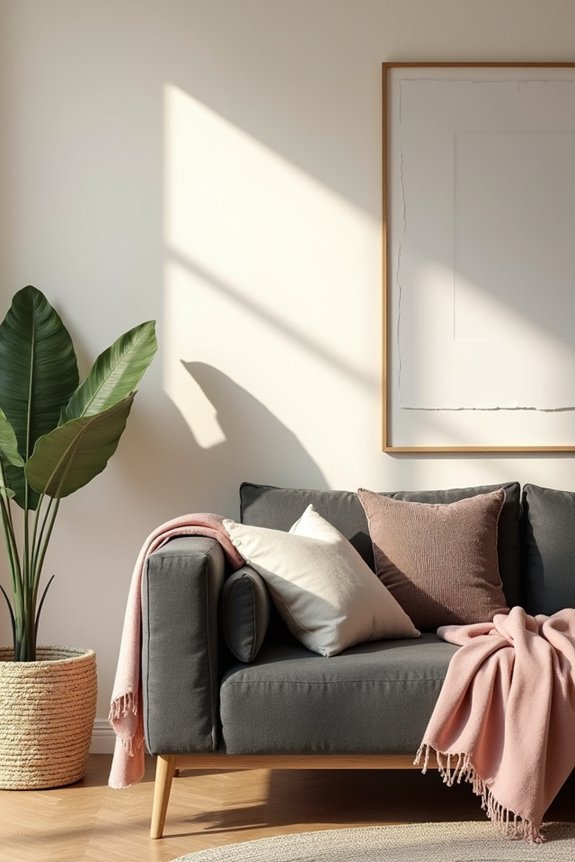
Why do some living rooms feel pulled together while others look like a mismatched jumble? The answer lies in starting with your color palette.
The secret to a cohesive living room starts with one fundamental choice: your color palette.
When you choose your base colors first, everything else falls into place naturally. Your rug, furniture, and accessories suddenly work together instead of clashing. It’s like having a blueprint before building a house.
Pick two or three main colors you love. Soft neutrals with one accent color often works well. This approach guides every purchase you’ll make. Your paint choice influences which curtains will work. Your wall color suggests which throw pillows fit the space.
This single decision removes the guesswork from decorating. You’ll spend less time second-guessing yourself and more time enjoying your space.
Start With a Large Rug to Ground Your Living Room
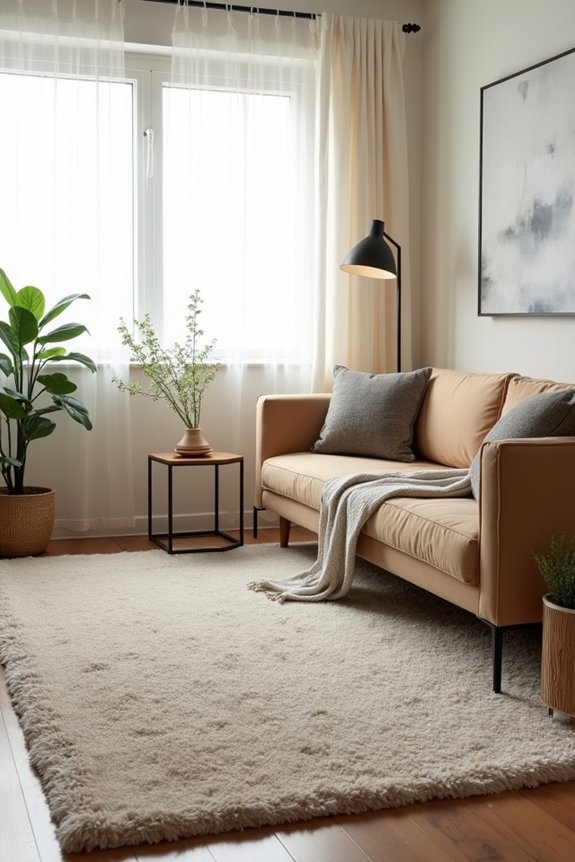
Now that you’ve got your color palette locked in, it’s time to anchor your room with a large rug. Skipping this step leaves spaces feeling disconnected and awkward.
A good rug does serious grounding work. Standard living room sizes like 8×10 or 9×12 fit most spaces perfectly. Here’s the practical part: your rug should extend at least six inches beyond your sofa on both sides—eight inches is even better.
Position yours to run the full sofa length, which visually anchors your seating and creates natural walkways. Aim for about 16–18 inches of clearance around furniture so everything flows naturally.
Too-small rugs make rooms feel cramped and disconnected. A properly sized rug pulls your whole space together and signals that you have a clear design vision in place.
Arrange Furniture to Encourage Conversation and Flow
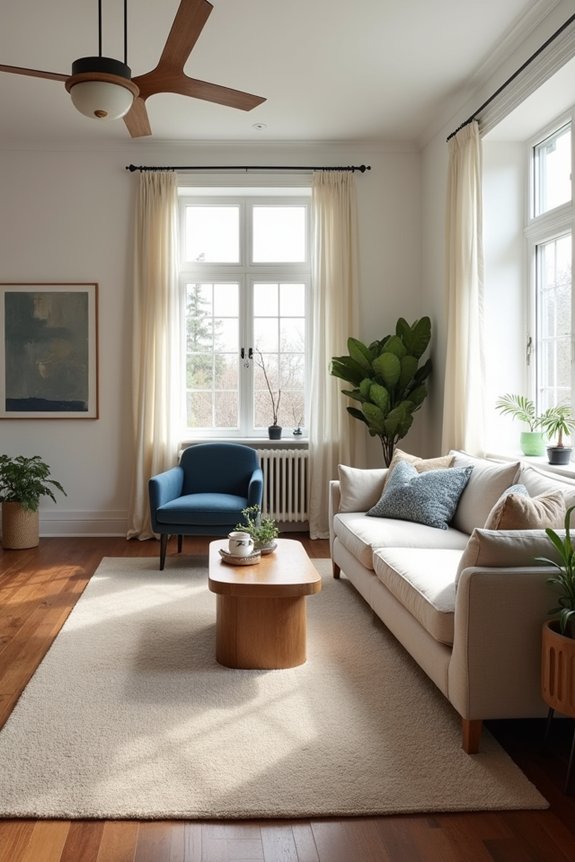
they push their sofa against the wall and call it a day. I used to do the same thing, and my living room felt disconnected.
Let your couch float in the room instead. Position it opposite two chairs to create real face-to-face conversation. Add a coffee table about half your sofa’s length—it anchors the seating while leaving 16 to 18 inches for walking around comfortably.
Balance the space with side tables or a console. This grounds your arrangement without making it feel cramped. A large rug under your seating unifies the conversation area, connecting front legs of furniture together.
When you arrange thoughtfully like this, your living room invites people to actually talk and linger. That’s the difference.
Layer Your Lighting for Ambiance and Function
Once you’ve got your furniture arranged to foster real conversation, lighting becomes your next catalyst. One overhead light made my living room feel like a cave. Layering your lighting makes a real difference.
Here’s my approach:
- Start with ambient lighting using floor lamps or wall sconces for general illumination
- Add task lighting with table lamps on side tables to reduce shadows and eye strain
- Include accent lighting with contrasting finishes to create visual depth
The trick? Position lamp shades so their bottoms sit near eye level when you’re seated. This disperses light evenly without glare. Using at least two light sources prevents that harsh, flat feeling. Mix natural textures and black accents throughout—they balance the lighting well.
Add Texture and Warmth With Throws, Pillows, and Natural Materials
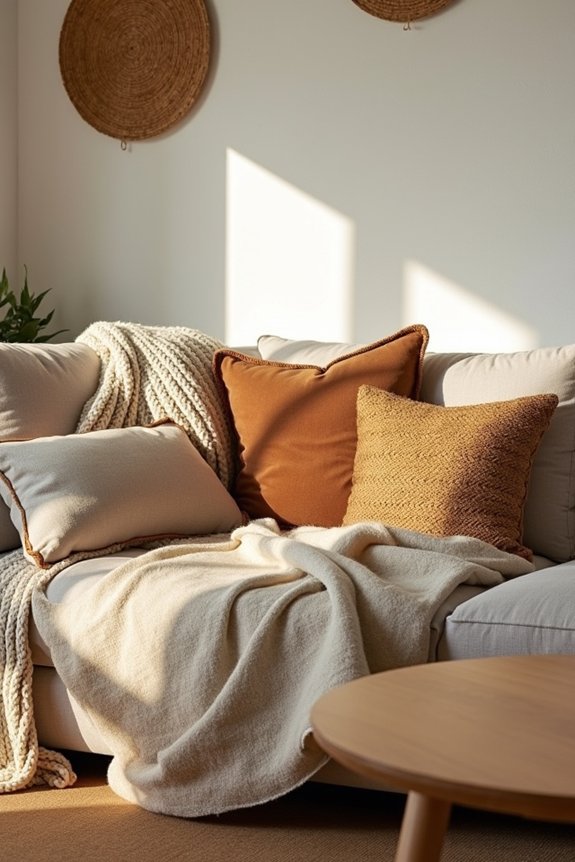
I’ve found that throwing textures into your living room—think knits, velvets, and soft sheepskin—makes the space feel cozier and less sterile. Mixing in natural materials like wood baskets, woven throws, and greenery adds depth while keeping things grounded and fresh. The trick isn’t matching everything perfectly; it’s layering different textures and patterns together while sticking to a calm color palette so nothing clashes.
Layering Textures For Depth
Why does your living room sometimes feel flat despite having furniture and color? Layering textures creates the depth that makes spaces feel inviting.
Here’s how to approach it:
- Mix different fabrics like knits, velvets, and woven materials on throws and pillows instead of matching sets
- Pair soft textiles such as sheepskin with natural wood and greenery for warmth
- Vary pillow sizes, shapes, and patterns to avoid a boring, cookie-cutter look
The trick is balancing bold textures against neutral walls and larger furniture pieces. This prevents your room from looking chaotic. Adding faux greenery, baskets, and botanical elements introduces texture naturally without overwhelming the space. When you layer thoughtfully, your living room becomes a place you actually want to relax in.
Natural Materials And Warmth
How do you make a living room feel like somewhere you actually want to spend time? I’ve found that layering natural materials creates instant warmth. I started by mixing wood tones—shelves, baskets, and planters—to build an earthy foundation. Then I added texture through throws and pillows in knits and velvets. This combination makes a plain space feel cozier.
A sheepskin throw draped over my sofa costs less than you’d think, and it noticeably changes how the room feels. I paired it with a natural-fiber rug that grounds everything together. The warmth comes from these tactile elements, not expensive pieces.
I also tucked in olive trees and greenery for subtle color without overwhelming my neutral base. These natural materials work together well, making my living room feel like home.
Throws And Pillows Strategy
The real magic happens when you stop matching everything and start mixing instead. I’ve learned that layering different textures creates the cozy feel we’re all craving.
Here’s my approach:
- Combine knits, velvets, and soft neutrals on your seating for warmth
- Mix colors, patterns, and textures rather than buying matching sets
- Incorporate natural materials like woven throws, linen pillows, or sheepskin accents
I shop at HomeGoods and Target to refresh my space affordably. The tactile richness of natural fibers adds depth that matching pillows simply can’t deliver.
To avoid clutter, I rotate a curated collection and store excess textiles away. This strategy keeps my living room feeling thoughtful and welcoming while staying practical.
Find Hidden Storage That Keeps Clutter Out of Sight
Ever notice how a room feels instantly calmer when you can’t see piles of stuff everywhere? I’ve learned that hidden storage is an effective solution for clutter management. Instead of letting books and toys sprawl across surfaces, I use ottomans with secret compartments and built-in cabinets to tuck everything away. Media consoles and storage benches work wonders too, giving me display space while hiding what I don’t need visible. I’m big on dual-purpose furniture—my coffee table has drawers, and my sofa hides storage underneath. The real benefit? I rotate seasonal items into away-from-room containers. By displaying only my favorite pieces and hiding the rest, I’ve created a peaceful space that actually feels like mine. It’s simpler than you’d think.
Style Your Shelves and Surfaces With Art and Objects You Love
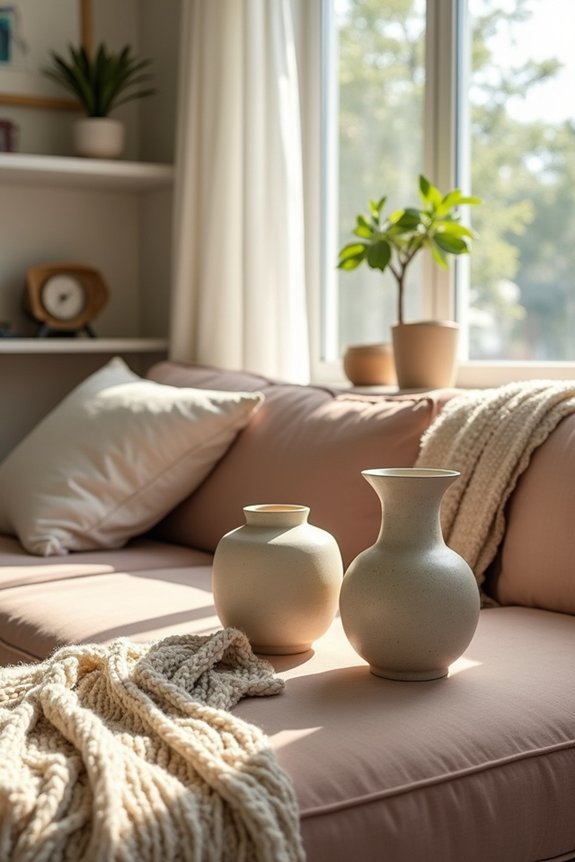
Once you’ve hidden away the excess clutter, your shelves and surfaces become prime real estate for displaying what you actually love. Curating what stays out matters in how your space functions.
Here’s what to do to keep things purposeful:
- Mix larger statement pieces with smaller objects to create visual interest without overwhelming the eye
- Use trays to corral items and add texture, contrasting rounded trays with your round coffee table for deliberate contrast
- Add greenery like faux olive trees near your TV console for dimension and height
Balance different wood tones across shelves so nothing feels visually heavy. The key? Display only what brings you joy. When you showcase pieces you genuinely love, your living room becomes a space that belongs to you.