

Sizing your ceiling fan is straightforward once you know three things.
First, figure out your cooling needs—a 270 sq ft living room typically needs 4,000–6,000 CFM for comfort.
Then measure your space and match it to the right diameter; that same room works well with 52–60 inch fans.
Finally, check your ceiling height to determine if you need a flush mount or downrod installation.
Follow these steps, and you’ll get the right fit.
Step 1: Determine Airflow Needs Based on Room Function

Why does airflow matter when selecting a ceiling fan? Because the right CFM rating keeps your living room comfortable year-round. Your airflow needs depend directly on your room size and how you use the space. For a 270 sq ft living room, you need roughly 4,000–6,000 CFM to support adequate cooling in common areas. To determine the right fan: align your blade span with room dimensions. A 52–60 inch blade span works well for this size, balancing airflow and aesthetics. Energy efficiency matters too—higher CFM lets your ceiling fan run at lower speeds for quieter operation while delivering comparable air circulation. This approach to ceiling fan sizing produces reliable results.
Step 2: Measure Your Room and Match It to the Right Diameter

Now that you’ve figured out what CFM rating your living room needs, it’s time to find the actual fan that’ll fit your space. I’ll walk you through the room measurement process.
Grab a tape measure and check your living room’s length and width, then multiply those numbers together for square footage. My 15-by-18-foot room equals 270 square feet, which helped me narrow down options.
Here’s where the diameter guide comes in handy. Most 270 square-foot spaces need 52–60 inch fans, while smaller rooms around 100–144 square feet work better with 29–42 inch blade diameter options. I matched my square footage to that quick-reference chart and found my ideal ceiling fan size.
Step 3: Verify Ceiling Height and Select Your Mount Type
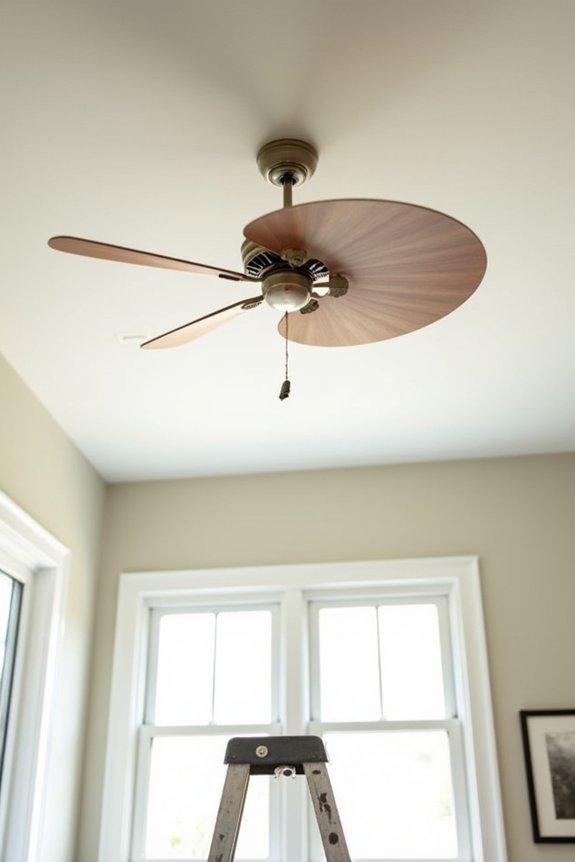
Once you’ve picked your fan size, it’s time to measure up—literally. Your ceiling height determines everything about installation. Standard 8-foot ceilings work well with flush mount options, keeping things sleek and compact. But if you’re working with higher ceilings, a downrod gives you flexibility to position the motor where it belongs.
Aim for 7 feet minimum clearance beneath your blades, though 8 feet is ideal for airflow. Non-hugger fans need 8–10 inches between blades and ceiling to prevent wobbles and strobing effects.
Got sloped or vaulted ceilings? You’ll likely need a canopy adapter or longer downrod for proper blade clearance and wobble control. It requires taking those extra measurements beforehand, which will help you avoid installation issues down the line.