

A legal bedroom isn’t just a room where you sleep—it’s gotta meet specific building codes. You’ll need at least 70 square feet with one dimension reaching 7 feet, plus a ceiling that’s 7 feet high.
Here’s the important part: you need two ways out, like a door and an egress window. Your room also needs permanent heating and proper ventilation. Miss any requirement, and appraisers won’t count it as a bedroom, reducing your home’s value. The specifics matter more than you’d think.
What Makes a Room a Legal Bedroom: The 4 Core Requirements
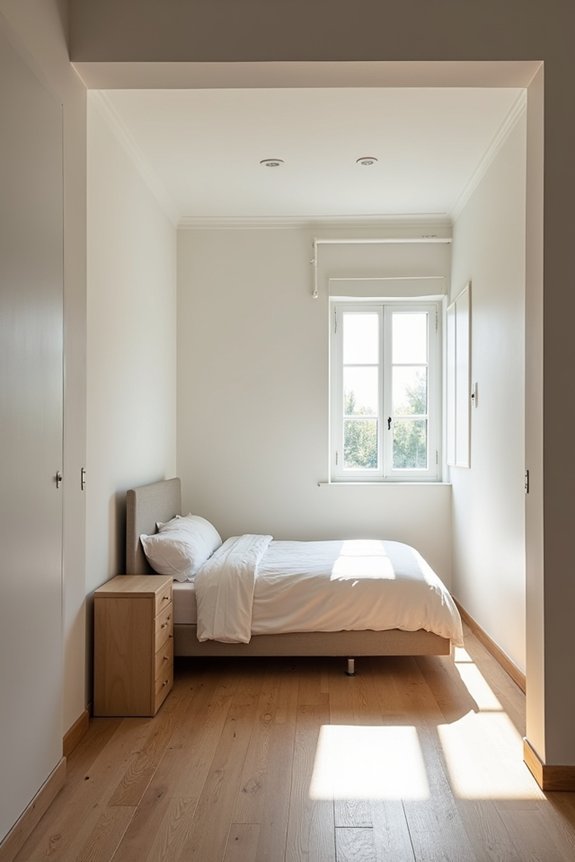
So you’re wondering what actually makes a bedroom “legal”—and honestly, I get it. Let me break down the four core requirements that matter.
First, you need adequate bedroom minimum size: at least 70 square feet of floor space with one dimension reaching 7 feet. Second, ceiling height must be at least 7 feet across most usable space.
Third, you’ll need a permanent heat source—portable heaters don’t cut it under local building codes. Finally, fire safety demands an egress window or exterior door for escape. That openable window area should measure around 5.7 square feet minimum.
These requirements aren’t arbitrary rules; they protect you. An egress window means you’re not trapped. Natural light and ventilation keep spaces healthy. Meeting these standards isn’t just legal—it’s about your safety and peace of mind.
Legal Bedroom Size and Ceiling Height Standards

What’s the magic number for a legal bedroom? The IRC requires minimum 70 square feet with at least one 7-foot dimension. I’ve learned that ceiling height matters too—you need 7 feet tall over at least 50% of usable space. Sloped ceilings work if they meet this requirement.
Key requirements for a functional bedroom:
- Adequate floor space prevents cramped conditions in your bedroom
- Proper ceiling height avoids a claustrophobic feeling when resting
- Safe egress windows in basement bedrooms protect you during emergencies
For two occupants, around 90 square feet provides comfortable living space. Basement bedrooms specifically need egress windows with sufficient openable area for fire safety and ventilation. These IRC requirements exist because your bedroom should feel like home, not just a box.
Legal Bedroom Requirements: Egress, Windows, and Safe Exits

Why do bedrooms need windows beyond just letting in light? They’re your safety exit route, honestly. You’ll find that a legal bedroom requires two means of egress—typically a door and a window opening. That window opening must meet minimum window size standards, around 5.7 square feet, so you can actually escape during emergencies.
Here’s what matters: your window needs to open directly to the outside at a required height, usually no higher than 44 inches from the ground. This makes it accessible when you need it most. The minimum window size also supports safety ventilation, keeping air flowing naturally.
I’ll be straightforward—these aren’t just bureaucratic rules. They’re about having a real exit to outside when you need one. That’s what separates a legal bedroom from any other room in your home.
Legal Bedroom Requirements: Heating and Cooling
Heating and cooling might not sound like bedroom legal requirements, but they’re actually important to making a room officially habitable. I’ve learned that most building codes require a permanent heat source—space heaters just won’t cut it legally. Your bedroom needs proper HVAC integration with the rest of your home’s system, and that’s non-negotiable for code compliance.
Most building codes require a permanent heat source for bedrooms—space heaters won’t meet legal habitability standards.
Here’s what creates that minimum climate control:
- A permanent heating system connected to your home’s main HVAC
- Cooling provisions through windows or integrated air conditioning
- Electrical and lighting standards that support safe operation
Window cooling works in some areas, depending on local codes. You’ll also need proper electrical outlets and lighting to maintain that habitable space year-round. These requirements aren’t just bureaucratic—they’re protecting your family’s comfort and safety.
Why Accurate Bedroom Classification Affects Appraisals and Resale Value
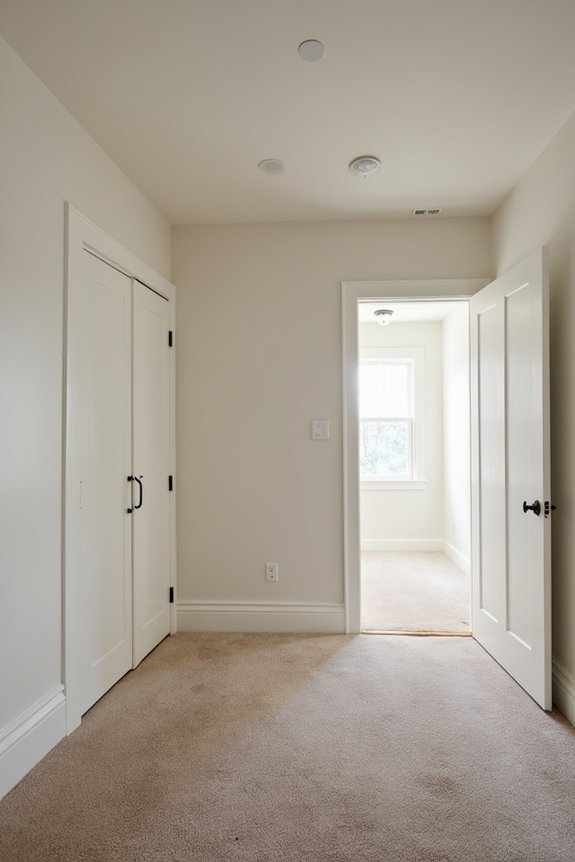
Whether a room legally counts as a bedroom can significantly affect your home’s value. When researching appraisals, I found that proper bedroom classification directly impacts marketability and resale value.
Appraisers follow IRC guidelines closely. They check minimum square footage, ceiling height, egress windows, and heating sources. A room missing any requirement—say, an inadequate egress window or lacking permanent heating—won’t count as a legal bedroom, even if it functions like one.
This matters considerably. Each legitimate bedroom increases your home’s appraised value. Potential buyers understand this too. They’ll pay premium prices for homes with accurate bedroom counts.
I learned that skipping proper bedroom classification carries real risk. Honest listings build trust and attract serious buyers willing to pay fairly.