I’ve found that the best TV spot depends on your room’s unique layout, lighting, and how you actually use the space.
Wall-mounting saves floor space and keeps pathways clear.
Above the fireplace creates a natural focal point, while corners work great for tight rooms.
Alcoves offer intimate viewing, and front-of-couch placement keeps things straightforward.
Off-center spots let architectural features share attention.
The key? Match your TV’s size to seating distance, minimize glare, and keep traffic flowing smoothly.
Stick around to discover which setup works best for your living room.
Start With Your Room’s Layout: Size, Light, and Focal Points
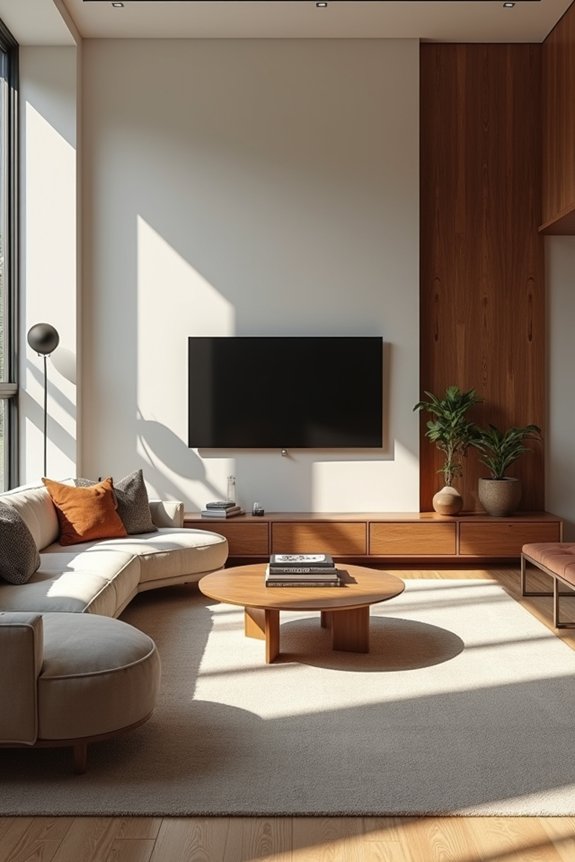
Where should your TV actually go? I’d start by honestly assessing your room’s layout and size. You don’t want an oversized screen overwhelming your space or blocking natural traffic flow.
Assess your room’s layout and size honestly to avoid an oversized TV overwhelming your space or blocking natural traffic flow.
Next, I consider light carefully. Glare from windows can really wash out your picture during daytime viewing, so positioning matters. I’ve learned this the hard way after placing a wall mount in direct sunlight.
Then I identify your focal points. Is it a fireplace, your seating area, or existing wall art? Your TV should either complement these or work alongside them, not compete.
Finally, I think about viewing distance from your main seating spot. This determines comfortable screen size. Good layout planning means your TV enhances the room without disrupting how you naturally move through it.
Wall-Mounted: Saving Floor Space Without Sacrificing Views
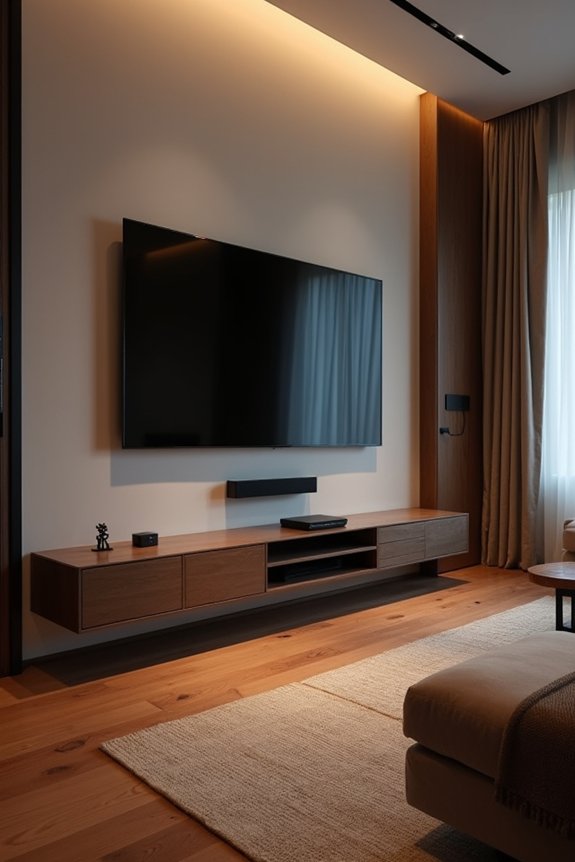
Wall-mounting your TV opens up floor space and lets you arrange furniture however you’d like, but getting it right takes a bit of planning. I’ve found that nailing the height and angle matters—you’ll want it at eye level when you’re sitting down, and a full-motion mount lets you adjust it for different seating spots. Then there’s the cable situation, which honestly looks better when you hide those wires behind the wall or use some cable trunking rather than letting them dangle everywhere.
Height and Viewing Comfort
How high should you actually mount your TV? Getting your viewing height right matters for comfort. You’ll want the center sitting slightly below eye level when you’re seated comfortably. This positioning reduces neck strain during long viewing sessions.
Think about your typical viewing distance from the couch. The bottom third of your screen should align with eye level for ergonomic comfort. Wall mounting lets you adjust swivel angles to accommodate different seating spots in your room.
This setup also keeps your space clutter-free. You can hide cords behind the TV or within the wall itself, maintaining a clean appearance. Proper mounting height also prevents obstruction of fireplaces or other room features.
Cable Management Solutions
One of my favorite things about mounting a TV on the wall is how it completely eliminates the cable mess that’d otherwise take over your living room. I’ve learned that a wall mount isn’t just about saving floor space—it’s an effective solution for cable management.
When you choose mounting options, you can conceal cables behind the TV or use an in-wall cable system. Both approaches deliver serious clutter reduction. I route my cords along the wall’s edge or hide them entirely, which keeps my space looking organized and neat.
The clean look you get is worth the effort. Your living room goes from cable-tangled chaos into something you’ll want to show friends. Plus, hiding wires makes rearranging furniture way easier down the road.
Mount Selection and Installation
Getting your TV securely fastened to the wall is essential. I’d recommend investing in a sturdy swivel mount that lets you adjust your viewing angle effortlessly. This flexibility means everyone in your living room gets a comfortable view, and you’re not stuck staring at an awkward angle permanently.
When installing, position the screen’s bottom third near eye level to reduce neck strain during extended viewing sessions. A quality wall mount supports your TV while enabling tilting and swiveling adjustments. Wall-mounted setups also free up floor space, making your room feel less cramped.
Consider cable concealment as well. Running wires behind the wall or through your mount keeps everything looking neat and organized, rather than cluttered with visible cords.
Above the Fireplace: When Style and Function Align
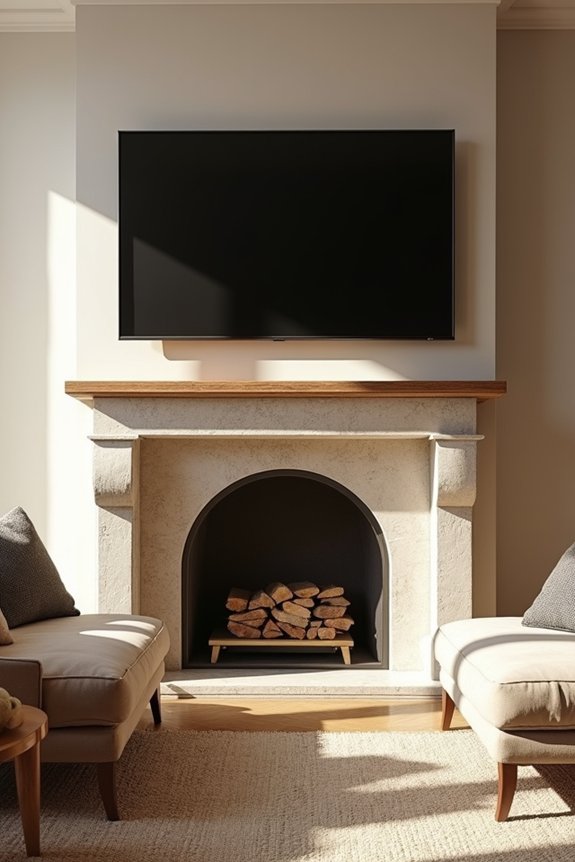
Why’s the space above your fireplace so tempting for a TV? It’s the ultimate focal point that saves precious floor space. A wall-mounted TV here creates that clean, centered look most people want in their living rooms.
The trick? Getting your mounting height just right. You’ll want the screen’s center slightly below eye level when you’re sitting down. This prevents neck strain and keeps viewing comfortable for hours.
What works well: cord concealment behind the mount makes everything look polished. Consider a motorized mount if you’re worried about viewing distance or fireplace obstruction. It lets you adjust angles without rearranging furniture.
The space above your fireplace is both practical and visually appealing—style and function working together.
In an Alcove: Creating an Intimate Viewing Nook
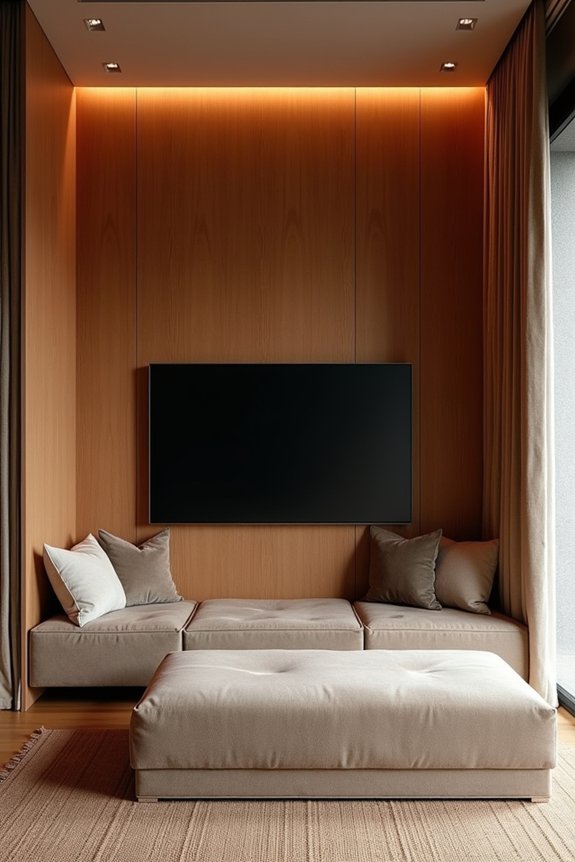
you’ll want to consider your viewing distance and TV size carefully. A smaller screen often feels more proportional in an alcove. The real value comes from integrating it with your surrounding decor through paint or wallpaper that matches your room’s style.
Want to downplay the TV itself? I use free-standing lamps or thin curtains to conceal it. This approach helps with decor alignment. Your alcove becomes an architectural feature rather than a focal point dominating the room.
Off-Center: Letting Architectural Features Shine
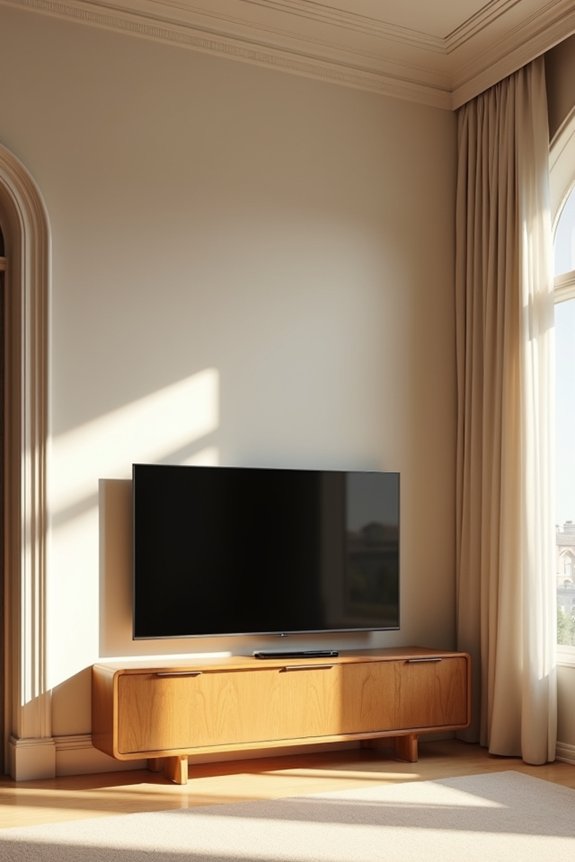
While an alcove gives your TV a cozy home, moving it off-center opens up different possibilities entirely. I’ve found that placing your TV off-center lets architectural features like fireplaces and large windows become focal points alongside your screen. This approach keeps conversation and connection as your room’s heart, not just the television.
A swiveling mount helps you adjust viewing angles whenever you need them. When I position my TV near a fireplace built-in, I maintain reasonable height while preserving sightlines for everyone. The key is paying attention to traffic flow and surrounding furniture to achieve visual harmony. You’ll want to make sure people can move freely without awkward angles. This layout takes thoughtfulness, but it creates a balanced, welcoming space where everyone belongs.
In Front of the Couch: The Straightforward Classic
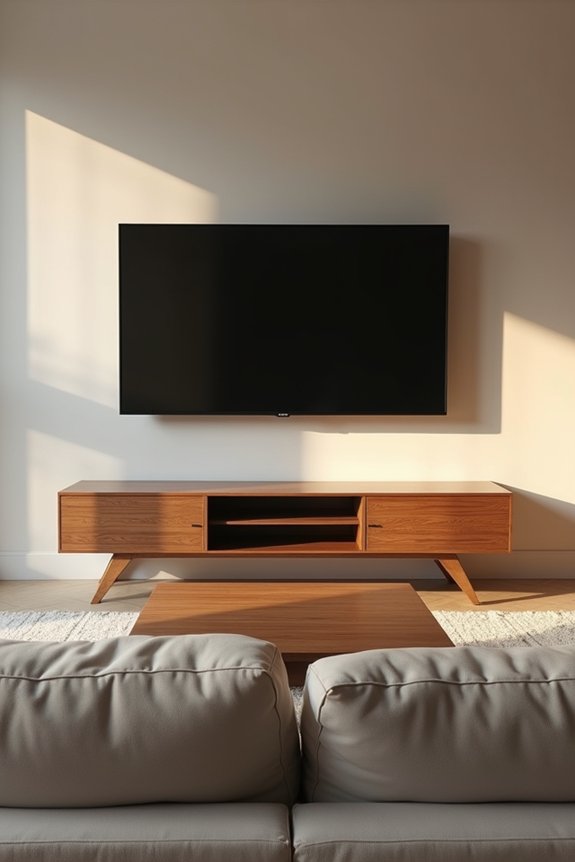
What’s the most natural spot for a TV? I’d argue it’s right in front of your couch. This classic TV placement creates an obvious focal point and comfortable viewing for everyone gathered around.
The most natural spot for a TV is right in front of your couch, creating an obvious focal point for comfortable viewing.
Here’s why I prefer this straightforward approach:
- Direct alignment matches seated eye level for most viewers
- Media console storage keeps gaming consoles and sound systems organized
- Easy reconfiguration lets you adjust your living room layout anytime
The setup does require attention though. I’ve learned that optimal viewing distance matters, and glare from windows can affect the experience. You’ll want to position your couch accordingly and maybe add some blinds.
Using slimline floating units maintains an open, spacious feel while anchoring everything nicely. This arrangement really does encourage that relaxed movie-night vibe we all want.
In a Corner: Making Tight Spaces Work
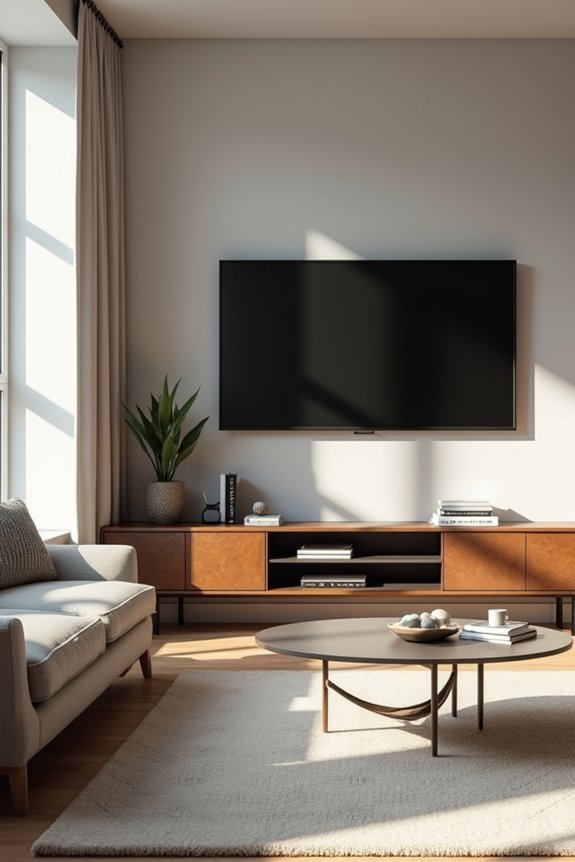
If your living room’s more shoebox than showroom, the couch-facing setup won’t cut it. Corner placement makes tight spaces more functional. A wall-mounted TV in the corner reduces central dominance and draws focus outward, which feels less cramped.
Here’s what works: position your corner mounts at proper eye level and measure your viewing distance carefully. I learned this the hard way after straining my neck for weeks. Darker corners naturally minimize glare, protecting your comfort during movie marathons.
The practical benefit? Space optimization. That freed-up floor space lets you add storage furniture or display pieces along opposite walls. Corner mounts handle various TV sizes when viewing angles align with adjacent seating.
Just keep clear pathways open. Your living room should feel welcoming, not like an obstacle course.