
Sewage smells aren’t just unpleasant—they’re actually dangerous. You’re breathing in hydrogen sulfide and other gases that irritate your eyes, nose, and throat. Prolonged exposure causes dizziness, headaches, and nausea, especially if you have asthma or respiratory issues. Bacterial pathogens in sewer gas also increase infection risks. The good news? Most problems stem from simple fixes like dried P-traps or blocked vents. But if symptoms persist or multiple fixtures smell, you’ll need professional help to diagnose what’s really happening in your pipes.
What Sewer Gas Does to Your Body
Why does that sewage smell in your bathroom bother you so much? Well, it’s not just unpleasant—it’s actually your body’s way of telling you something’s off. When you’re exposed to sewer gas, you’re breathing in hydrogen sulfide and other compounds that irritate your eyes, nose, and throat. Prolonged exposure can trigger dizziness, headaches, and nausea. If you’re dealing with asthma or other respiratory conditions, sewer gas exposure really impacts your health. These gases degrade your indoor air quality over time. Bacterial pathogens in the mix pose infection risks, especially if your immune system’s already stressed. Even low-level exposure matters, affecting your respiratory function and comfort at home.
Where Sewer Gas Leaks Come From
Now that you know how sewer gas affects your body, let’s figure out where it’s actually coming from in your bathroom. Sewer gases escape through several common sources. Your toilet wax seal might’ve deteriorated, creating gaps where gases seep through. Dried-out P-traps under sinks lose their water barrier, allowing gases to rise back up. Blocked or damaged vent pipes can’t properly channel gases outside, so they circulate indoors instead. Cracked sewer lines introduce widespread odors throughout your home. Missing cleanout plugs also provide direct pathways for gases. Once you identify the source, you’re halfway to solving the problem.
Dizziness, Headaches, and Nausea: Sewer Gas Warning Signs
When you’re feeling lightheaded after a shower or getting a headache that won’t quit near your bathroom, sewer gas might be the culprit. I’ve noticed that dizziness and headaches often worsen when multiple fixtures run simultaneously. That’s when sewer gas concentrations spike.
| Symptom | Cause | When It Happens |
|---|---|---|
| Dizziness | Hydrogen sulfide exposure | Poor ventilation periods |
| Headaches | Methane gas buildup | Multiple fixture use |
| Nausea | Combined gas exposure | High concentration levels |
If you’re experiencing these warning signs, you’re not alone. People with respiratory conditions feel symptoms more intensely. Even low concentrations irritate eyes, nose, and throat in poorly vented spaces. I’d recommend getting professional inspection promptly if symptoms persist. Pay attention to these signals—your body’s telling you something needs attention.
Why Hydrogen Sulfide Buildup Is Especially Dangerous
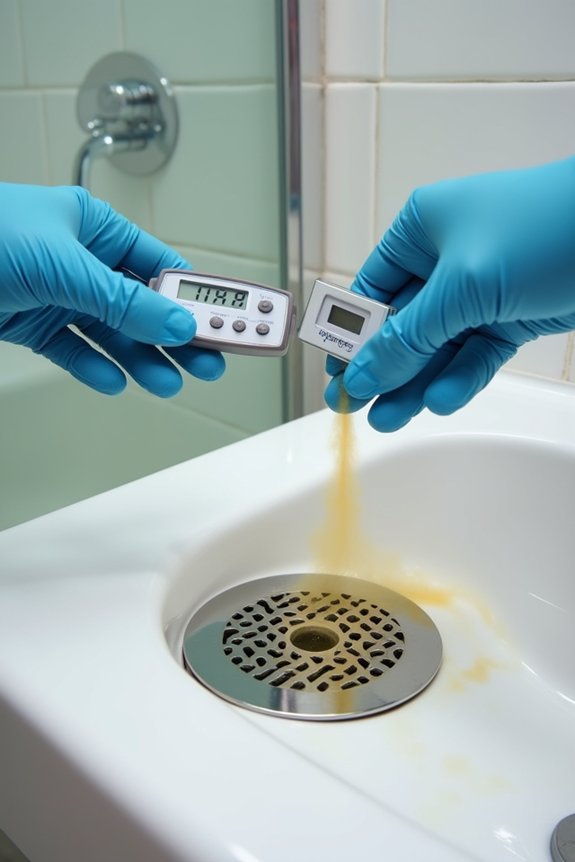
Just how bad can hydrogen sulfide get in your bathroom? It’s more serious than you might think. This toxic gas accumulates quickly in confined spaces without proper ventilation, and that’s where things get risky for you and your family.
Here’s what happens: hydrogen sulfide builds up when sewer gases aren’t vented correctly. Even at moderate levels, it causes real health risks like headaches and dizziness. At higher concentrations, you’re looking at respiratory issues and nausea that’ll knock you sideways.
Immediate ventilation is your best defense. Open windows, run exhaust fans, and don’t ignore that rotten egg smell. If symptoms persist despite improved ventilation, call a professional. Your bathroom shouldn’t be making you sick.
Common Plumbing Issues That Trigger Sewage Smells
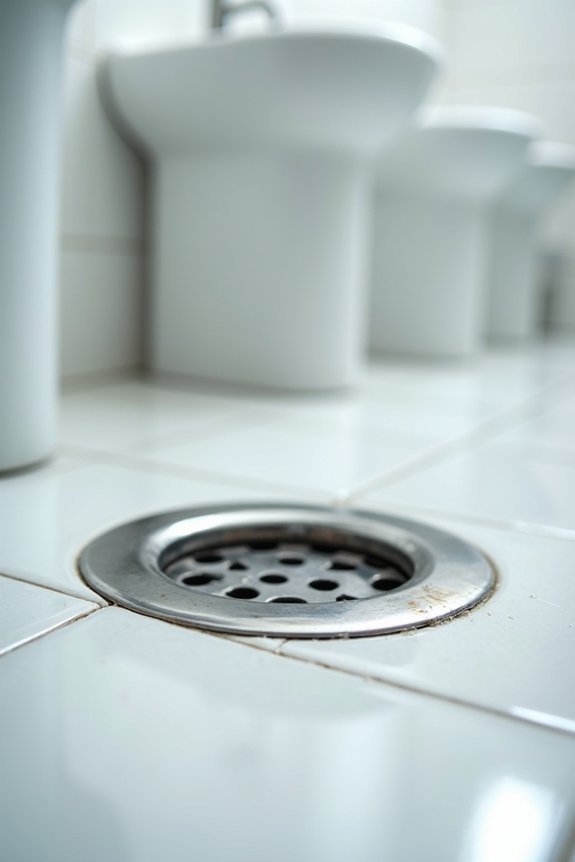
What’s actually causing that sewage smell in your bathroom? I’ve found it’s usually one of several common plumbing culprits.
What’s actually causing that sewage smell in your bathroom? I’ve found it’s usually one of several common plumbing culprits.
Clogged drains trap hair, soap scum, and debris, which harbor bacteria and create those nasty odors. Dead-water traps in infrequently used fixtures lose their water seal, allowing sewer gases to escape directly into your space. It’s frustrating when you realize a simple fix—running water—could’ve prevented it.
Blocked vent pipes can’t properly ventilate gases, so they circulate back inside instead. I’ve also seen damaged toilet seals, like worn wax rings, leak sewer gases at the base. Then there’s the bigger issue: sewer line problems including breaks, blockages, or tree-root intrusions that back up odors throughout your entire bathroom.
Identifying which issue you’re facing helps determine your next move.
When a Sewage Smell Signals a Serious Problem
Most bathroom odor issues I’ve mentioned are fixable with basic maintenance, but some situations demand professional attention. Here’s when you’ll want to call in the pros.
If you’re noticing persistent smells despite refilling your P-trap or checking a blocked vent stack, you’re likely facing a main sewer line problem. This isn’t something you can DIY away. Multiple fixtures releasing odors simultaneously? That’s your red flag. You’re probably dealing with serious system failure that requires professional assessment and specialized equipment like sewer cameras.
Hydrogen sulfide gas from damaged sewer lines poses real health risks—headaches, dizziness, and respiratory irritation aren’t fun. When odors linger despite your efforts, don’t wait. Getting professional help protects both your health and your home’s structural integrity before things get worse.
What to Do Right Now If You Smell Sewer Gas
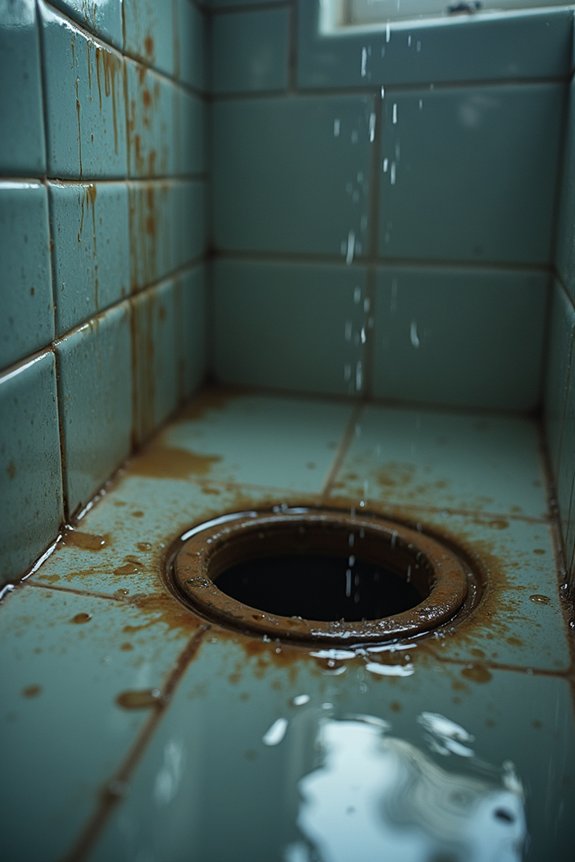
When you catch a whiff of sewer gas in your bathroom, pinpoint where it’s coming from first—check your toilet, drains, and vents since the source matters for your next move. Right now, crack open those windows and flip on your exhaust fan to clear the air, then walk through these quick fixes before you need to call someone. If the smell sticks around after you’ve tried refilling dry traps and checking for leaks, or if you’re hearing gurgling sounds, that’s your signal to contact a licensed plumber who can dig deeper.
Identify The Odor Source
Where’s that smell coming from? I’d start by checking three common culprits in your bathroom.
First, look at your P-trap—that curved pipe under your sink. If you haven’t used a fixture in weeks, the water barrier dries up. Just run water through unused drains to restore that protective seal.
Next, inspect your toilet’s base. I’d look for pooling water or damp spots around it, then gently rock it. A compromised wax seal lets sewer gas seep indoors.
Finally, listen for gurgling sounds in your drains. That usually means your vent—the pipe that lets gases escape safely—is blocked. If you hear that, you’ve probably found your problem.
Pinpointing the source makes fixing it way easier.
Immediate Safety Actions
Once you’ve figured out where that smell’s coming from, your next move depends on how bad it is.
If you’re experiencing dizziness, headaches, or shortness of breath, leave immediately. Sewer gas exposure isn’t something to brush off. Here’s what to do:
- Open all windows and turn on exhaust fans for better ventilation
- Shut off gas appliances and electrical switches near the odor source
- Avoid matches, lighters, or open flames until it’s confirmed safe
- Evacuate others if the smell’s strong or won’t go away
- Contact emergency services or a licensed plumber right away
Don’t attempt DIY fixes on gas lines or sewer problems yourself. That’s beyond what most homeowners should handle. Professional assessment keeps everyone safe. Acting quickly in this situation is the right approach for protecting your household.
Contact Professional Help
How quickly should you call a plumber? Don’t wait around—contact one today if you’re smelling sewer gas. I’ve learned that lingering odors signal serious problems like cracked sewer lines or failed seals. Here’s when you need emergency help:
| Warning Sign | Action |
|---|---|
| Strong sewage smell near toilet | Call immediately |
| Backups or gurgling sounds | Schedule emergency service |
| Multiple affected fixtures | Contact professional today |
| Damp spots or pooling water | Diagnostic needed right away |
| Odors persist after DIY attempts | Don’t delay further |
Before calling, jot down when the smell started and which fixtures are affected. Mention any DIY steps you’ve tried. If you’re in Massachusetts or Connecticut, companies like Noonan Energy offer same-day emergency plumbing with camera inspections and hydro-jetting. They’ll diagnose what’s happening and fix it properly.
Is It Safe to Stay Home During Investigation?
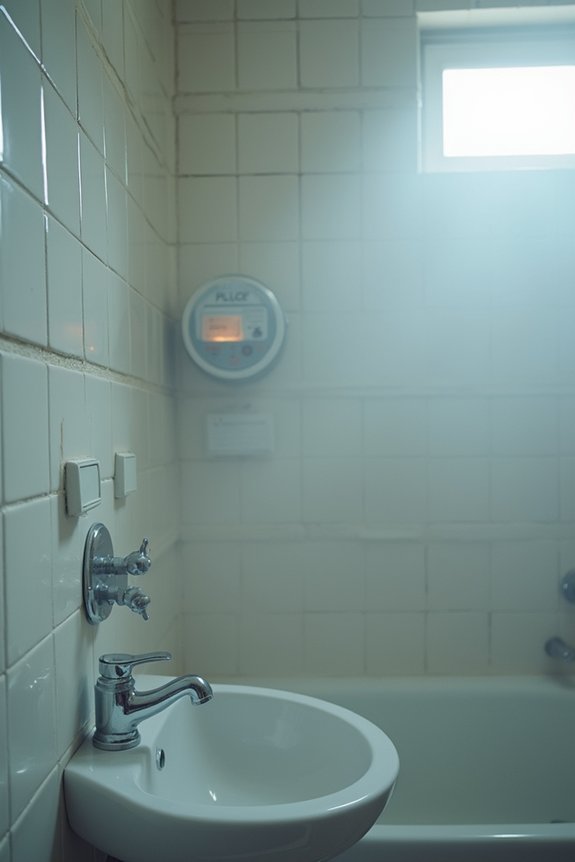
Should you stay put while someone investigates that sewage smell? I’d honestly recommend limiting your time in affected areas. Sewer gases like methane and hydrogen sulfide can cause dizziness and headaches, so professional evaluation matters. Here’s what I’d consider:
Limit your time in sewage-affected areas—sewer gases like methane and hydrogen sulfide can cause dizziness and headaches, so professional evaluation matters.
- Open windows wide to improve ventilation throughout your home
- Avoid the smelly area if you’re experiencing nausea or eye irritation
- Stay in well-ventilated rooms while waiting for the plumber
- Keep kids and pets away from suspected problem zones
- Don’t smoke or use open flames near sewer gas sources
If a vent blockage or pipe issue exists, gas concentrations could spike indoors. You’re not being paranoid by stepping outside for fresh air. Think of it as smart precaution. Most investigations wrap up quickly, and you’ll feel relieved knowing what’s happening.
What a Professional Plumber Will Look For
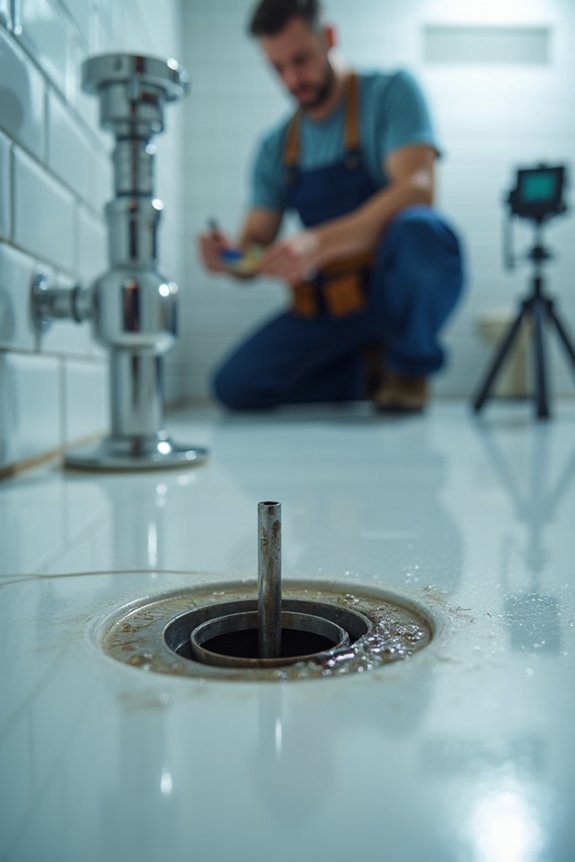
Now that you’ve got some breathing room and fresh air flowing through your home, it’s time to figure out what’s actually causing that smell. Here’s what a plumber checks first.
| Problem | What Happens | Why It Matters |
|---|---|---|
| Dry P-trap | Water barrier evaporates | Sewer gases escape upward |
| Blocked vent pipes | Air can’t flow properly | Odors back up into bathroom |
| Damaged wax seal | Leaks around toilet base | Gases seep through gaps |
Your plumber inspects these culprits systematically. They’ll examine your dry P-trap and check those vent pipes for blockages. They’ll assess your toilet’s wax seal too. If everything looks fine there, they’ll investigate your main sewer line using camera inspections. They’re hunting for root intrusion, structural damage, or blockages. They’ll also look for wastewater backup signs like pooling or gurgling sounds. Think of them as detectives solving your bathroom mystery.
Stop Sewer Smells Before They Happen
I’ve found that stopping sewer smells before they start beats dealing with them later, and it’s easier than you’d think. You’ll want to focus on three key things: keeping your drains clean, making sure your pipes have proper ventilation, and staying alert to any changes in your plumbing system’s behavior. Let me walk you through each one so you can keep your bathroom smelling fresh.
Regular Drain Cleaning Routine
The best way to avoid sewage smells is honestly the simplest: don’t let your drains get gross in the first place. I’ve learned that staying ahead of problems beats fixing them later.
Here’s what I do to keep my drains fresh:
- Run water daily in every bathroom drain to keep P-traps filled and prevent sewer gas
- Clean drains monthly or quarterly, depending on usage
- Flush baking soda and hot water monthly, then rinse with vinegar and boiling water
- Inspect vent openings during maintenance for proper ventilation
- Call a plumber if slow drains or persistent odors return
Regular drain cleaning removes hair, soap scum, and grease buildup before they cause problems. I’ve found that this routine keeps odors away and prevents those frustrating backups that nobody wants dealing with.
Maintain Proper Pipe Ventilation
Why do some bathrooms smell like sewage while others stay fresh? The answer lies in your vent pipe system.
Proper plumbing ventilation is your home’s best defense against sewer odors. Your vent pipe directs gases safely outside, preventing them from circulating indoors. When blockages from leaves, debris, or ice form, your venting stops working effectively.
What to watch for in your home:
| Warning Sign | Cause | Solution |
|---|---|---|
| Gurgling sounds | Blocked vent pipe | Professional clearing |
| Sewer smell indoors | Damaged plumbing ventilation | Repair inspection |
| Slow drains | Debris buildup | Routine maintenance |
| Bubbling toilets | Vent obstruction | Snake cleaning |
Maintaining clear vent pipes prevents most sewer smell problems before they start. Regular inspections catch issues early, protecting your family’s comfort and health.
Monitor Plumbing System Health
Once you’ve tackled your vent pipes, the real work begins—keeping your whole plumbing system healthy so odors don’t creep back in. I’ve learned that consistent monitoring catches problems before sewer gases escape into your home.
Here’s what I focus on:
- Run water in rarely-used fixtures weekly to maintain P-trap seals
- Schedule drain cleanings annually to prevent hair and soap buildup
- Check fixtures regularly for hidden leaks that worsen odors
- Track odor changes after maintenance to spot recurring issues
- Consider professional sewer-camera inspections if multiple drains show trouble
Plumbing system health isn’t glamorous, but it’s necessary. When you stay proactive with odor monitoring, you’re protecting your home’s air quality and catching bigger problems early. This approach keeps sewer gases where they belong—away from you.
Long-Term Health Risks From Living With a Sewage Smell
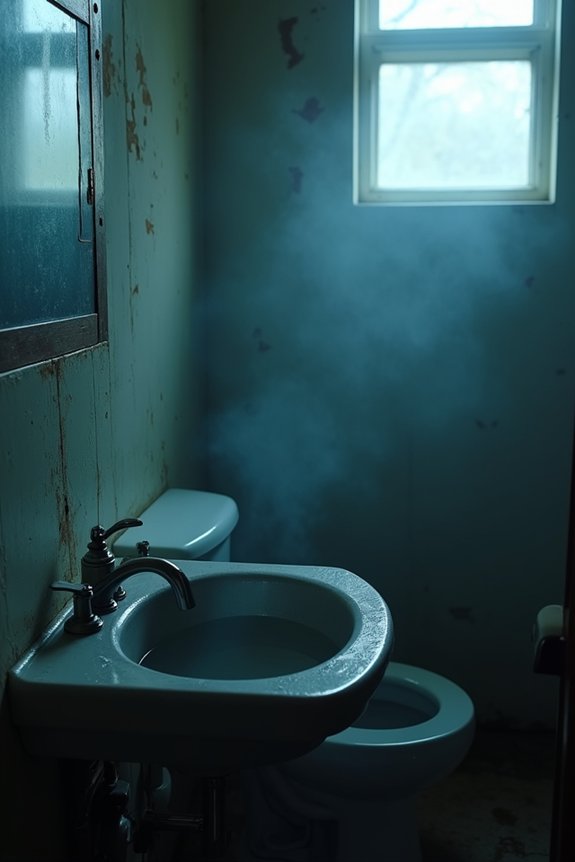
How long can you really ignore that sewage smell in your bathroom before it starts affecting your health? I’ll be honest—longer than you’d think, but not forever.
Living with persistent sewer odors exposes you to hydrogen sulfide and methane gases that gradually degrade your indoor air quality. You might notice headaches, dizziness, or fatigue creeping in without connecting them to that lingering smell. Over time, these long-term health risks compound.
Chronic exposure irritates your eyes and throat while aggravating respiratory conditions like asthma. Airborne bacteria from cracked pipes or failed traps increase infection risk. The worst part? You’re breathing contaminated air daily without realizing it’s the source.
I’ve learned that addressing the smell early—through regular plumbing checks and trap maintenance—prevents these health issues from developing. Don’t wait until your body tells you something’s wrong.