

Whether you can keep goats in your backyard depends on where you live—some cities allow them, others ban them completely. I’d start by calling your local animal control office to ask about ownership rules in your area. You’ll also need to check your property deed for any livestock restrictions and confirm your lot’s zoning type with your city’s Development Services. Once you’ve verified it’s legal, you’ll find out what permits, space requirements, and housing standards apply to your specific situation.
Where You Can Keep Goats (and Where You Can’t)
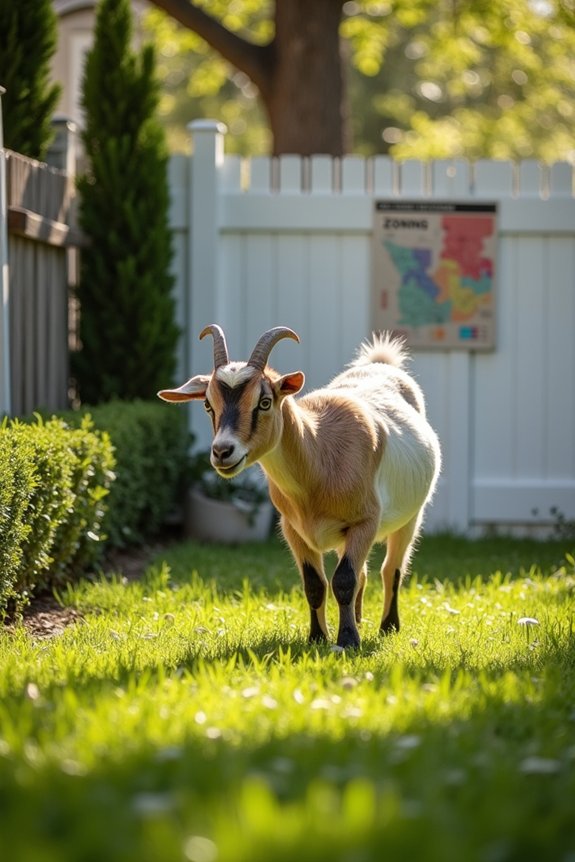
There’s the thing about backyard goats: where you can actually keep them depends almost entirely on local rules. I’ve learned this the hard way by chatting with neighbors who thought they were in the clear.
Some cities welcome goats with open arms. Others? They’ll shut you down fast. Your local laws might restrict goats by lot size, zoning requirements, or demand permits and licensing. Some places prohibit them entirely.
Here’s what I do: I check my specific city or county regulations first. Unincorporated areas often have different rules than nearby cities, which catches people off guard.
Before bringing goats home, verify sanitation, setback, and housing requirements in your local code. It’s boring paperwork, but it saves you serious headaches later.
How to Find Your City’s Specific Goat Ordinances
So where do you actually start looking for your city’s goat rules? I’d suggest searching your local municipal code under Animals, Fowls, or Livestock sections. That’s where cities typically stash their ordinances about keeping goats.
Next, I’d contact your city’s Development Services or Animal Control directly. They’ll give you the exact details—setback distances, herd size limits, and permit requirements for your specific zone. This step matters; I learned this the hard way.
Some cities, like San Diego, allow goats with conditions. You might keep two miniature goats if your shed meets setback requirements. Others have stricter rules or ban them entirely.
Your property zone matters too. Check whether you’re in a residential area where ordinances even permit goats. Getting answers upfront saves frustration later.
Lot Size, Zoning, and Property Setback Requirements
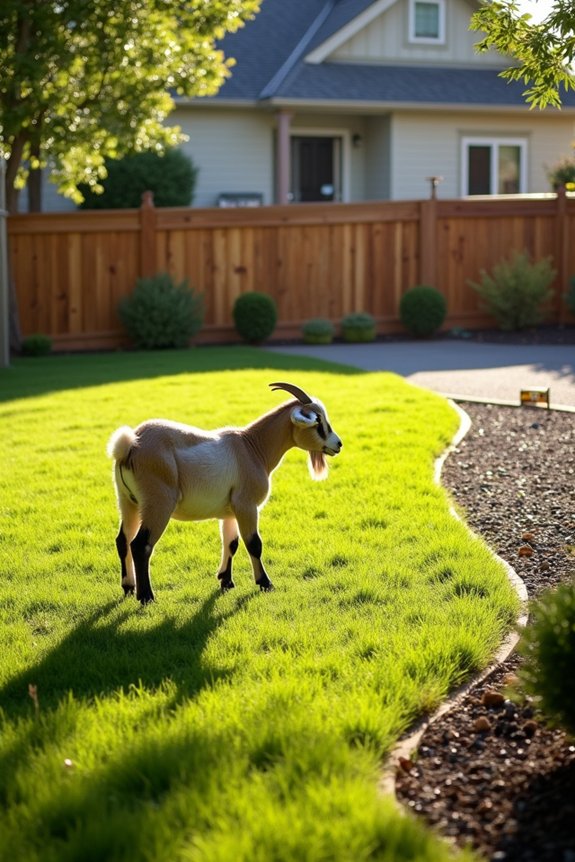
Once you’ve tracked down your city’s goat rules, you’ll need to check your specific lot. Your zone type determines whether goats are even allowed. Then comes the next step—measuring setbacks.
Here’s the thing: your goat shed can’t sit wherever you want. Most areas require structures like a 5-foot side setback and 13-foot rear setback, though your local rules might differ. I’d grab your property deed or use your city’s Zoning Map application to find exact distances.
Lot size matters too. Some cities only permit goats on larger properties. San Diego, for instance, allows two miniature goats for single-family residents with specific enclosure setback requirements.
Don’t guess. Call your Development Services Department directly. They’ll confirm your zone type, setback dimensions, and whether you’re in city limits or unincorporated county land.
Housing and Enclosure Standards Your Goats Need

How much space do your goats actually need? You’ll want to provide at least 400 square feet of predator-proof outdoor area surrounded by a sturdy 5-foot fence. Inside, your goat enclosure should be secure from outside threats and easy to clean.
Goats need at least 400 square feet of predator-proof outdoor space with a sturdy 5-foot fence and a secure, easy-to-clean enclosure.
For housing standards, I’d recommend a shed that’s at least 10 square feet, predator-proof, vented, and waterproof. Here’s what I’ve learned: avoid fully enclosed structures because moisture buildup causes serious health problems. Your goats need dry, well-drained shelter with proper airflow.
Keep your shed outside required setbacks. The fence itself matters too—design it so you can access it easily for maintenance. These housing standards aren’t just regulations; they’re what your goats need to thrive.
Goat Breed Restrictions and Required Neutering/Dehorning
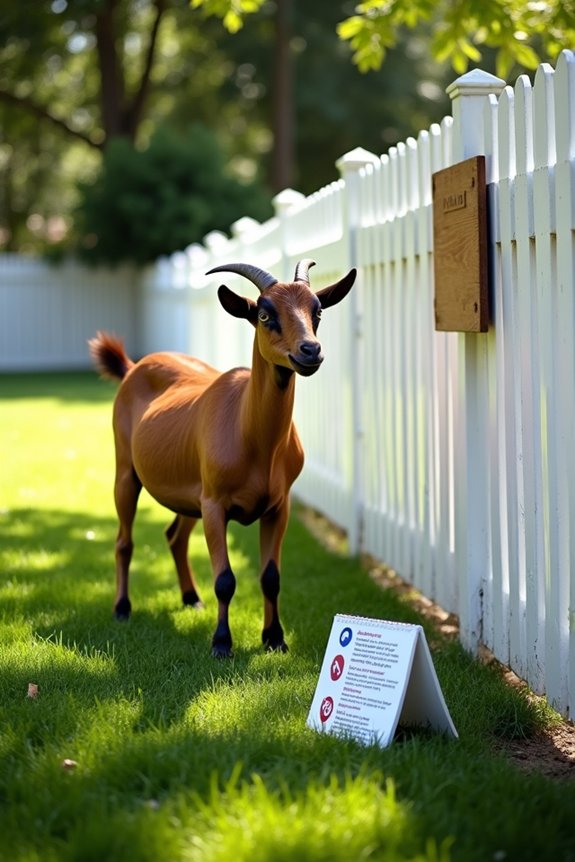
If you’re thinking about keeping goats in your backyard, I’ve got to be straight with you—Seattle’s got pretty specific rules about which breeds you can actually own. You’ll need to stick with pygmy, dwarf, or miniature goats, and here’s the part that trips up a lot of people: all your male goats have to be neutered, and you’ll need to have any kids dehorned when they’re young. It’s not the most fun part of goat ownership, but these requirements exist to keep your neighbors happy and your goats safe.
Miniature Breed Requirements
The breed you pick matters way more than you’d think when raising backyard goats. I learned this the hard way before understanding miniature breed requirements.
Here’s what you need to know about miniature goats:
- Only pygmy, dwarf, or miniature goat breeds qualify for backyard programs in most areas
- All male goats must be neutered to meet local regulations
- Young goats require disbudding (dehorning) for safety and health standards
These requirements exist for good reasons. Smaller goat breeds fit better in residential spaces. Neutering prevents aggressive behavior and reduces odors. Disbudding prevents injuries to you and other animals.
I’ll be honest—these steps take effort upfront. But they’re non-negotiable if you want legal, responsible goat ownership. Understanding these requirements beforehand saves headaches later.
Neutering Male Goats
Most urban areas require you to neuter your male goats—and honestly, it’s one of those rules that makes sense once you understand why. Neutering prevents unwanted breeding and reduces aggression, which keeps your urban goats and neighbors happier. I’ve learned that intact males develop a strong odor and become territorial, behaviors that don’t work well in tight neighborhoods.
Your city’s ordinance likely bundles this requirement with other practices like disbudding and breed restrictions. Before you bring goats home, I’d strongly recommend checking your local city code directly. Requirements vary significantly between municipalities, and you’ll want to know exactly what’s expected.
Talk to your veterinarian about timing too. Getting ahead of regulations prevents headaches later and shows you’re a responsible goat keeper.
Dehorning Young Kids
When should you actually disbud your goat kids? It’s earlier than you might think. Most backyard-goat regulations require dehorning within the first few weeks of life. Here’s what works best:
- Disbud kids between 3-10 days old when horn buds are still soft
- Use a dehorning iron or caustic paste following veterinary guidance carefully
- Provide pain relief and monitor the area daily for infection
Dehorning young is gentler on the animals than waiting. Removing those tiny horn buds prevents serious injuries later. Most cities mandate this for backyard goats anyway. Getting it done early means your kids heal faster and you’ll stay compliant with local regulations. It’s worth the effort upfront.
Keeping Your Goats Healthy and Your Property Safe
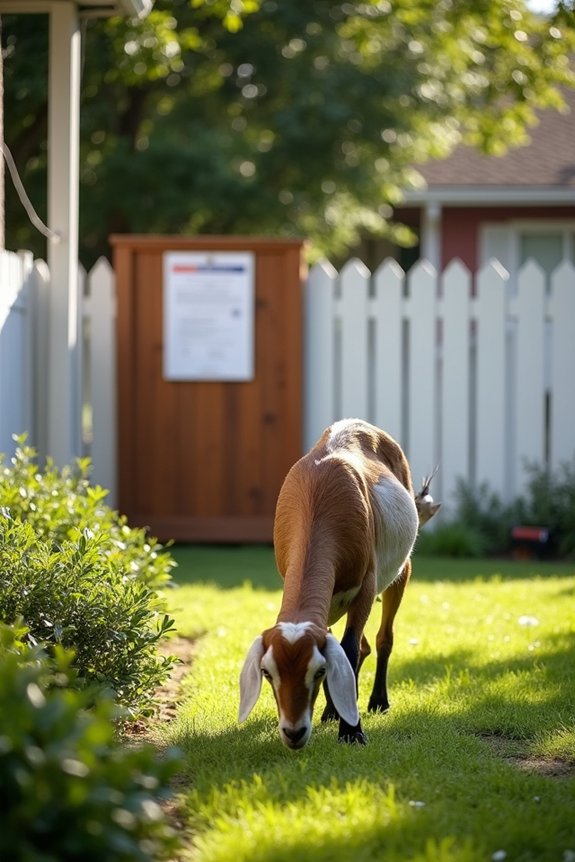
Once you’ve got your goats home, I’ll be honest—keeping them healthy and safe requires some real attention to detail. You’ll need to stay on top of veterinary care, set up solid defenses against predators, and keep your property clean enough that diseases don’t spread through your herd. Let me walk you through what actually matters in these three areas, because skipping any one of them can turn your backyard project into a frustrating mess pretty fast.
Health Monitoring And Veterinary Care
Because goats can hide illness pretty well (I’ve learned this the hard way), staying on top of their health means catching problems before they get serious. I’ve found that regular veterinary care and vigilant monitoring help keep my herd thriving.
Here’s what I prioritize for solid goat health:
- Schedule annual herd health testing and routine hoof trimming to prevent lameness and disease
- Watch daily for illness signs like loss of appetite, lethargy, or coughing
- Consult your veterinarian promptly whenever something seems off
How important it is to catch issues early cannot be overstated. When you’re part of the backyard goat community, you realize that preventative veterinary care saves money and heartache down the road. Your commitment to their wellness keeps everyone—you and your herd—safe and healthy.
Predator Protection Strategies
If you’ve kept goats for more than a week, you’ve probably realized they’re basically delicious snacks to most predators. I learned this the hard way when a coyote tested my fence at 2 AM.
Strong goat fencing is your first line of defense. I use five-foot cattle panels topped with additional barriers because predators are creative. Here’s what I’ve found works:
| Protection Method | Effectiveness | Effort Level |
|---|---|---|
| Guardian dogs | High | Medium |
| Secure night shelter | High | Low |
| Predator-proof fencing | Very High | High |
I also keep my enclosure dry and clean to avoid attracting hungry visitors. Regular monitoring catches vulnerabilities like gap openings or weak latches before disaster strikes. Consider adding guardian animals like donkeys or llamas too—they’re protective neighbors.
Sanitation And Safety Practices
While predators test your fences at night, the real threat to your goats’ health often comes from something less dramatic: dirty living conditions. I’ve learned this the hard way, and sanitation makes or breaks backyard goat keeping.
Here’s what I do to keep things safe:
- Wash my hands and change clothes after handling goats or their areas
- Clean housing regularly to reduce bacteria and disease risks
- Compost manure properly so it generates enough heat to kill harmful pathogens
You’ll also want to keep water sources away from goat areas. Bacteria in their intestines and urine can cause serious human illness, so proper sanitation isn’t optional—it’s necessary. Spending thirty minutes on cleaning beats dealing with preventable sickness later.
Legal Restrictions on Selling Goat Milk and Cheese
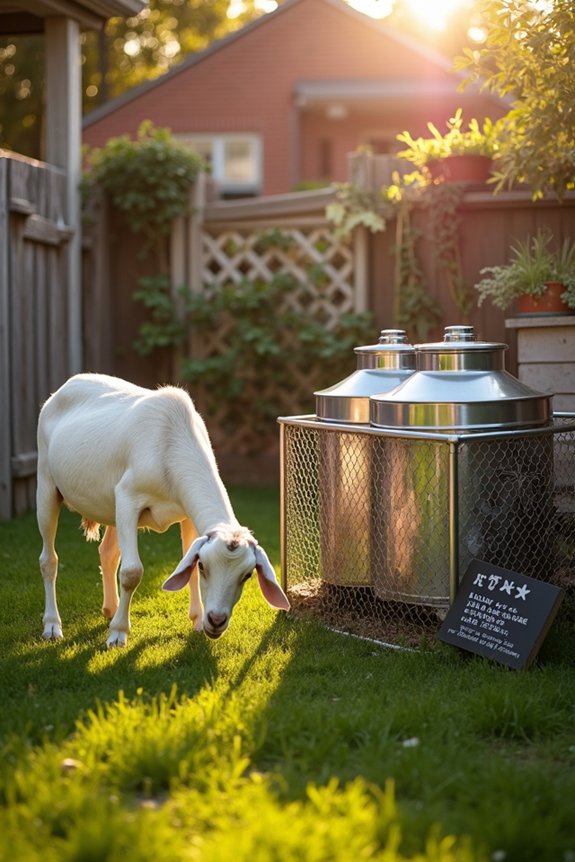
So you’re wondering if you can turn your backyard goat operation into a money-making venture?
I’ll be honest—it’s more complicated than you’d hope. Most places prohibit selling goat milk or cheese from backyard operations. I learned this the hard way after dreaming about my first farmer’s market booth.
Here’s what matters: pasteurization is non-negotiable for any goat milk you’d consume or use for cheese. Safety comes first, always.
The tricky part? Regulations vary wildly by location. Your city or county might have completely different rules than your neighbor’s jurisdiction. I can’t tell you what’s legal where you live.
Your best move is contacting your local regulatory agencies directly. They’ll clarify exactly what you can and can’t do. It’s tedious, but necessary before investing time or money into selling operations.
How to Obtain Permits and Begin Goat Ownership Legally
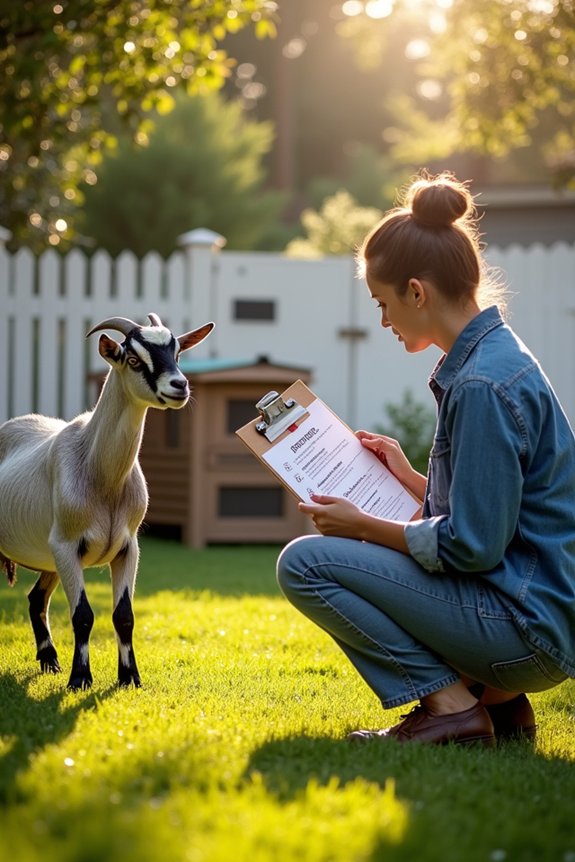
Before you bring home your first goat, you need to handle local regulations.
I learned this the hard way. Here’s what I did to get my permits sorted:
- Called my city’s animal control office and asked about goat ownership rules
- Checked my property deed for any covenants restricting livestock
- Applied for the required permits with my local planning department
Your jurisdiction will specify minimum lot sizes, fencing requirements, and shelter standards. I had to install proper predator protection before my permit got approved.
This legwork takes time, but it prevents problems later. Contact your local city offices directly—regulations vary everywhere. They’ll give you the official code language and application procedures you need. Getting it right upfront means you can enjoy goat ownership without worry.