
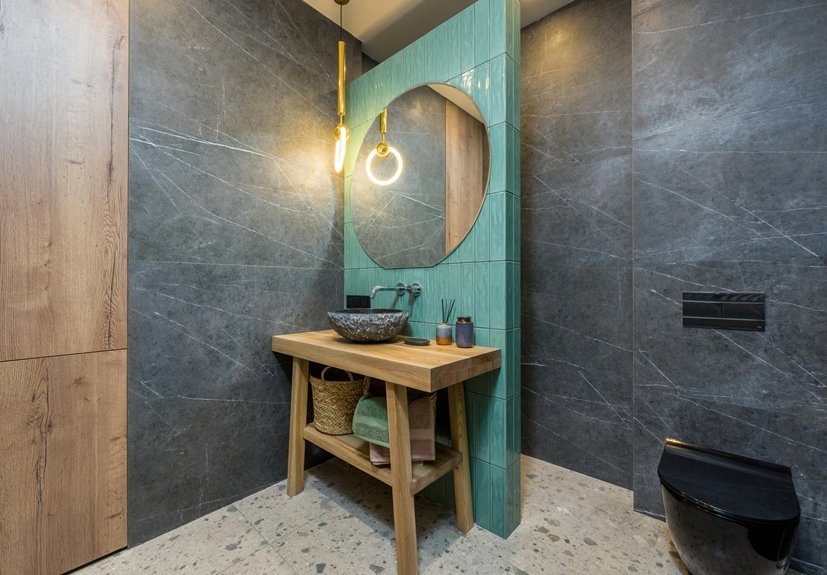
A bathroom vanity combines your sink with storage—basically a workspace and cabinet rolled into one. I’d recommend measuring your space first; it’s worth fifteen minutes upfront to avoid costly returns. Next, think about whether you need single or double sinks, then pick materials that resist moisture like plywood with water-resistant coatings. Match your countertop and hardware finishes for a polished look. The right vanity balances function, style, and durability. Stick around to discover specifics on installation and long-term maintenance.
What Is a Bathroom Vanity and Why It Matters?
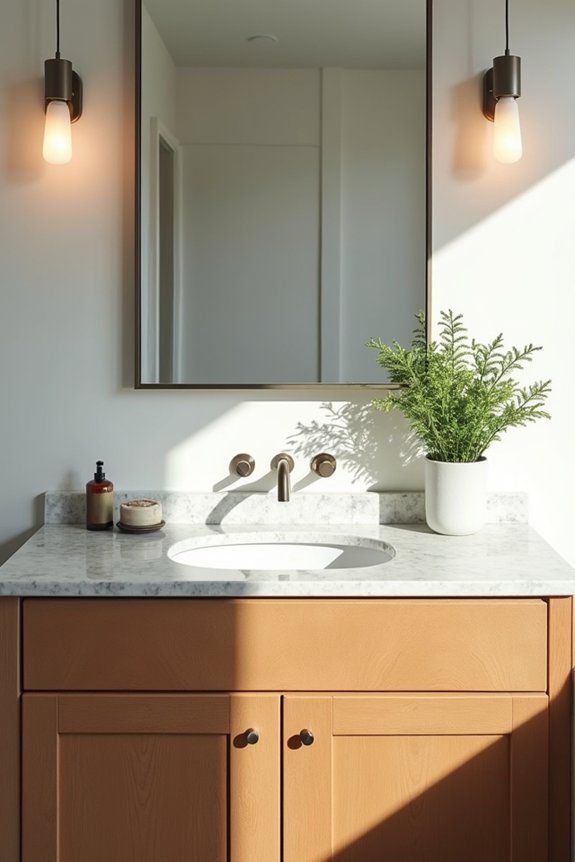
Ever wonder why your bathroom vanity matters so much? I’ll tell you—it’s honestly the hardest-working piece in your bathroom. Your vanity combines a sink with storage, giving you both function and style in one compact unit. It’s where you wash up every morning and stash all your toiletries neatly away.
The material you choose really affects how long your vanity lasts in that moisture-heavy bathroom environment. Whether it’s solid wood or plywood, your choice impacts durability and maintenance needs considerably.
Your countertop and sinks deserve attention too. Different materials like quartz or granite look great and affect cleaning ease. The right vanity maximizes your bathroom space while keeping everything accessible. It typically sits at a comfortable height, around 32 to 36 inches. Getting this choice right improves your entire bathroom experience.
Measure Your Space Before You Shop
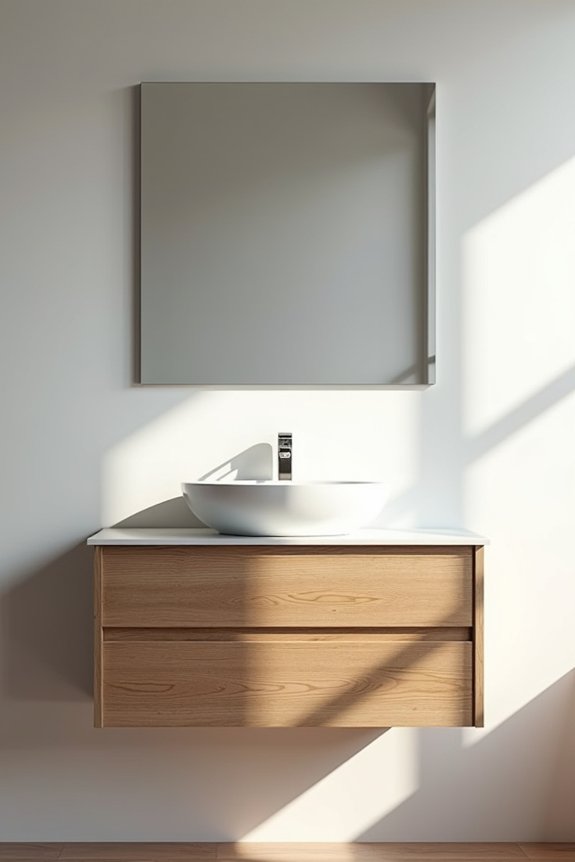
Before you start shopping, grab a tape measure and check your bathroom’s actual dimensions—width, depth, and height matter more than you’d think. You’ll also want to note where your plumbing connections are and make sure you’ve got at least 30 inches of clear space in front of the vanity so you’re not doing an awkward squeeze every morning. Spending 15 minutes measuring now beats the frustration of ordering a vanity that doesn’t fit later.
Assess Door Swings And Clearance
How’d you like to install a beautiful vanity only to find you can’t fully open the door?
I’ve learned this lesson the hard way. Before shopping, I now measure everything carefully:
- Check door swings to prevent vanity from blocking openings
- Maintain at least 30 inches of clearance in front for comfortable access
- Verify vanity dimensions fit your floor space without cramping traffic flow
- Locate plumbing rough-ins to align with your vanity position
These steps matter because tight spaces create frustration daily. I always measure twice—once horizontally and once accounting for how doors swing open. I also consider overhang depth so drawers operate smoothly.
Checking plumbing rough-ins upfront saves expensive rework later. Taking thirty minutes now beats regret during installation. You’ll know everything fits properly.
Record Width, Depth, Height
Where should you actually start measuring? I grab my tape measure and jot down three dimensions: width, depth, and height. The width tells me if the vanity fits between walls or fixtures. Depth matters because I need adequate clearance—at least 30 inches in front for comfortable movement. Height fits the vanity to my family’s needs.
I also check rough-in locations for plumbing and electrical lines since these directly affect vanity placement and available cabinet depth. These hidden elements often surprise me during installation.
Finally, I verify that my chosen vanity’s measurements match any matching top or mirror I’m considering. Mismatched dimensions create frustrating headaches later. Taking time upfront saves me from expensive returns or modifications down the road.
Account For Plumbing Locations
What’s hiding behind your bathroom walls? Plumbing rough-ins and supply lines that affect your vanity choice. I learned this the hard way during my first bathroom update.
Before shopping, I measured everything:
- Located my sink drain and waste stack positions
- Traced water supply lines to understand their routing
- Checked vanity dimensions against plumbing stub-outs
- Verified installation clearance around doors and fixtures
Your vanity dimensions must align with existing plumbing locations. Mismatches mean costly rerouting work. I found that standard layouts use 1-1/2 inch drains and 3/8 inch supply lines, which simplified my search considerably.
Map where your vanity sits relative to wall studs and nearby fixtures. This prevents plumbing clashes and saves money. Measuring twice beats installing twice.
Assess Your Bathroom Layout Before Choosing a Vanity
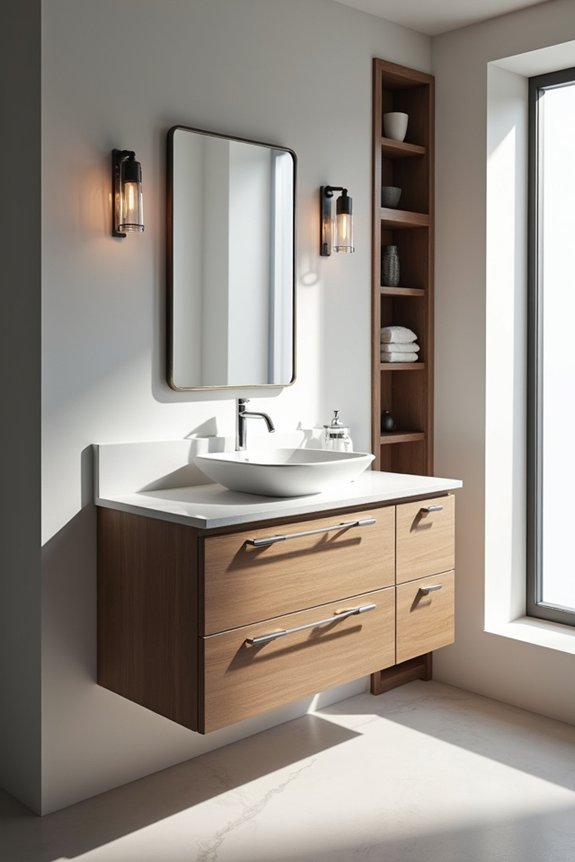
Before you fall in love with that gorgeous vanity you saw online, here’s the thing: you’ve got to work with what you’ve already got.
I learned this the hard way. Your bathroom dimensions and existing plumbing rough-ins actually control everything. Check where your water lines and drains currently live—they’re not going anywhere without major headaches. Next, measure your actual footprint carefully, noting door swings and toilet clearances so your vanity doesn’t become an obstacle course.
Consider how deep your countertop needs to be and whether you’ve got legroom to move comfortably. For tight spaces, floating vanities save real estate. Finally, plan your lighting and mirror placement above the vanity before committing to anything. This whole space planning thing seems tedious, but it prevents expensive mistakes later.
Decide Between Single and Double Sinks
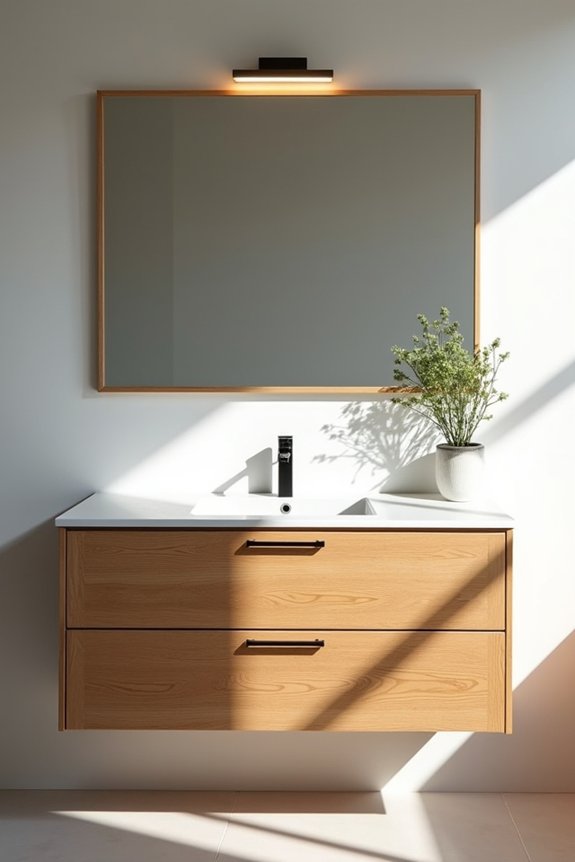
Now I’ll help you figure out if you need one sink or two, which depends on who’s using your bathroom and how much counter space you have. If you’re working with a smaller bathroom or mostly just need a vanity for guests, a single sink keeps things compact and leaves plenty of room for your toothbrush and other items. But if you’re sharing a bathroom with someone else or your mornings get busy with multiple people getting ready at once, a double sink might reduce frustration and give each person their own space.
Single Sink Space Requirements
When you’re working with a compact bathroom or powder room, a single sink vanity might be exactly what you need. Single-sink setups work well for smaller spaces because they’re straightforward and efficient.
What matters most for your single sink space requirements:
- Allow at least 30 inches of clearance in front for comfortable movement
- Plan for drawer and cabinet storage on one unified side
- Keep plumbing connections simpler with fewer rough-in points needed
- Maximize counter space without splitting it between two users
A single-sink vanity gives you more counter real estate than you’d expect. You’ll gain extra storage through smart drawer placement, and your compact bathroom layout becomes easier to manage. The simplified plumbing means fewer complications during installation.
Dual Sink Household Benefits
Ever found yourself waiting outside a bathroom while someone else finishes their morning routine? I have, and it’s honestly frustrating. That’s where dual sinks come in handy.
With two sinks, you and your partner can brush teeth simultaneously. No more negotiating who goes first. You’ll both get ready faster, reducing morning stress considerably.
I’ll be honest though—dual sinks demand more counter space and storage than single ones. Your bathroom layout needs room for two separate areas. Installation gets trickier too, requiring complex plumbing work that increases costs.
But here’s the thing: dual sinks improve accessibility notably. One person can apply makeup while another shaves. If you’re planning long-term, they offer flexibility for future household changes.
Consider your actual routines before deciding.
Calculate Storage by Listing What You’ll Store
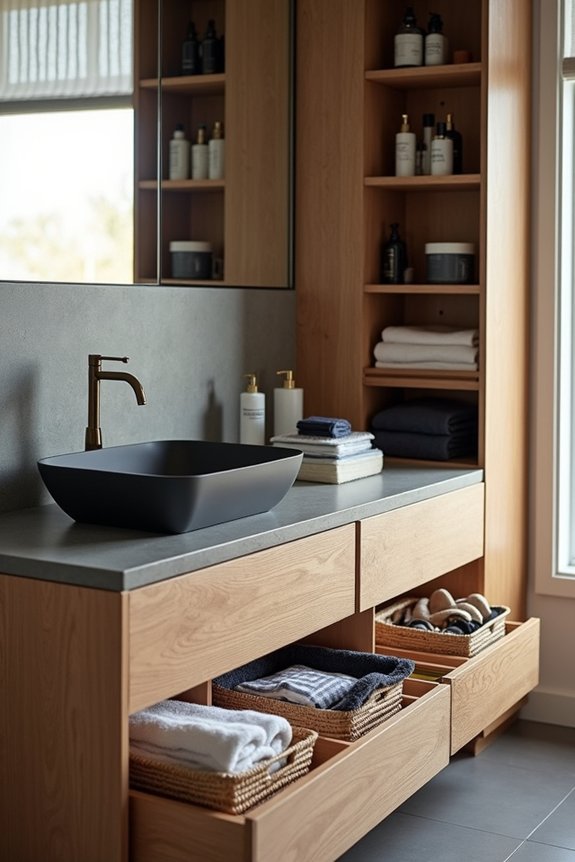
How do you know if a vanity’s actually big enough for your stuff?
Start by listing everything you store, then work backward to find your perfect vanity width.
I start by listing everything I store, then work backward to find my perfect vanity width. Here’s what I inventory:
- Toiletries (medicines, hair tools, deodorant)
- Cosmetics (makeup, brushes, mirrors)
- Towels and washcloths
- Cleaning supplies and guest toiletries
Breaking down each category helps me estimate cabinet space needed. I count roughly 12 makeup items, 4 towels, and 8 medicine bottles. Small items need drawer dividers; towels need cabinet shelves. Frequently used products go on open shelving.
This storage inventory guides my vanity selection. I need drawers for cosmetics and medicines, cabinets for bulk cleaners and towels. Knowing my exact storage needs determines the minimum vanity width I’ll actually need for bathroom organization.
Choose Between Wall-Mounted and Freestanding Styles
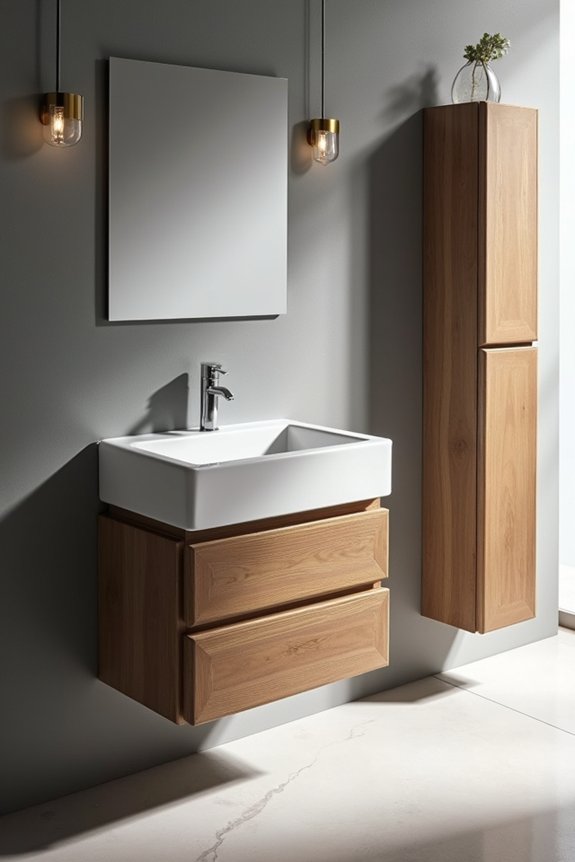
Now comes the fun part—deciding whether you want your vanity mounted on the wall or standing freely on the floor. This choice affects three big things: how spacious your bathroom feels, how easy it is to install and clean, and where you’ll actually store your stuff. Let me walk you through each one so you can pick what works best for your space and lifestyle.
Space and Visual Impact
What’s taking up all that precious floor space in your bathroom? Your vanity choice matters more than you’d think. I’ve learned that understanding space and visual impact helps you pick the right style for your home.
Consider these four key differences:
- Wall-mounted vanities free up floor area, creating an airier feel
- Freestanding options anchor your room with classic, furniture-like presence
- Storage accessibility varies—wall-mounted hides plumbing, freestanding offers under-vanity space
- Visual weight differs; wall-mounted feels modern and light, freestanding feels grounded
Small bathrooms? Wall-mounted vanities make spaces feel bigger by eliminating that floor clutter. Larger bathrooms? Freestanding vanities work well with their warmth and traditional appeal. Your vanity top and overall storage needs should guide this decision too. Think about what makes your bathroom feel like *your* space.
Installation and Maintenance
Once you’ve picked your vanity style, installation and maintenance become your next real considerations. Here’s what I’ve learned from helping friends with their bathrooms.
Wall-mounted vanities need professional plumbing adjustments and secure wall studs for mounting. You’ll want countertop height between 30-36 inches, allowing adequate clearance for comfortable access. The upside? They’re easier to clean underneath, though exposed hardware requires moisture protection.
Freestanding units typically install without plumbing modifications since they work with standard floor connections. Installation’s straightforward, but dust collects around the legs and base more easily.
Both styles need regular maintenance. Wall-mounted vanities demand attention to wall finish protection. Freestanding pieces need periodic leg cleaning. Neither option’s perfect, but understanding these differences helps you choose what works best for your lifestyle and bathroom setup.
Storage and Functionality
How much storage do you actually need in your bathroom?
Your answer shapes everything. Here’s what I consider when choosing between styles:
- Wall-mounted vanities maximize vertical space with shelving and drawers above the countertop
- Freestanding units offer deeper cabinet doors and more drawer configurations for essentials
- Under-counter clearance in wall-mounted designs makes cleaning easier and creates accessibility
- Countertop space varies—floating vanities give you room to breathe; freestanding takes up floor area
I started with a cramped freestanding unit. When I switched to wall-mounted, I had more room to work with. Wall-mounted works great if your plumbing cooperates. Freestanding gives you classic storage without relocating hookups. Think about what you’re actually storing—hair tools, medications, daily toiletries. That determines whether you need multiple drawer depths or simple open shelving.
Select a Sink Style That Fits Your Routine
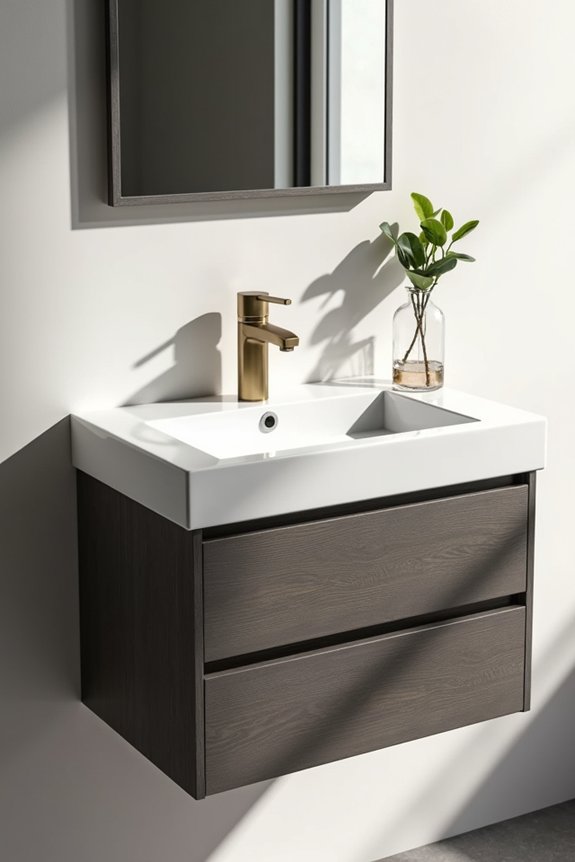
Your sink style matters more than you’d think—it shapes everything from how you use your vanity to how easily you’ll clean it. Undermount sinks offer a sleek appearance and make countertop cleaning straightforward, but they require precise installation and compatible countertop material. Vessel sinks are visually striking and rise above the counter, though they’ll reduce your under-sink storage space.
Consider your routine carefully. Do you wash your face frequently? Apply makeup daily? Your sink accessibility and vanity height matter more than aesthetics alone. Vessel setups sometimes require higher countertops for comfortable use. Match your sink style with your faucet configuration. Installation compatibility matters—pick something that works with what you have.
Pick Moisture-Resistant Vanity Materials
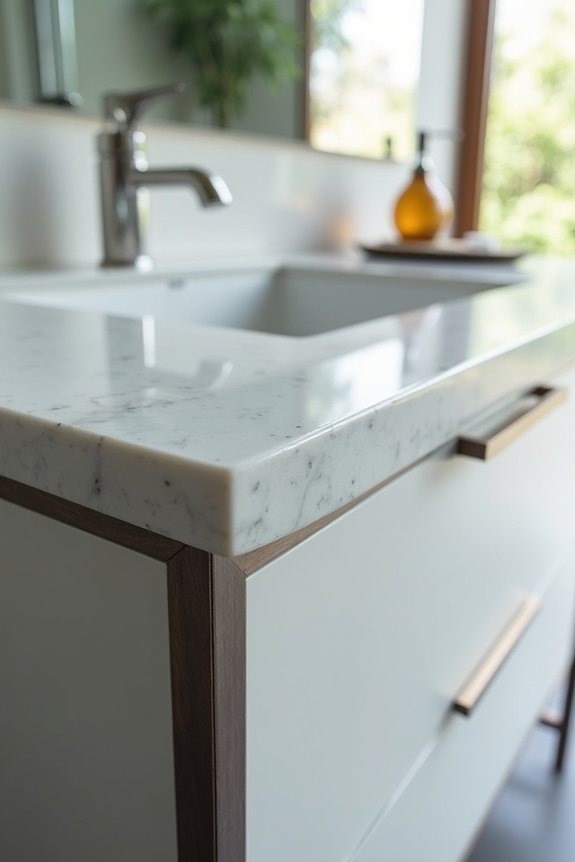
You’ve picked your sink style, but the catch—even the perfect sink won’t matter if your vanity cabinet warps or swells from constant bathroom moisture.
I’ve learned this the hard way. Here’s what I now prioritize when choosing vanity materials:
- Plywood-core cabinets with moisture-resistant coatings instead of solid wood
- Water-resistant veneers on MDF or plywood substrates to prevent swelling
- Moisture-sealed joints that block water penetration at vulnerable spots
- Corrosion-resistant hardware like stainless steel or coated brass fittings
For countertops, I skip porous marble and choose quartz or solid surfaces instead. They handle humidity without staining or degrading. Sealed edges matter too—they’re your first defense against moisture sneaking in.
These vanity materials keep your bathroom looking sharp for years, not months.
Choose a Countertop Material That Matches Your Lifestyle
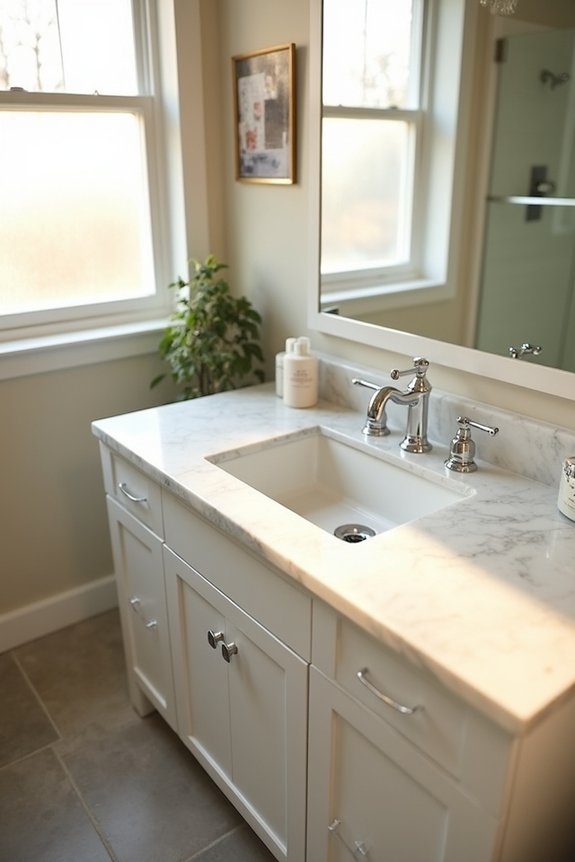
What countertop material actually fits your life? I’ve learned that choosing wisely saves you headaches later.
If you’re constantly rushing through mornings, quartz countertops are your friend. They’re non-porous, so they resist stains without needing sealing. I appreciate that I don’t need to babysit them.
For those wanting something equally forgiving, solid-surface materials offer seamless, repair-friendly surfaces that handle humidity beautifully. They’re low-maintenance, which honestly matters when life gets hectic.
Here’s the thing: marble and granite look beautiful but demand regular sealing and careful attention. That’s not necessarily bad—just different.
Consider your bathroom’s traffic level and your actual maintenance habits. High-traffic spaces need durability and moisture resistance more than perfection. Choose what you’ll actually care for, not what sounds impressive. Your lifestyle should guide everything.
Match Your Vanity to Your Bathroom’s Style
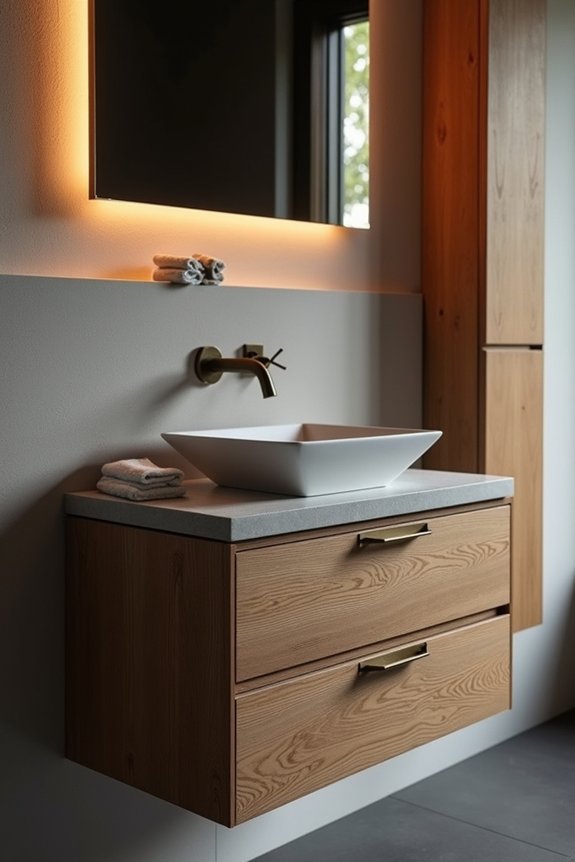
Start by identifying your bathroom theme—modern, rustic, or something in between. Then choose a vanity style that complements it:
Start by identifying your bathroom theme, then select a vanity style that complements your design aesthetic.
- Match finishes and hardware across faucets, mirrors, and lighting
- Keep materials consistent with tile and wall colors
- Balance your vanity’s silhouette and proportions with surrounding fixtures
- Consider a neutral-toned vanity for future flexibility
Coordinating these elements creates a space with visual harmony rather than mismatched pieces. Your vanity style should complement your bathroom’s design language without dominating it. It’s about making thoughtful choices that work for you.
Coordinate Faucets, Mirrors, and Lighting With Your Vanity
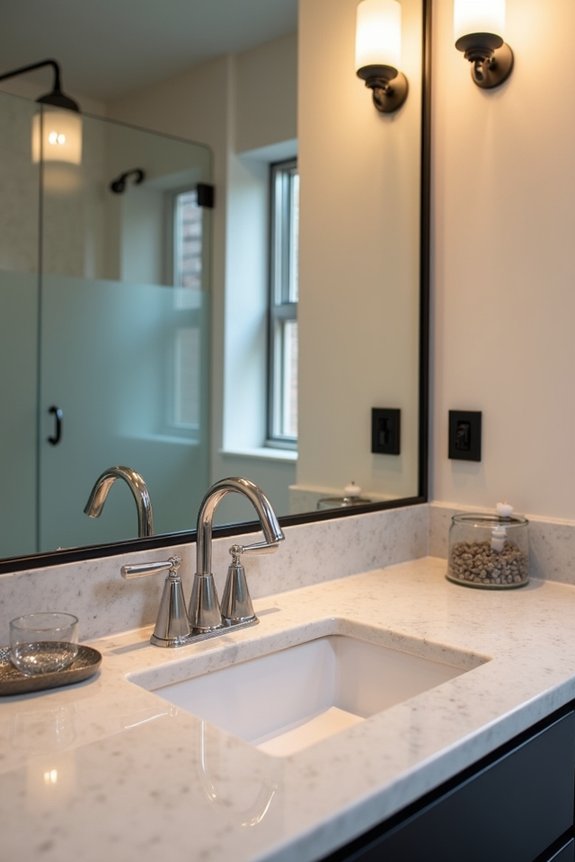
Once you’ve picked your vanity, the real coordination work begins—and honestly, it’s where a bathroom either comes together or falls flat. I’ve learned that matching your faucet configuration to predrilled countertop holes saves major headaches during installation. Your mirror size should align with your vanity width, while lighting placement matters—aim for 3,000–4,000K color temperature to eliminate shadows on your face.
Here’s what I always check: verify clearance between faucet handles and your mirror so nothing interferes during use. The finishes coordination across your vanity hardware, faucet, and mirror frames creates visual harmony. Mismatched metal tones stick out immediately. When everything works together visually, your bathroom feels deliberate and polished—not like you grabbed pieces randomly.
How Material Choices Affect Long-Term Maintenance
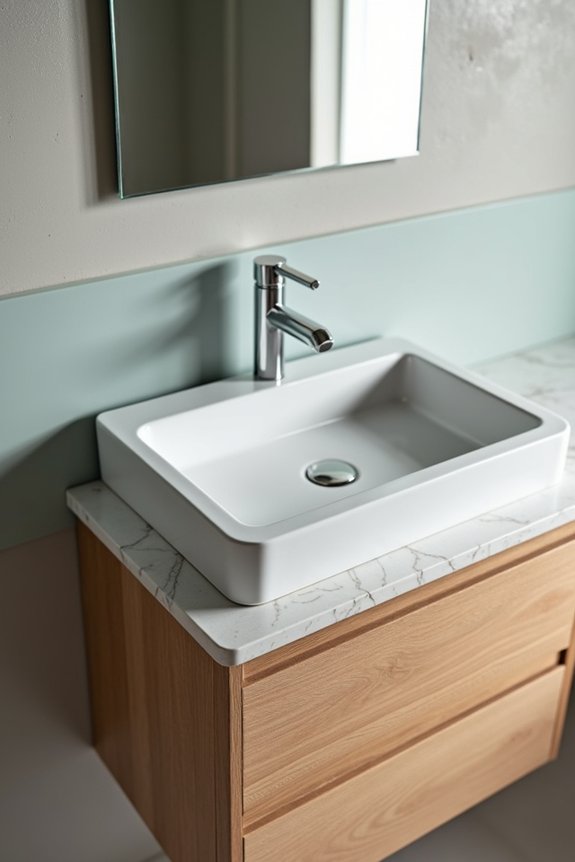
Picking the right faucet and mirror matters, but here’s what I’ve discovered: none of that polish survives if your vanity falls apart from water damage. I’ve learned the hard way that material choices determine your bathroom investment’s success or failure.
Here’s what actually impacts your long-term maintenance:
- Solid wood vanities need regular sealing to prevent warping in humid bathrooms
- Plywood handles moisture better than MDF, which swells without proper sealing
- Countertop materials like quartz require zero sealing, while marble needs periodic resealing
- Hardware finishes must be corrosion-resistant or they’ll corrode from humidity and cleaning
I’ve watched friends regret cheap materials within two years. The upfront cost of quality materials saves you headaches later. Your vanity’s durability depends entirely on understanding these material realities.