
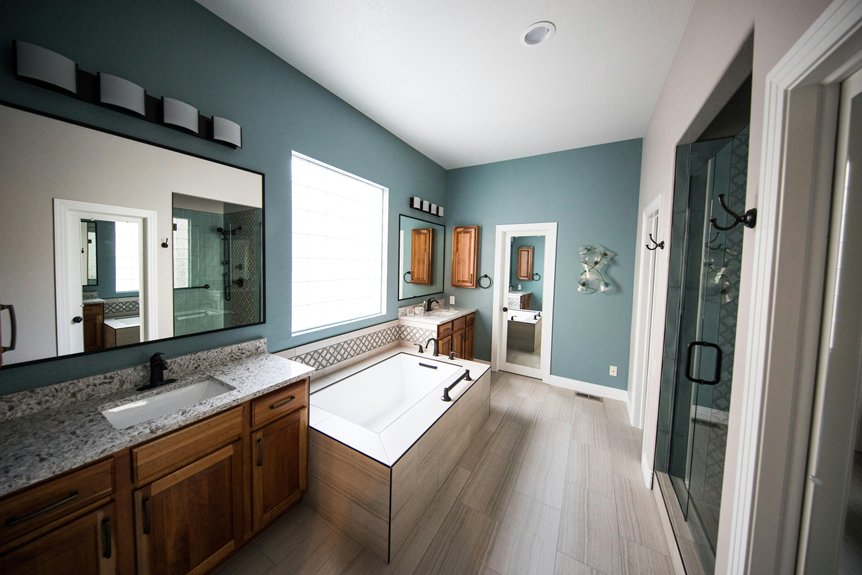
A bathroom remodel typically takes 2–12 weeks depending on project complexity. Small DIY projects wrap up in 2–3 weeks, while larger renovations with structural work stretch to 6–12 weeks. You’ll spend 1–3 weeks on planning and bids, then face demolition (1–2 days), rough-in work (2–4 days), and installation (3–5 days).
Permitting, inspections, and unexpected issues like water damage or plumbing problems often add time. Staying communicative with your contractor and starting permits early helps keep things moving smoothly through completion.
What’s the Average Bathroom Remodel Timeline?

How long does a bathroom remodel actually take? It depends on what you’re doing. A small DIY project runs 2–3 weeks, while professionals finish similar work in 1–2 weeks. Larger remodels typically take 3–4 weeks, and complex projects with structural work take 6–12 weeks or longer.
Here’s what I’ve learned: design and planning takes several weeks before demolition even starts. Demolition itself is quick—usually 2–4 days. Then rough-in plumbing and electrical each take 1–2 days. Installation and finishing touches add another 2–3 weeks.
Your bathroom remodel timeline really hinges on scheduling, materials lead times, and contractor availability. Permits and inspections will impact your project phases. Getting permits ready beforehand saves serious headaches down the road.
Planning Your Bathroom Remodel Timeline: Bids and Permits
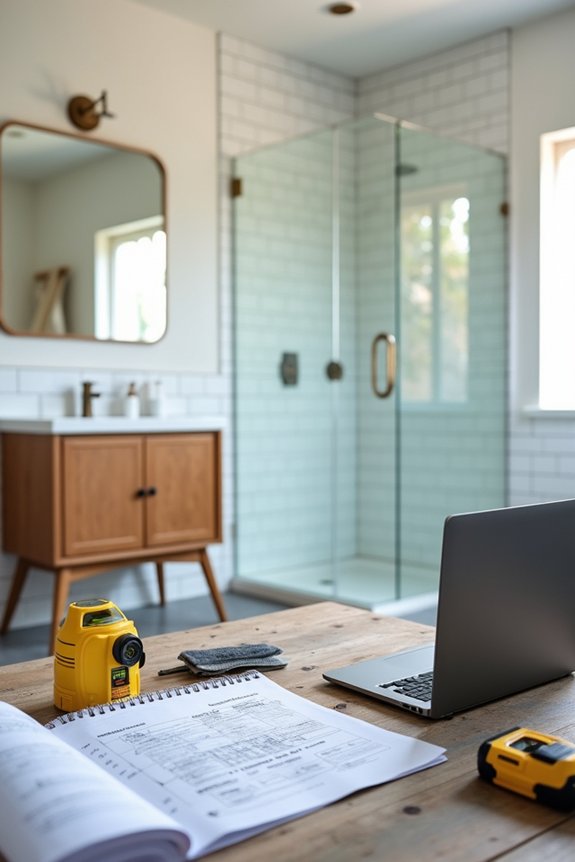
Once you’ve closed on your property, you’re ready to tackle the planning phase—and this is where patience matters. You’ll post your bathroom remodel timeline on Sweeten within 1–3 days to gather contractor bids. Then comes the site visits; expect written bids about 5–7 business days later. During this period, you’re comparing estimates and leveling bids between Sweeten and non-Sweeten contractors. I recommend using Sweeten’s free consultation to discuss your options—it helps clarify project milestones. Once you’ve selected your contractor, contract signing takes roughly one week. Before permits proceed, you’ll review the work description, costs, and payment timing together. This planning phase typically spans 2–4 weeks, setting up your project schedule for success.
Demolition and Rough-In: Week 1 of Your Bathroom Remodel
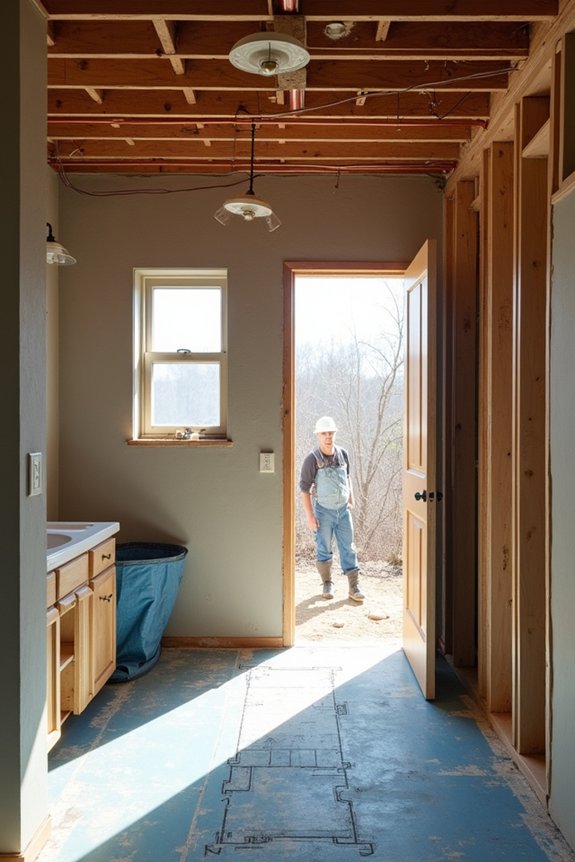
Week 1 is when things get loud and messy—your contractor’ll tear out old fixtures and tiles, which honestly takes just a day or two if everything goes smoothly. I’ve seen plenty of surprise problems pop up during demolition, like water damage hiding behind walls, so don’t freak out if your timeline shifts a bit. Once the debris’s cleared, the real work begins with rough-in plumbing and electrical, plus you’ll need inspections before moving forward.
Demolition Process and Timeline
The demolition phase is where your bathroom remodel begins—it’s messy, it’s loud, and it’s a significant undertaking. This kickoff week typically takes just one or two days, during which crews remove old fixtures, tiles, and cabinets completely.
Here’s what to expect: drywall removal and flooring demolition as part of the process. The crew will protect your home’s remaining areas carefully, managing debris disposal to keep things contained. This protection matters because hidden issues often emerge during demolition—water damage, structural concerns, or other problems that need addressing before rough-in work begins.
Once the space is prepped and cleared, your plumbing and electrical rough-in work starts immediately. This timeline keeps your bathroom remodel moving forward smoothly and efficiently.
Rough-In Plumbing and Electrical
What comes after all that demolition dust settles? That’s when rough-in work happens—and honestly, it’s where things get real.
Your plumbing rough-in typically takes one to two days. We’re talking new pipes, drains, and water lines installed behind those bare walls. Electrical rough-in follows a similar timeline, running your wiring and outlets according to code.
Here’s the thing: you’ll need permits and inspections before moving forward. I’ve seen delays happen when inspectors catch issues, so budget extra time just in case.
Hidden problems sometimes emerge during demolition—water damage or structural concerns that need fixing first. These discoveries can push your timeline back, but addressing them now prevents bigger headaches later.
Coordinate closely with your trades. When rough-in stays on schedule, your entire remodel flows smoothly.
Inspection Schedules and Delays
Once demolition wraps up and rough-in crews move in, inspection schedules become your new best friend—or your biggest source of stress, depending on timing. I’ve learned that city inspections can add 1–3 days to your timeline, and scheduling them early prevents everything from backing up. Here’s what I’d recommend: coordinate with your inspector before rough-in begins. Backordered materials can derail you fast, so confirm delivery dates upfront. When walls open up, unseen issues sometimes pop up—old plumbing, hidden damage, stuff nobody expected. That’s frustrating, but it’s reality. Your permits need approval before anything starts, so don’t skip that step. I’ve seen delays cascade from Week 1 straight through later phases when people overlook scheduling and permits. Stay ahead of it.
Installation Phase: Weeks 2–3 of Your Bathroom Remodel
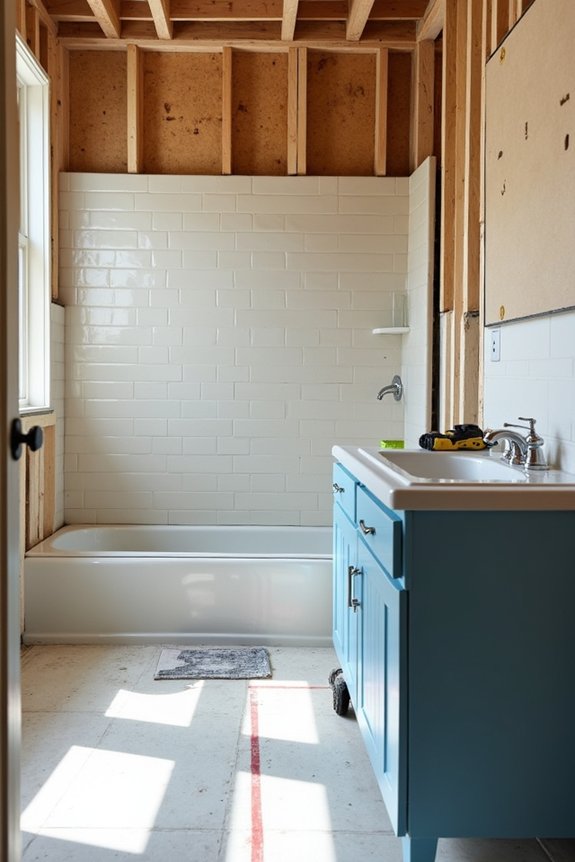
After demolition wraps up, you’re ready for the next phase—actually seeing your new bathroom take shape. The installation phase typically runs 2 to 3 weeks, and this is when things get real. You’ll watch your vision move from blueprints into actual fixtures and finishes.
| Task | Duration | What Happens |
|---|---|---|
| Flooring Installation | 1–2 days | New floors go down |
| Tile Work | 2–3 days | Walls and backsplashes completed |
| Vanity Setup | 1–2 days | Cabinets installed and secured |
| Tub/Toilet Install | 1–2 days | Major fixtures positioned |
| Final Touches | 3–5 days | Paint, hardware, testing |
During these weeks, installers handle flooring, vanity placement, tub, toilet, and tile work. Toward the end, finishing details like paint and hardware happen. You’ll test fixtures to confirm everything works properly before your punch list.
Getting Sign-Off: Inspections, Final Fixes, and Your Last Payment
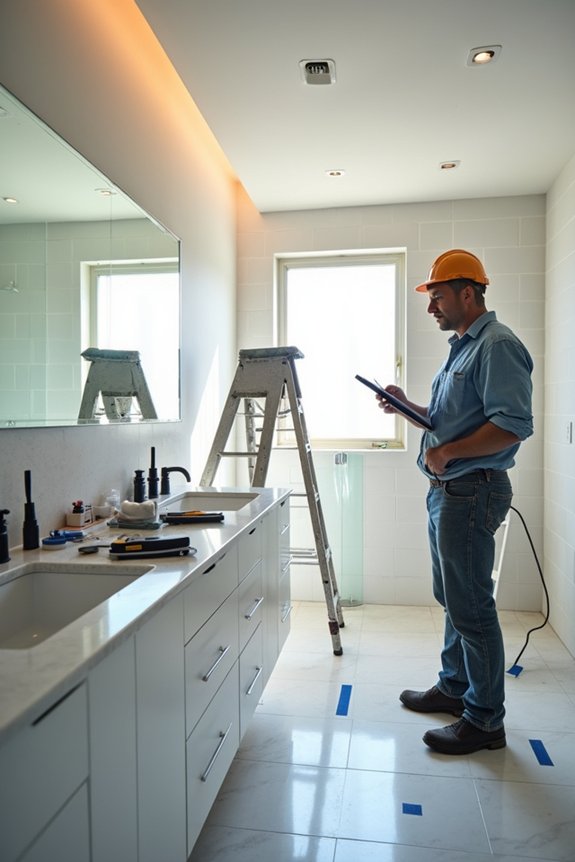
Once your contractor wraps up the main work, you’ll navigate city inspections and sign-offs before declaring victory. Then comes the punch list—basically your chance to flag anything that needs tweaking, from wonky cabinet doors to grout that didn’t quite cooperate. I’ll walk you through what happens next and when you can finally hand over that last payment.
City Inspections And Sign-Offs
How much longer until you’re done? After demolition and rough-in work, city inspections become your next hurdle. These sign-offs aren’t optional—they’re required checkpoints.
Here’s what happens: inspectors review your plumbing permits and gas permits before approving anything. This step typically takes 1–3 days, though delays happen. You’ll need a dedicated hour-long on-site inspection (that’s Step 11) where officials verify compliance with local codes.
Permits for certain plumbing and gas work can slow your entire project timeline. Submit applications early to stay ahead. Once inspectors grant city approvals after rough-in completion, you’re cleared for finishing work.
The final punch list comes next, followed by your last payment. Getting these inspections right means avoiding costly rework later.
Punch List Items And Fixes
City inspections are behind you now, which means you’re officially in the home stretch. During your final walk-through with your contractor, you’ll create a punch list identifying minor defects needing fixes. We’re talking cabinet doors that need adjusting, grout corrections, and scratches on surfaces—nothing major, just the finishing details.
| Item Type | Typical Timeline | Notes |
|---|---|---|
| Cabinet adjustments | 1-3 days | Usually completed quickly |
| Grout repairs | 2-5 days | May need curing time |
| Surface scratches | 1-2 days | Backordered materials may delay |
Your contractor typically addresses these defect repairs within days when feasible, though backordered materials sometimes require return visits. Once all punch list items meet agreed-upon standards, you’ll receive your final sign-off and make that last payment. You’ve completed your project.
Final Payment And Completion
After addressing those punch list items, you’re ready for the moment you’ve been waiting for—making that final payment and officially calling your bathroom remodel complete. During your final walk-through with the contractor, you’ll inspect every detail together. Any remaining issues get documented, then your contractor tackles them systematically. Some fixes happen immediately; others require return visits, especially if backordered materials are involved. Once all completion milestones are crossed, you’re done. The payment process wraps up after everything checks out. I’ve learned that timely completion hinges on communication—staying flexible about renovation timeline adjustments keeps things moving smoothly. You’ve navigated the entire journey from planning through punch list resolution. That final payment isn’t just money changing hands; it’s recognition that your bathroom remodel is finally complete.
What Delays Your Bathroom Remodel (and How to Prevent Them)?

Why do some bathroom remodels sail through while others seem to hit every possible snag? I’ve learned that knowing the common culprits helps you navigate them better.
| Delay Type | Impact | Prevention |
|---|---|---|
| Permitting delays | Days to weeks | Start applications early |
| Material backorders | Days to weeks | Order items immediately |
| Inspection scheduling | 1–3+ days | Coordinate with inspectors upfront |
| Plumbing/electrical issues | 1–3+ days | Budget contingency time |
Permitting delays from city approvals often extend timelines considerably. Material backorders for tiles, vanities, and fixtures pause work unexpectedly. Inspection scheduling for complex electrical or plumbing work creates bottlenecks. Demolition frequently reveals unforeseen plumbing or electrical issues requiring repairs.
Change orders mid-project cascade into further delays. I recommend contingency planning, ordering materials early, and scheduling inspections proactively. This approach keeps your project timeline realistic and manageable.