
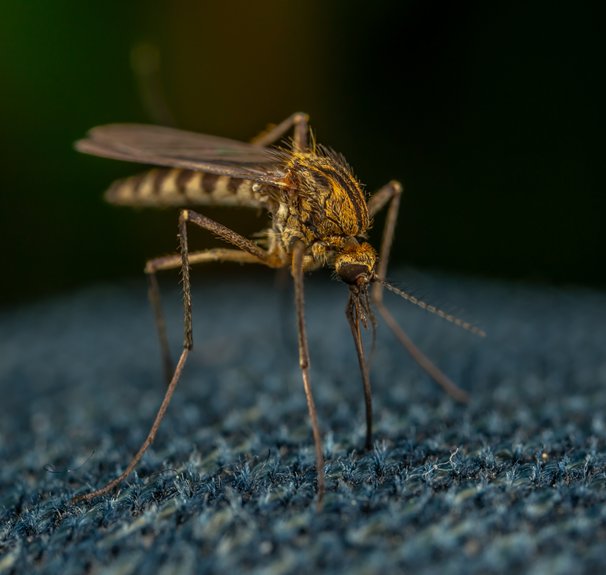
I’ve tackled this myself, and honestly, it’s a three-part process. First, I drain or cover any standing water—buckets, birdbaths, clogged gutters—since mosquitoes breed there. Then I keep my grass short and trim shrubs to eliminate their hiding spots. For water I can’t drain, I use mosquito larvicide. Finally, I spray vegetation where they rest and wear repellent with DEET when I’m outside. It takes about 2-4 weeks of effort, but there are additional steps you can take if that doesn’t work.
Eliminate Standing Water Where Mosquitoes Breed
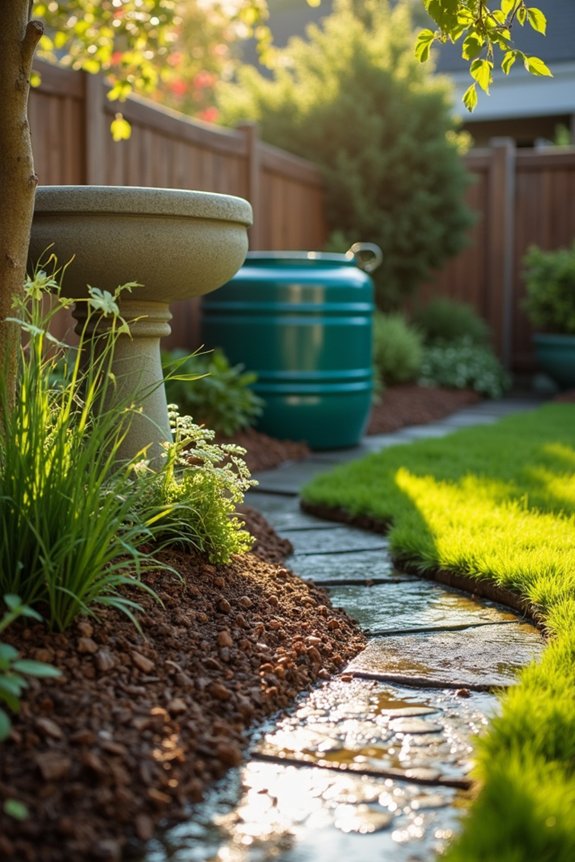
Mosquitoes need water to breed—eliminate standing water in your yard to prevent a population explosion.
Mosquitoes need water to breed, so standing water in your yard is basically an open invitation to a mosquito population explosion. I learned this the hard way after ignoring my gutters for months.
Start by hunting down obvious culprits. Check for forgotten buckets, plant saucers, birdbaths, and toy pools—these are prime breeding sites. I now empty my plant saucers weekly without thinking twice.
For containers you can’t empty, cover them tightly or use mesh screening smaller than an adult mosquito. Don’t forget tree holes, clogged gutters, and low yard depressions either. Fill them, drain them, or cover them completely.
Also inspect septic tanks for cracks and cover plumbing openings with wire mesh. Proper drainage eliminates standing water fast. It’s one of the most effective mosquito prevention methods available.
Cut Grass and Trim Dense Vegetation

Your lawn’s height matters more than you’d think regarding mosquitoes. Keeping grass under 2 inches dramatically reduces where mosquitoes rest and hide. When you trim vegetation regularly, you’re removing their favorite shady spots.
| Task | Benefit | Frequency |
|---|---|---|
| Cut grass short | Reduces moisture, eliminates resting spots | Weekly |
| Trim shrubs | Improves airflow, speeds drying | Bi-weekly |
| Remove dense growth | Decreases shade and shelter | Monthly |
Dense vegetation traps moisture and creates perfect mosquito habitats. By trimming overgrown shrubs, you’re exposing those hidden areas and letting air flow through your yard faster. After rain, your lawn dries quicker, making it less attractive to mosquitoes.
This proactive approach works best alongside removing standing water. Together, these efforts create an unwelcoming environment for mosquitoes during peak activity periods.
Treat Water That Can’t Be Drained With Larvicides
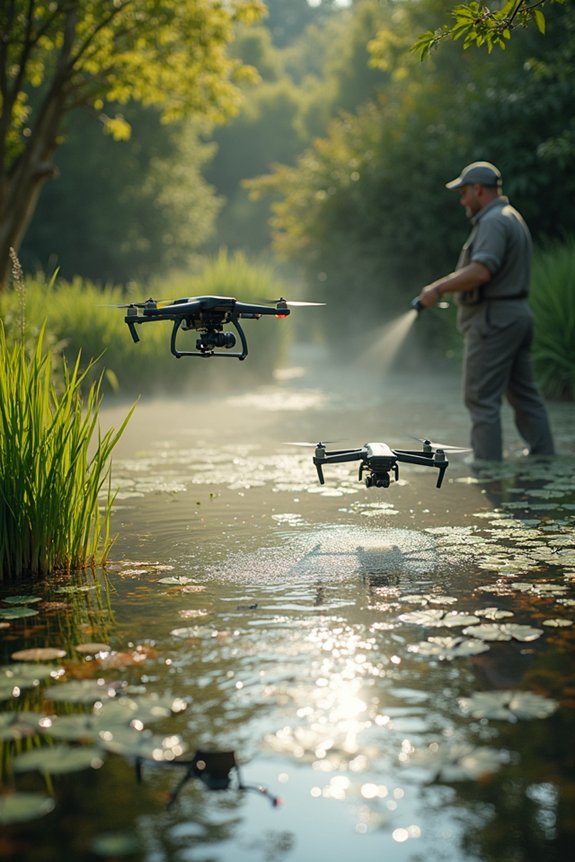
Sometimes standing water’s a fact of life in your yard—maybe it’s a birdbath you use regularly, a decorative pond, or a low spot that collects rain. When you can’t drain these areas, larvicides become your go-to solution. I’ve found that products containing Bacillus thuringiensis israelensis (Bti) work well because they target mosquito larvae without harming other wildlife. Methoprene’s another solid option that disrupts insect development. The key is choosing a product labeled specifically for your water type. I always follow the label instructions carefully—timing and dosage really matter. Check your water features regularly for larvae, and reapply treatment as directed. It’s not the most exciting yard work, but treating standing water keeps those mosquitoes from multiplying in the first place.
Keep Mosquitoes Out: DIY Spraying and Product Selection
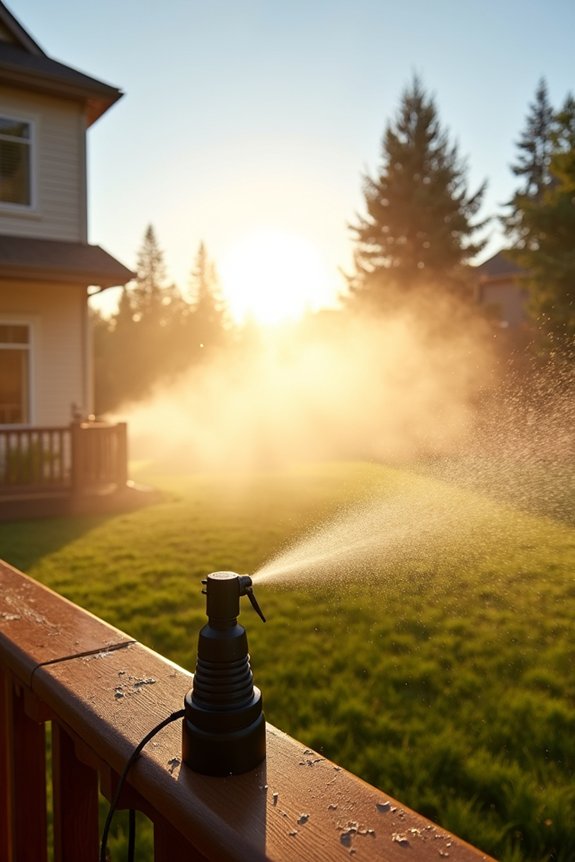
Once you’ve tackled the standing water problem, it’s time to target the adult mosquitoes hanging around your yard. DIY spraying works well when you’re ready to take action. You’ll want to spray vegetation where mosquitoes rest—under trees, shrubs, and low palms especially. Use a backpack or hand pump sprayer and follow the label directions carefully. The key is covering your lawn, shrubs, and landscaping thoroughly. If you’re fogging instead, spray in the evening after sunset to catch resting mosquitoes. It takes patience, but consistent mosquito control beats swatting all summer. If spraying feels overwhelming, licensed professionals handle the work while following EPA guidelines. Either way, you’re taking back your backyard.
Protect Yourself: Repellents, Clothing, and Timing

While keeping mosquitoes out of your yard is half the battle, you’ll still want to protect yourself when you’re actually outside enjoying it. I’ve found that combining the right repellents with smart clothing choices and timing reduces how many bites I get. Let me walk you through the products and strategies that work.
Effective Repellent Products
How serious are you about actually enjoying your backyard? I’ve learned that choosing the right repellent matters. I always reach for EPA-registered products containing DEET, picaridin, IR3535, or oil of lemon eucalyptus—these actually work. DEET up to 30% gives me solid protection without feeling greasy. Picaridin’s my go-to when I want something lighter. Before applying any repellent, I remove sunscreen and lotions first; they’re barriers that reduce effectiveness. I apply repellent last, after sunscreen dries completely. Here’s what I’ve noticed: reapplying matters, especially after sweating or swimming. Check product labels for specific instructions. I’ve tested natural formulations before, honestly—their effectiveness varies too much. Stick with proven options, and you’ll actually stay comfortable outside.
Clothing and Timing Strategies
Getting the right repellent on your skin is half the battle, but what you wear matters just as much. I’ve learned that long, loose, light-colored clothing creates a protective barrier mosquitoes can’t easily penetrate. Pre-treating your clothes with permethrin gives you extra defense that lasts through multiple washes.
Timing’s equally important for outdoor activity success. I skip dawn and dusk when mosquitoes are hungriest—that’s just asking for trouble. Instead, I plan activities for mid-morning or afternoon when they’re less aggressive. When repellents are applied properly, you’ve got flexibility to enjoy your backyard confidently.
The key is combining everything together: treated clothing, quality repellents on exposed skin, and strategic timing. You’re not just hoping mosquitoes stay away—you’re actually preventing bites through smart choices.
Monitor Progress and Know When Professional Help Pays Off
Once you’ve implemented your mosquito control plan, you’ll want to track what’s actually working—I’ve learned the hard way that assumptions don’t count. You can monitor your progress by noting fewer bites during peak times, spotting less standing water, and observing whether you’re spending more comfortable time outside without constantly swatting. Knowing when DIY efforts aren’t cutting it helps you decide if professional help makes sense for your situation.
Track Effectiveness Over Time
Why would you keep doing the same thing if it’s not actually working? I’ve learned this lesson the hard way. Start tracking standing water changes weekly, noting where mosquitoes breed. Keep a simple log of your interventions and results. Monitor adult mosquito activity at dusk before and after you’ve made changes—this gives you real numbers to compare. I jot down larval monitoring observations alongside treatment dates. After a few weeks, you’ll spot patterns. Are bites actually decreasing? That’s your real-world success measure. Compare pre- and post-treatment counts honestly. If nothing’s improving after multiple efforts, that’s when calling a licensed professional makes sense. Documenting everything—landscape changes, products used, timing—helps you and the pro figure out what’ll actually work for your situation.
Signs You Need Professional Help
After a few weeks of tracking, you’ll know whether your DIY efforts are actually paying off. If you’re still seeing persistent activity despite your hard work, it might be time to call in professionals who can spot hidden breeding sites you’ve missed.
| Sign of Success | What It Means | Timeline |
|---|---|---|
| Fewer adult mosquitoes | Your traps capture less | 1–2 weeks |
| Larvae dropping | Water sources improving | Ongoing checks |
| More resting spots cleared | Shaded areas safer | Each inspection |
Here’s the thing: dense yards with lots of containers make DIY tough. Professional services use EPA-registered products efficiently and create targeted plans. If you’re on a large property or in a high-risk area, annual professional programs often work better than sporadic DIY attempts—and provide better value over time.
When DIY Methods Fall Short
How long should you stick with DIY before throwing in the towel? I’d give it 2–4 weeks of solid effort—larval control, barrier methods, yard cleanup, the whole routine. If mosquitoes still show up after that timeframe, you’re probably fighting a losing battle.
That’s when professional treatment makes sense. Licensed professionals bring EPA-registered products and precise application skills you can’t replicate with store-bought sprays. They’ll inspect your breeding hotspots—containers, gutters, tree holes—and create a tailored plan covering up to 20,000 square feet.
Here’s the honest part: professionals typically cost more upfront. But they reduce adults faster and more consistently throughout the season. Always verify their licensing and credentials first. It’s worth the investment when DIY frustration outweighs savings.