
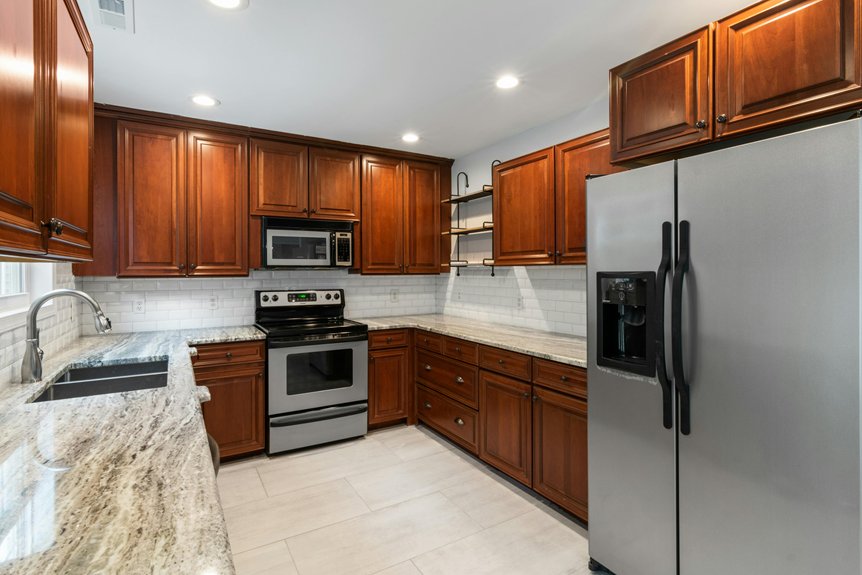
A 10×10 kitchen remodel runs $10,000–$25,000, and labor accounts for about half your budget.
Cabinets consume another 29–40%, leaving countertops, flooring, and appliances to split the remaining funds.
Layout changes—like moving your sink—increase costs quickly.
Plan for a 10–20% contingency buffer because unexpected issues arise during renovations.
Keep in mind that your remodel typically returns 50–70% of your investment, so aligning your budget with your home’s overall value is important.
Understanding where each dollar goes helps you make informed decisions about priorities and trade-offs.
Budget $10,000–$25,000: Why the Range Is So Wide?
Why does a 10×10 kitchen remodel cost anywhere from $10,000 to $25,000? I’ve learned the answer involves several moving parts working together.
Labor costs alone eat up 50 to 60 percent of your budget. That’s a substantial portion, and it’s why contractors’ rates vary so much. Material costs create another layer of complexity. You can choose budget-friendly cabinets or splurge on high-end options—both are totally valid.
Layout changes matter too. Moving plumbing or electrical work? That’ll push costs higher. Then there’s contingency planning, which I recommend at 10 to 20 percent. Unforeseen issues pop up constantly during renovations.
Global market fluctuations and tariffs also impact what you’ll pay for supplies. Understanding these factors helps you feel confident about your specific project costs.
Cabinet Costs: 29–40% of Your Remodel Budget
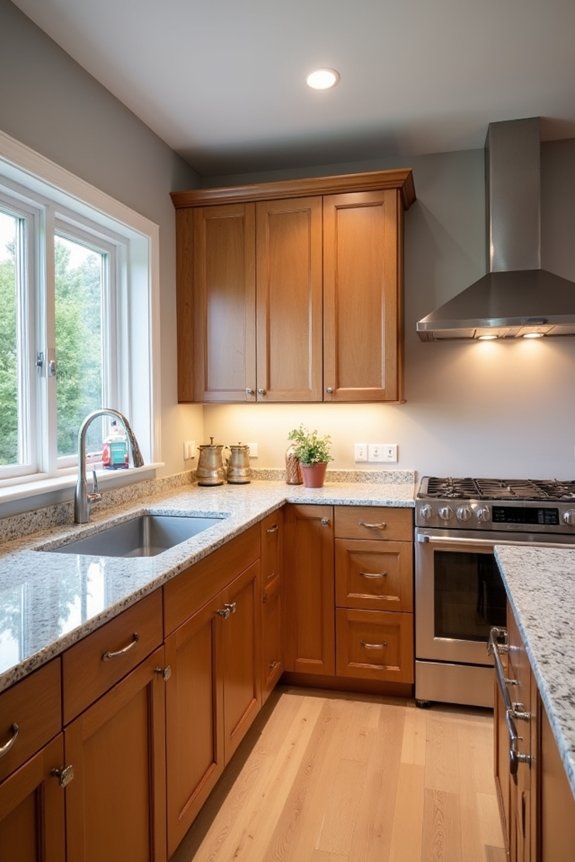
Since cabinets account for nearly a third of your kitchen budget, understanding your options here matters. You have choices ranging from budget stock cabinets around $3,000–$9,000 to custom setups that run $15,000 or more, so selecting the right quality level for your wallet makes a significant difference. The material you choose—whether it’s basic plywood or something higher-end with soft-close hinges—determines where your total cabinet costs land within that $5,000–$15,000+ range.
Budget Allocation Breakdown
How much of your kitchen budget should go toward cabinets? Roughly 29–40% for a 10×10 kitchen remodel. Here’s where your budget allocation typically breaks down:
| Budget Category | Percentage |
|---|---|
| Cabinets | 29–40% |
| Countertops | 15–20% |
| Flooring | 10–15% |
| Appliances | 15–20% |
| Labor & Misc. | 10–15% |
Cabinet costs vary widely depending on your choices. Stock options from big-box stores run $3,000–$9,000, while semi-custom cabinets cost more. You’re paying for materials—laminate versus wood—plus features like soft-close hinges and dovetail drawers.
Tariffs can spike prices on imported cabinets, so domestic options sometimes save money. Remember to account for installation fees as well; they’ll add $1,500–$3,000 to your budget allocation.
Cabinet Quality Options
What’s actually holding up your kitchen cabinets matters more than you’d think. When I started planning my remodel, I realized cabinet options span a huge range. You’ve got budget-friendly stock cabinets running $2,000–$3,000, which work great if you’re not picky about customization. Mid-range plywood cabinets with warranties sit around $4,000–$5,000 plus installation costs. Custom options climb to $6,000–$15,000+, offering personalized designs that fit your space perfectly.
Stock vs. custom comes down to your priorities and budget. Stock cabinets from big-box stores like IKEA or Home Depot offer lower upfront costs but less flexibility. Semi-custom USA-made options give you quality at a reasonable price point. Refinishing or painting existing cabinets is also worth considering—sometimes $400–$1,800 can significantly improve your kitchen’s appearance.
Countertops, Flooring & Appliances: Where the Remaining Budget Goes
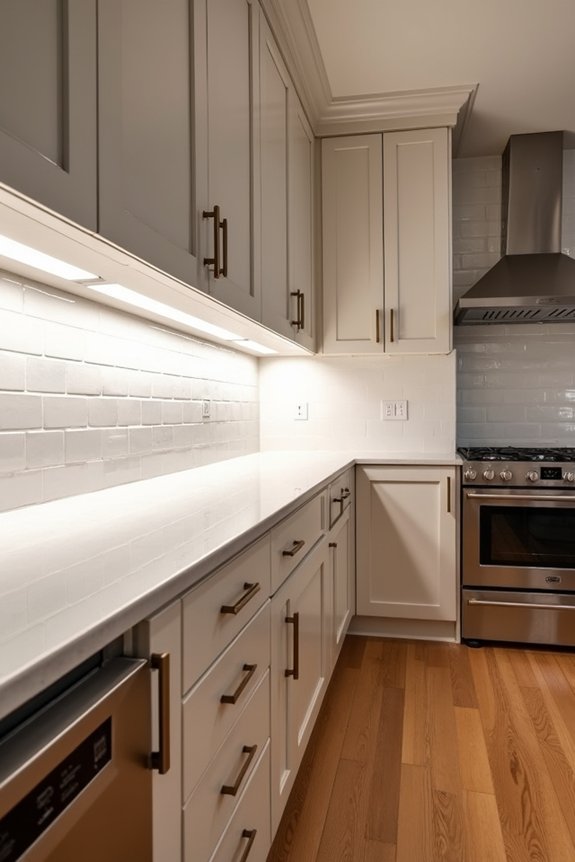
After you’ve settled on cabinets, you’ll want to figure out where your remaining budget goes—and honestly, countertops, flooring, and appliances tend to eat up a big chunk of it. I’ve found that picking the right materials here really shapes both your kitchen’s look and your finances. Let me walk you through how to make smart choices on each of these three areas.
Countertop Material Selection
Because countertops eat up a significant chunk of your remodel budget, picking the right material matters more than you’d think. I’ve learned this the hard way.
Let me break down your material comparison options. Laminate runs you $240–$900 total, but it’s honestly fragile. Quartz costs around $60 per square foot installed—roughly $2,100 for your 10×10 kitchen—and it’s practically durable. Granite sits under $40–$45 per square foot in many markets, giving you that luxe look at a reasonable cost.
Here’s my take: mid-range quartz balances durability and cost well for families like yours. It resists stains, scratches, and heat far better than laminate. Your installed cost stays reasonable while you actually enjoy your countertops for decades.
Appliance & Flooring Allocation
You’ve picked your countertops, but now you’ve got to divvy up what’s left. Labor share typically eats 50–60% of your total budget, which honestly leaves you with less breathing room than you’d hope. Your appliance budgets and flooring costs have to squeeze into whatever remains.
For flooring, expect around $2,000 for materials and installation across your kitchen and dining area. Appliances can range wildly—basic packages start near $3,500, while mid-range setups hit $15,000. Here’s the reality: you’re juggling competing priorities with limited funds. I’d prioritize reliable appliances over trendy finishes. Quality appliances last longer and impact daily life more than granite counters ever will. Make your choices count.
Labor Eats 50–60% of Your Total Kitchen Remodel Cost
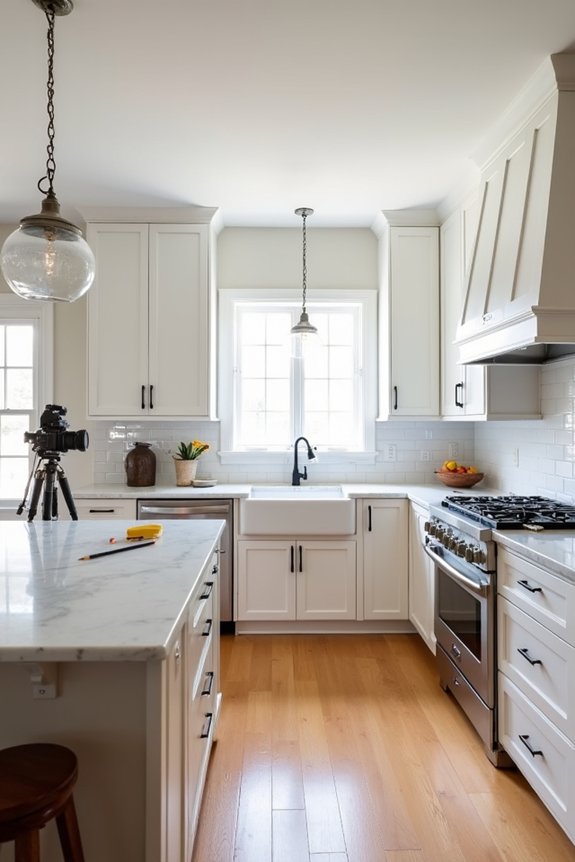
Want to know where your kitchen remodel budget actually goes? Labor’s your answer. I’ve seen it firsthand—labor eats 50–60% of total costs, making it your single largest expense alongside cabinets.
| Task | Cost Impact |
|---|---|
| Cabinet mounting | High |
| Electrical rough-ins | High |
| Plumbing work | High |
| Countertop installation | High |
Here’s what stands out: labor costs are rising in 2026, now ranging 35–50% depending on your region. That’s substantial. Scope changes hit labor hardest since materials have fixed prices, but labor hours increase quickly. Contingencies matter more than you’d think.
I learned this the hard way during my remodel. Understanding labor’s true weight helps you budget smarter and avoid surprises down the road.
Layout Changes & Material Choices: Hidden Cost Drivers
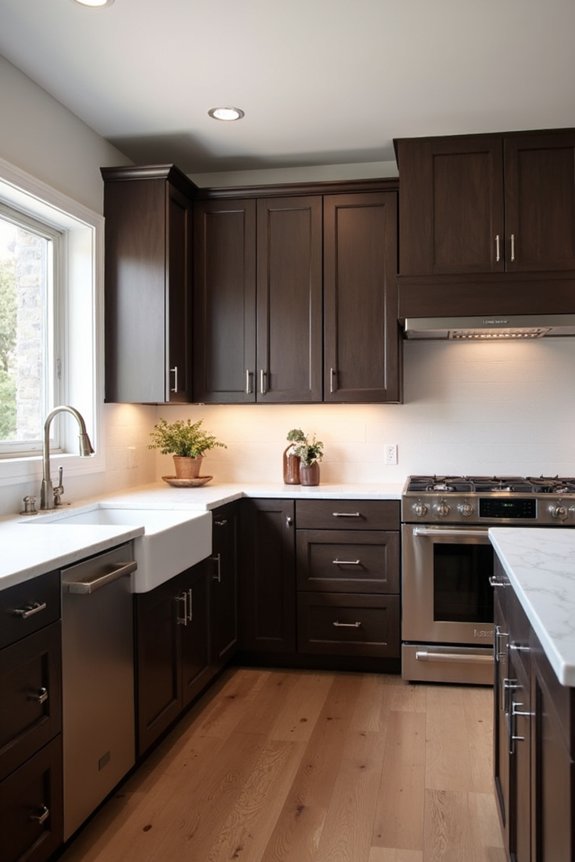
Ever notice how a kitchen remodel’s price tag can jump from reasonable to shocking? Layout changes and material choices are often the hidden costs that catch homeowners off guard.
Here’s the thing: moving your sink or stove typically adds several thousand dollars. You’re paying for plumbing or gas line relocations, electrical work, and permits—easily 5,000 to 20,000 extra. I learned this the hard way when I considered relocating my cooktop.
Your cabinet selection matters tremendously. Stock cabinets are budget-friendly, but semi-custom or custom options increase costs significantly. Then there’s the tariff factor. Imported cabinets and steel components cost more, making domestic options increasingly attractive.
My advice? Keep your layout intact if possible. Stick with stock materials initially. These decisions alone can save you thousands while still delivering a functional kitchen that looks fresh and current.
Protecting Your Remodel Budget: A 10–20% Contingency Strategy
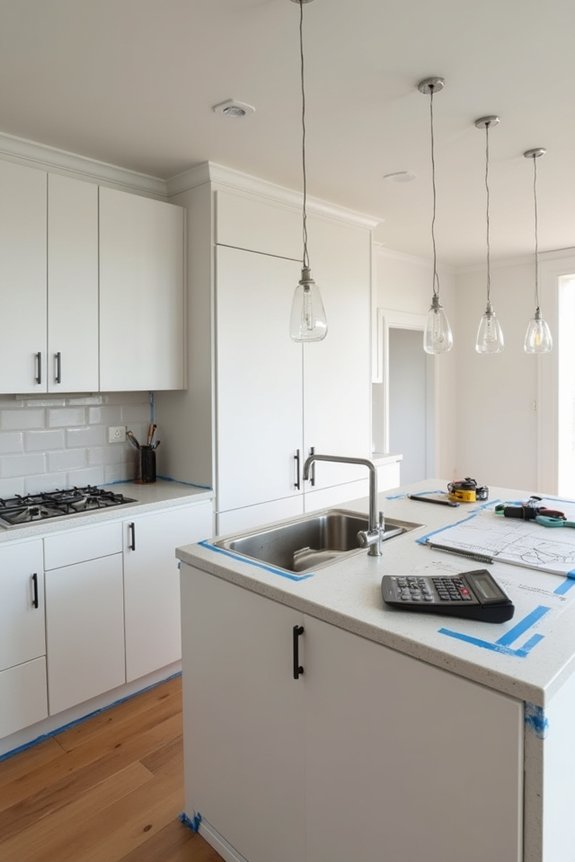
Now that you’ve locked in your layout and materials, here’s the reality check: unexpected costs will pop up. I’ve seen it happen countless times—contractors open a wall and discover old wiring that needs replacing. That’s where your contingency budget comes in handy.
I recommend setting aside 10–20% of your total remodel costs for surprises. If your project runs $15,000, that’s $1,500–$3,000 cushion. Honestly, 15–20% is smarter when you’re moving plumbing or gas lines; those changes easily add $5,000–$20,000.
Think of contingency as your safety net. It absorbs material price jumps, tariff fluctuations, and scheduling delays without derailing everything. Pair your contingency with a detailed quote breakdown from contractors. This combo keeps you prepared and honest about what’s really ahead.
Does Your Kitchen Remodel Return 50–70% ROI?
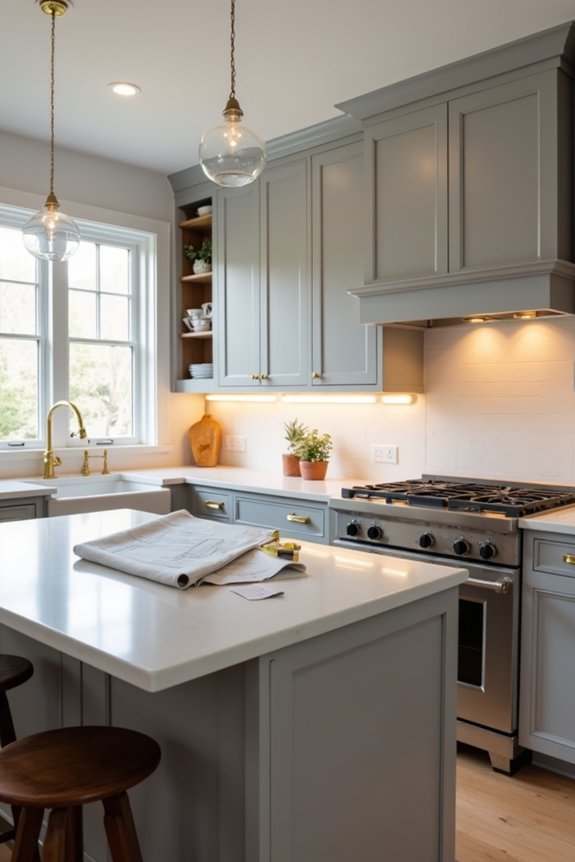
How much of your remodel investment actually comes back when you sell? That’s the million-dollar question, right?
How much of your remodel investment actually comes back when you sell? That’s the million-dollar question.
Here’s what I’ve found: minor kitchen remodels typically recoup around 70–81% of your remodeling cost in 2026. Major projects? They’re more modest, returning about 50–60% ROI. The difference matters because you’re protecting your wallet.
The real key is alignment. I make sure my remodel matches my home’s value and neighborhood. Overspending on kitchen upgrades actually hurts your return. That’s counterintuitive, but it’s true.
Energy-efficient appliances and quality materials boost kitchen value beyond simple cost recovery. I’ve learned that mid-range remodels hit the sweet spot—budgeting 5–15% of your home’s value works best.
Smart choices compound your ROI significantly.