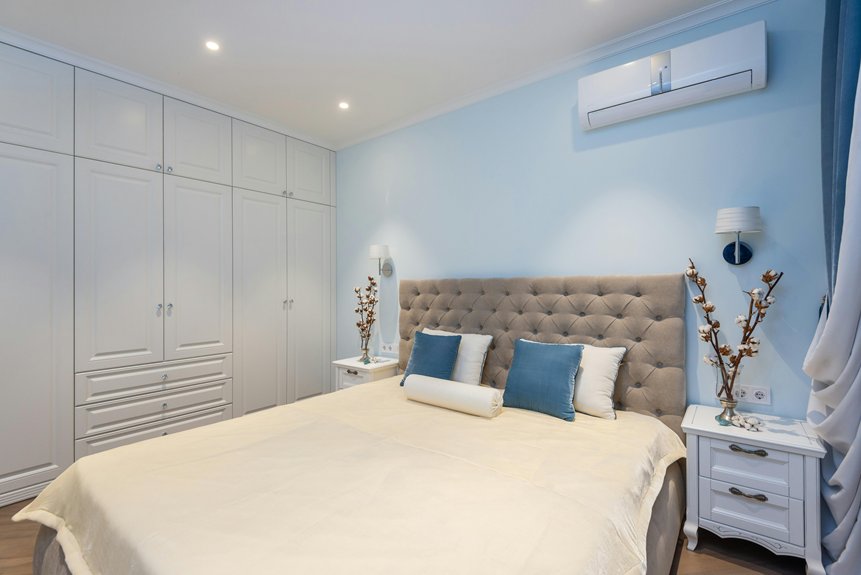
Your bedroom air purifier placement affects how well it works. Place it on a nightstand 3 to 5 feet from your head, angling airflow across your bed instead of blasting your face.
Keep it centered in the room with at least 1-2 feet clearance around all sides—corners create dead zones where stale air accumulates.
Close your bedroom door while it runs, and consider two units if your space exceeds 400 square feet.
The specifics on positioning near electronics and managing airflow direction reveal important details.
Use Elevated Placement: Nightstands and Dressers Work Best
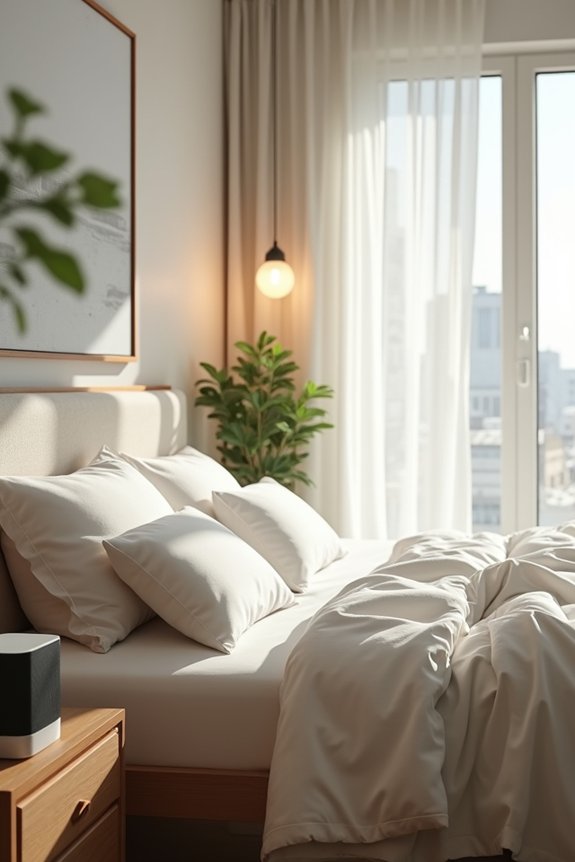
Why does height matter so much when you’re setting up an air purifier? Elevated placement directly impacts how your unit performs. When I place my purifier on a nightstand or dresser, it sits about 3 to 5 feet from where I sleep. This positioning targets your breathing zone instead of getting stuck near the floor.
Nightstands and dressers work best because they naturally align your purifier with better air distribution. The elevation keeps airflow from stagnating at ground level, which improves sleep quality. I keep about 1 to 2 feet of clearance around the unit so nothing blocks airflow. Avoiding placement directly against my bed prevents obstruction while I’m sleeping. It’s one adjustment that delivers real results.
Position Your Purifier 3 to 5 Feet From Your Head of Bed
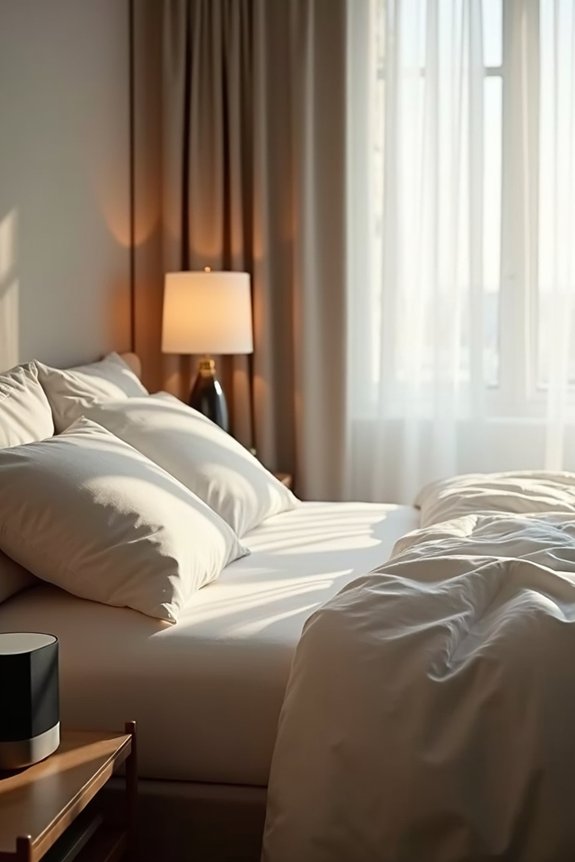
I’ve found that placing your purifier about 3 to 5 feet from your head of bed strikes the right balance—close enough to clean the air you’re breathing, but far enough to avoid that annoying direct breeze on your face. You’ll want to angle the airflow so it moves across your breathing zone rather than blasting straight at you, which took me a few nights to get right. This distance gives you cleaner air without disrupting your sleep, and it’s the zone that most bedroom purifiers are actually designed for.
Optimal Distance for Sleep
How close should your air purifier actually sit to your pillow?
I’ve learned that the sweet spot is about 3 to 5 feet away. This distance matters because it positions your purifier in your breathing zone without being intrusive. You’re getting cleaner air where it counts—right where your face is—but the unit isn’t blasting directly at you all night.
Think of it like this: too close feels invasive and uncomfortable. Too far away? You’re missing the whole point of air purifier placement. I place mine on my nightstand, slightly angled toward the bed rather than straight-on. This approach gives me solid sleep comfort while maximizing how effectively the purifier works.
It’s all about finding that balance between effectiveness and comfort in your space.
Avoiding Direct Air Exposure
Finding the right distance solves half the battle, but positioning matters just as much. I’ve learned that placement distance really impacts your sleep quality. You’ll want your purifier about 3 to 5 feet from your head, angled away from your face.
Here’s why this matters for your breathing zone:
- Direct airflow hitting your face disrupts sleep and causes discomfort
- Angled airflow lets clean air reach you without the blast
- Slight cross-bed movement circulates air more naturally
- You breathe easier without that constant air stream
I used to position mine directly beside my bed—big mistake. The constant breeze kept waking me up. Now I place it on a nearby dresser, angled slightly away. My airflow reaches my breathing zone perfectly without feeling annoying. This positioning will improve your sleep quality.
Angle the Airflow Across Your Bed, Not Directly at Your Face
Why does pointing your air purifier straight at your face feel uncomfortable when you’re trying to sleep? Direct airflow disrupts your rest and can actually wake you up.
Instead, angle your purifier to create a gentle cross-breeze across the bed. Place the unit about three to five feet from your headboard on a nightstand or dresser. This positioning lets clean air sweep across your sleeping zone without blasting your face.
Think of it like a soft breeze rather than a fan. The airflow travels toward you indirectly, improving air exchange while you sleep. Tilt the purifier slightly so purified air drifts across the mattress naturally.
This airflow strategy keeps you comfortable all night. Your purifier placement works harder for better breathing-zone coverage without the annoying direct air exposure.
Place Your Air Purifier in Room Center, Not Corners
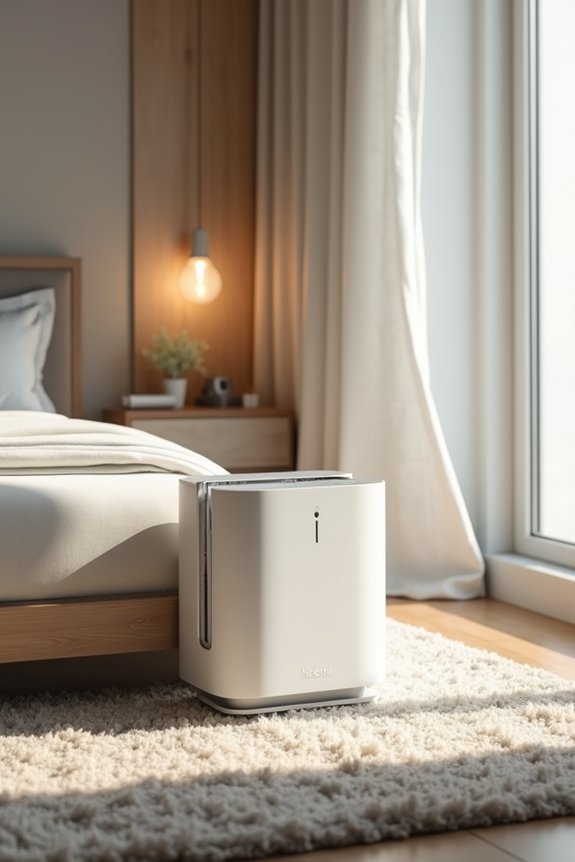
I’ve learned the hard way that corners are basically dead zones for air circulation, so I’d recommend placing your purifier toward the room’s center instead. You’ll want at least one to two feet of clearance on all sides, which helps the unit pull in air from every direction and push it out effectively. Think of it this way: center placement means your purifier’s working the whole room, not just fighting stagnant air in a cramped corner.
Central Placement Maximizes Air Flow
Where you position your air purifier makes a real difference in how well it actually works. I’ve learned that central placement beats corners every single time.
When I kept my bedroom purifier tucked away, I noticed stuffy air lingering near my bed. Moving it to the room center improved the air quality noticeably. Here’s why central placement matters:
- 360-degree intake pulls contaminants from all directions simultaneously
- Even air flow reaches your breathing zone more effectively
- Faster cleaning happens when air circulates uniformly throughout
- Better sleep quality results from cleaner air where you actually breathe
I maintain at least 1 to 2 feet of clearance on all sides. This simple adjustment lets air flow freely without restrictions. Your bedroom purifier works hardest when positioned centrally—the difference in air quality is noticeable.
Avoiding Corner Dead Zones
Ever notice how dust seems to collect in your bedroom corners? That’s because corners are airflow dead zones. I’ve learned that placing my purifier there wastes its potential entirely.
Instead, I position mine toward the room center or near an open wall. This placement lets the unit pull air from all directions effectively. I keep about one to two feet of clearance around it, which honestly has a real impact.
When I tried tucking mine in a corner, I noticed stale air lingering in opposite areas. Moving it to better placement solved that problem right away. Now my purifier actually circulates clean air throughout the entire space rather than just processing what’s nearby. Corner dead zones simply don’t work for effective bedroom purification.
Optimal Distance From Walls
How much space does your air purifier actually need to breathe?
I learned this the hard way—cramming my unit against a wall basically turned it into a decorative nightstand accessory. Here’s what actually works for optimal air purifier placement:
- Maintain 1-2 feet clearance from all walls to avoid blocked intake
- Position toward room center rather than corners for better circulation
- Keep the breathing zone open around your purifier’s sides and top
- Allow 360-degree intake access so air flows freely from every direction
When I repositioned mine away from walls, the difference was noticeable. Air actually circulates properly now, and my purifier works as designed. Think of it like giving your purifier room to do its job—it can’t filter effectively when it’s gasping for air itself. Your bedroom’s air quality depends on this simple adjustment.
Maintain Proper Clearance Around Your Bedroom Air Purifier
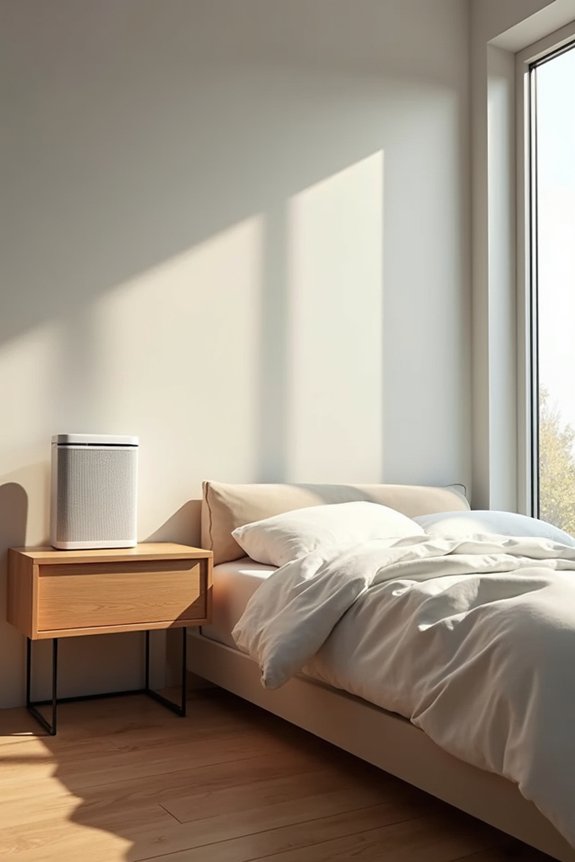
One of the biggest mistakes I made with my first air purifier was cramming it into a corner, thinking it’d save space. I quickly learned that clearance around your unit matters significantly.
You’ll want to maintain at least one to two feet of space on all sides. This breathing room lets your purifier pull in air freely and push clean air back out without obstruction. I found that when I gave my unit proper clearance, it worked noticeably better.
Don’t place it against walls or nestle it near furniture either. That restricted airflow and reduced its performance. Once I moved mine to an open area with good clearance, I noticed the difference immediately. Your placement directly impacts how well the purifier actually cleans your bedroom air.
Keep Electronics and Fans Away From Your Unit
Why’d I place my air purifier right next to my bedroom fan? Total mistake, honestly. Electronics create competing airflow that actually reduces circulation, so keeping them separated matters more than I realized.
Placing your air purifier next to other electronics? That competing airflow actually reduces circulation—separation matters more than you’d think.
What I’ve learned about smart air purifier placement and electronics away:
- Position your purifier at least 1-2 feet from TVs, computers, and fans
- Active devices interfere with air quality sensors and mess with performance
- Blocked sides reduce efficiency, especially for 360-degree intake models
- Maintain airflow clearance on all sides of your unit
I’ve since moved mine to an open spot away from my desk setup. The difference in airflow clearance is noticeable—my purifier actually works better now. Giving your unit breathing room really does help.
Avoid Blocking the Air Intake or Outlet Vents
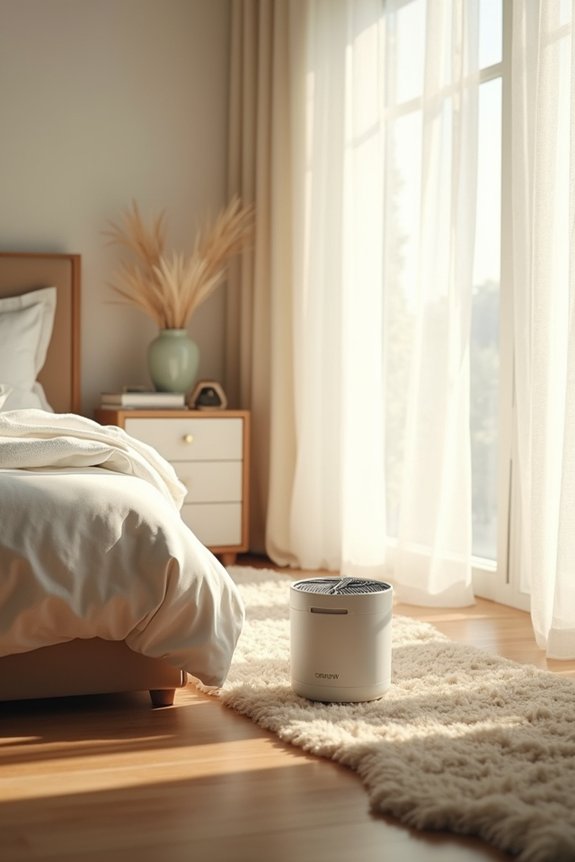
Now that you’ve got your purifier away from competing electronics, it’s time to think about what’s directly around it. I learned this lesson the hard way when I stuffed mine in a corner. The airflow was poor because furniture blocked the air intake vents completely.
Here’s what I’ve found works best: maintain at least one to two feet of clearance around your unit’s sides. This space lets air circulate freely without obstruction. Don’t tuck it behind drapes or furniture—these materials reduce performance.
I also avoid placing mine near walls. Walls reduce how well air moves through the room. Position your purifier where nothing blocks the inlet or outlet vents. When you give it proper clearance, you’ll notice the difference in air quality and how your bedroom feels fresher.
Close the Door While Running to Maximize Filtration
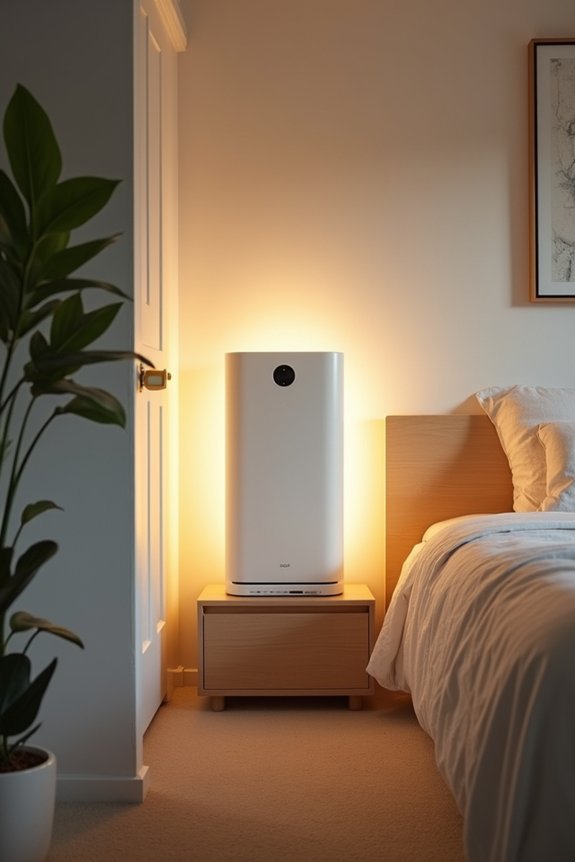
I’ve learned that keeping your bedroom door closed while running the purifier is one of the easiest wins you can get. When I seal the room off, I’m creating a contained space where the purifier can focus its energy on cleaning just that air, rather than fighting a losing battle against pollution sneaking in from the hallway. It’s like the difference between trying to cool down your whole house with one fan versus closing a single room—you’ll feel the results faster.
Seal Air Leaks Effectively
Keeping your bedroom door shut while running the purifier makes a difference. When I left mine open, the air quality didn’t improve as much as I’d hoped.
Sealing air leaks effectively means:
- Closing your bedroom door completely during purifier operation
- Checking for gaps under the door and around frames
- Using weatherstripping or draft stoppers if needed
- Keeping windows closed while the unit runs
A closed door contains cleaned air within your space. It prevents pollen, pet dander, and other pollutants from sneaking in from hallways. Your purifier works harder when outside air constantly enters. I found that proper purifier placement combined with door closure created noticeably fresher air. Sealing those leaks is worth the effort.
Maximize Filter Efficiency Indoors
Since your air purifier can only clean the air it actually reaches, closing your bedroom door while it runs matters. I’ve noticed that keeping the door shut creates a contained space where your purifier’s CADR rating performs at its best. When I leave the door open, pollutants from other rooms sneak in and undermine all that filtration work.
Here’s what happens: with the door closed, airflow cycles more efficiently around your sleeping area. Your unit’s intake and outlet create a focused loop instead of fighting against fresh contamination. Think of it like trying to fill a bathtub with the drain open—you’re working against yourself.
I started closing my door consistently, and I noticed cleaner air faster. It’s a simple habit that maximizes your filter’s actual performance.
Position Near the Bedroom Door for Allergen Control (Optional Strategy)
Position Near the Bedroom Door for Allergen Control (Optional Strategy)
Want to catch allergens before they settle into your sleeping space? Positioning your purifier near the bedroom door helps with allergen control. It filters incoming air carrying pollen and pet dander before they reach your bedroom.
Here’s what this strategy offers:
- Intercepts pollutants from other rooms before entering your bedroom
- Creates a cleaner air zone by reducing cross-contamination
- Works especially well if pets don’t sleep with you
- Enhances filtration when you keep the door closed
Give your unit 1–2 feet of clear space around it. Don’t let furniture or the door swing block airflow. This placement shift helps you breathe easier at night without fussing over complicated setups.
Use Two Units for Bedrooms Over 400 Square Feet
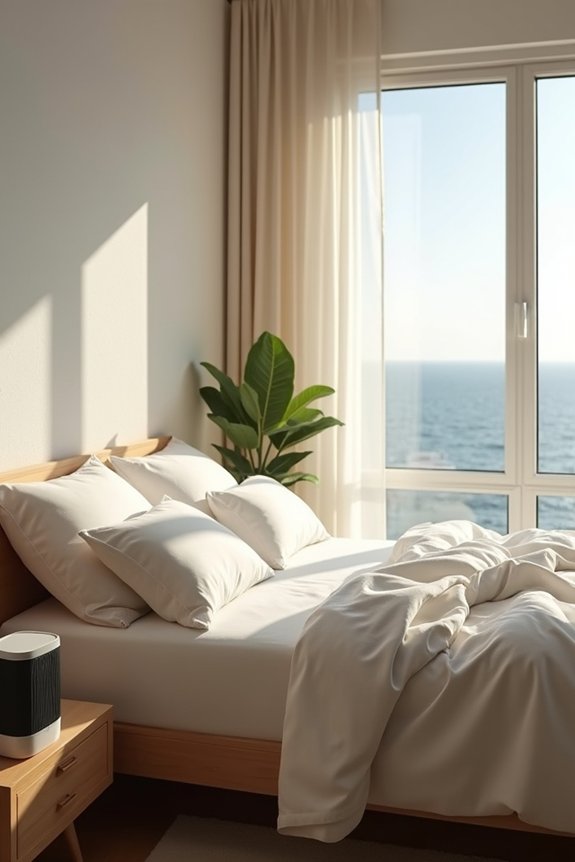
How much space does your bedroom actually cover? If it’s over 400 square feet, one purifier probably won’t cut it. I learned this the hard way after my larger guest room stayed stuffy despite running a single unit constantly.
That’s where two purifiers come in. They’re more effective than maxing out one unit. I place mine on opposite sides of the room for even coverage. Placement elevation matters too; I keep both elevated on nightstands or shelves rather than the floor.
Space them roughly 3 to 5 feet from your bed’s head. This positioning delivers cleaner air right where you’re breathing. Give each unit 1 to 2 feet of clearance from walls and furniture. Your bedroom size demands this balanced approach for optimal air turnover.