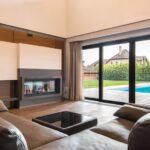
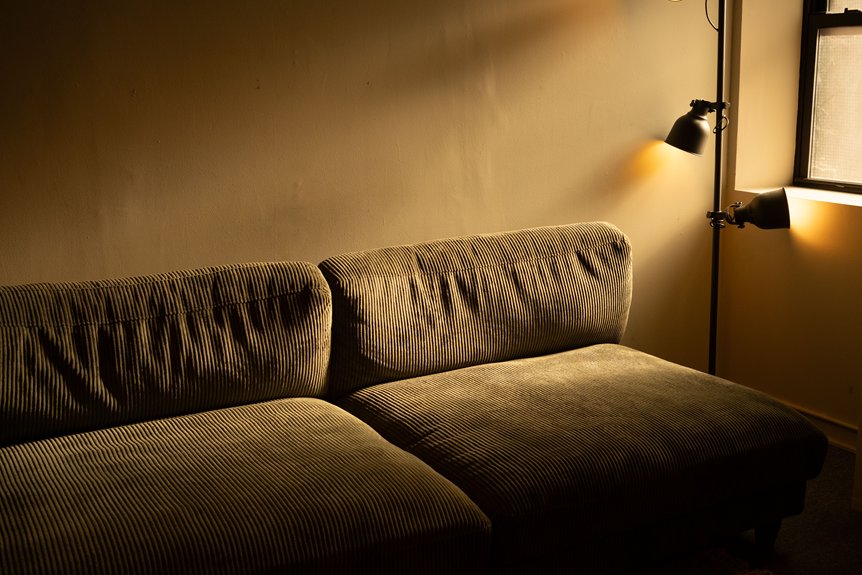
Floor lamp placement significantly impacts your living room lighting. Start by mapping your layout and identifying dark corners where you actually sit.
Position lamps beside chairs for reading—aim for shade height around 60-65 inches to avoid glare.
Corner lamps brighten dim spots and add depth.
Match lamp height to your ceiling: shorter rooms need 50-60 inch lamps, standard ones work with 60-70 inches.
Consider pathways so you’re not tripping.
Experiment with layering lighting for different occasions like movie nights.
Map Your Living Room Layout Before Placing a Floor Lamp
Before you drag a floor lamp into your living room and hope for the best, take a step back and actually map out what you’re working with. I learned this the hard way after blocking a main pathway with my first lamp.
Start by identifying your living room’s natural zones—your seating clusters, reading spots, and empty corners. Walk through your space and notice where people naturally gather. Next, trace your main pathways to spot potential glare issues near your TV viewing angle. You’ll want to avoid casting light directly on screens.
Mark spots where you’d benefit from task lighting near chairs or desks. Consider how windows affect your daytime layout too. This simple mapping step prevents frustrating placement mistakes and gets your lighting working properly for your space.
Identify Your Lighting Gaps and Activity Zones
Where exactly are those dark corners hiding in your living room? I’ve found them lurking beside chairs and under shelves. Walk through your space at different times and notice where shadows settle.
Next, identify your activity zones. Where do you read? That reading nook needs dedicated task lighting. Do you watch TV there? Gaming spots need ambient lighting that won’t create glare.
Look at your natural light gaps. Morning sun hits one wall, but afternoons leave your couch area dim. That’s where a floor lamp placement proves useful.
Document everything. Sketch quick notes about which corners feel dark and which activities happen where. Mark potential spotlight features you’d like to highlight. This simple map guides your floor lamp selection. You’re building a personalized lighting plan that works for how you actually live.
Place Floor Lamps Next to Seating for Reading and Relaxation
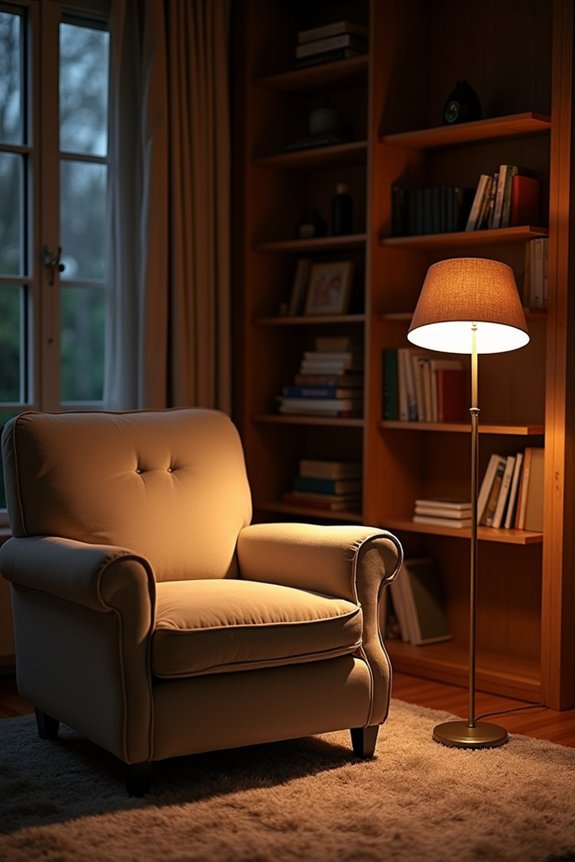
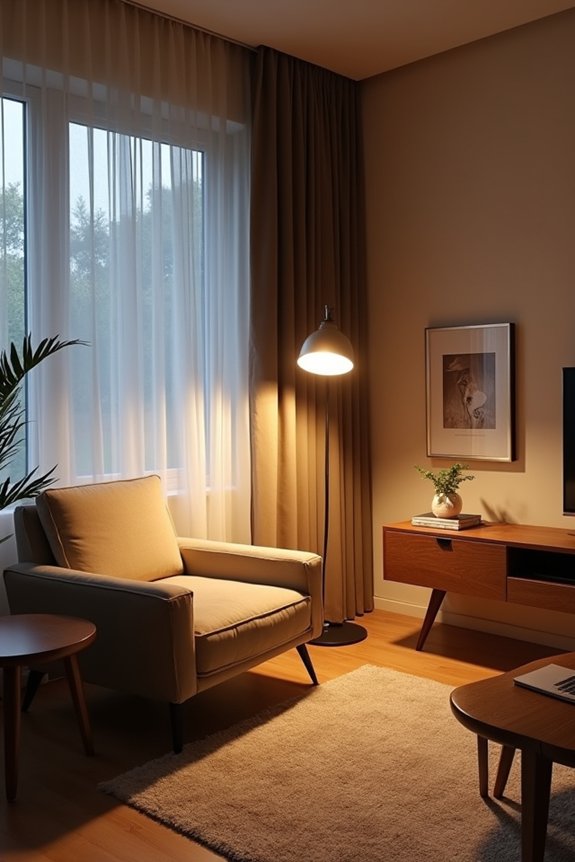
How’s your current reading setup working out? I’ve realized that floor lamp placement significantly affects the comfort of a reading nook. I position my adjustable lamp slightly behind or beside my favorite chair, directing light over my shoulder without causing glare. This task lighting setup lets me read comfortably for hours.
I’ve learned that eye level height matters too—around 60–65 inches when seated keeps me from straining my eyes. An adjustable lamp works well because I can redirect light without moving my entire seating area.
I choose shades that cast warm, focused light rather than bright ambient lighting that overwhelms the room. A translucent fabric or open metal shade creates that cozy feel. When you balance seating and lighting properly, your living room becomes an inviting space for relaxation.
Use Corner Lamps to Brighten Dark Spots and Add Depth
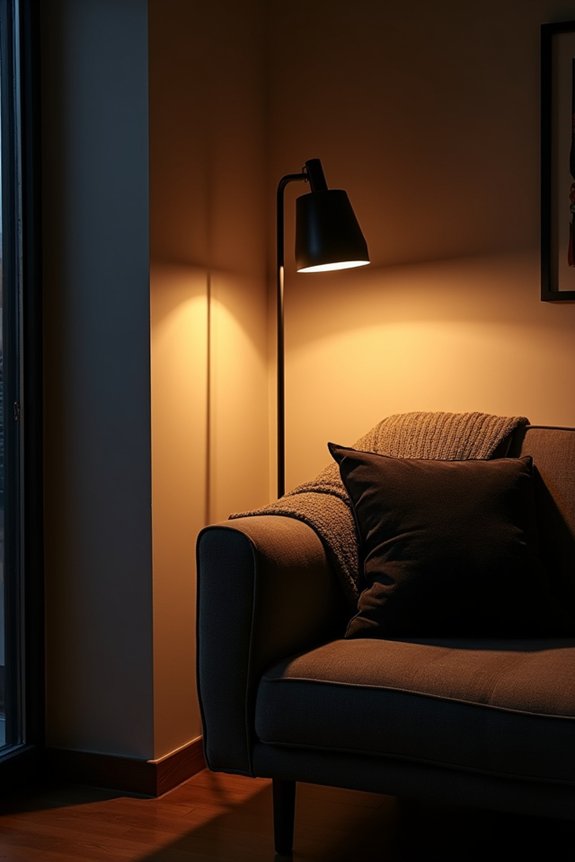
Ever noticed how certain corners of your living room seem to absorb light instead of reflect it? I’ve been there too, and corner lamps can help brighten those dark spots that make rooms feel cramped and uninviting.
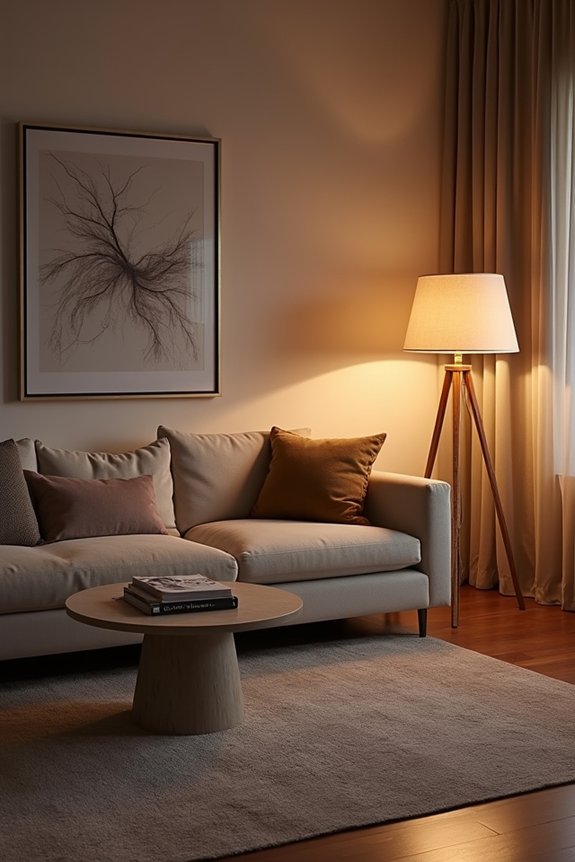
Here’s what I’ve learned: placing a tripod lamp with a large drum shade in a corner bounces ambient illumination off your walls effectively. The glow spreads evenly throughout the room, adding depth to the layout. Wide shades or multiple bulbs increase light dispersion even more, reducing those annoying shadows near seating areas.
The best part? Corner lamps work as decorative elements too. They don’t obstruct traffic flow like other lighting solutions, yet they deliver solid brightness. Your whole living room feels more spacious and welcoming right away.
Position Floor Lamps to Highlight Artwork and Focal Points
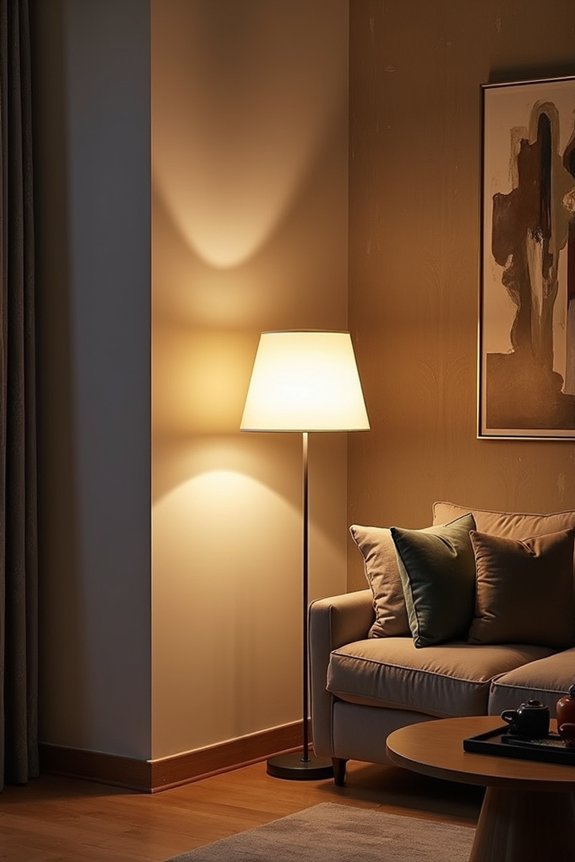
Want to make that painting or gallery wall stand out? Strategic floor lamp placement highlights artwork as a focal point in your room. Position your adjustable head floor lamp about 15–24 inches from the piece, aiming slightly below eye level to minimize reflections. This viewing angle maximizes detail visibility without washing out colors.
For larger pieces, arc floor lamps with wide reach provide even illumination. The key is avoiding hot spots and glare on frames or glass—it requires careful positioning.
| Lamp Type | Best For | Key Benefit |
|---|---|---|
| Adjustable Head | Medium artwork | Precise angle control |
| Arc Floor Lamp | Large focal points | Wide coverage area |
| With Dimmer | All artwork | Flexible ambient lighting |
Pair your artwork lighting with a dimmer. This lets you adjust brightness throughout the day, preventing over-illumination that dulls those beautiful colors you’re trying to showcase.
Layer Lighting Behind Furniture for Movie Nights and Ambiance
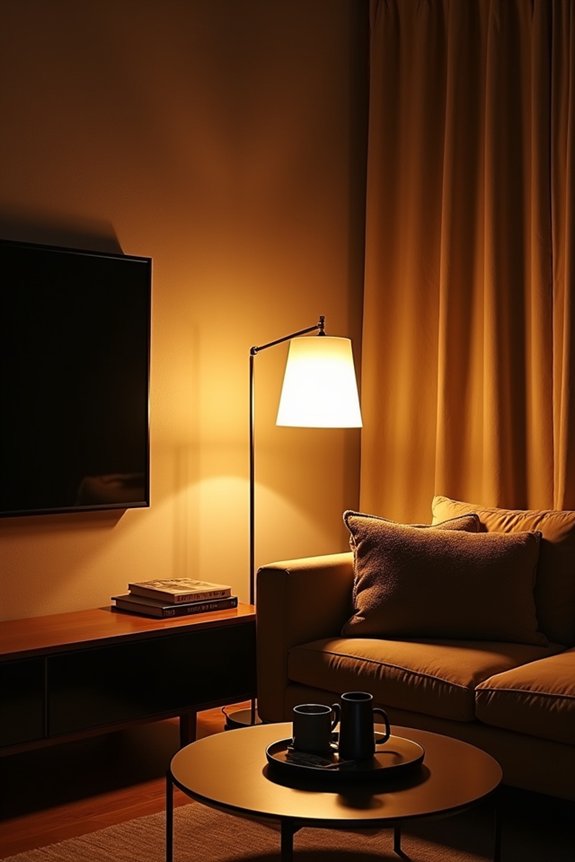
When’s the last time you settled in for a movie and realized the room felt either too bright or weirdly dark? I’ve been there, and layered lighting behind furniture changed my viewing experience. Placing a floor lamp behind your sectional creates that perfect ambient glow without annoying glare on your TV. I positioned mine at a slight angle, and it fills those dark corners beautifully. The key? Dimmable lamps let you adjust brightness for maximum comfort during movie nights. An arched floor lamp with a wide shade bounces light off walls, creating softer illumination. Choose one with a sturdy base and muted finish—you don’t want tipping hazards in high-traffic spaces. This floor lamp placement makes your living room more comfortable for viewing.
Size Your Floor Lamp to Fit Your Furniture and Ceiling Height
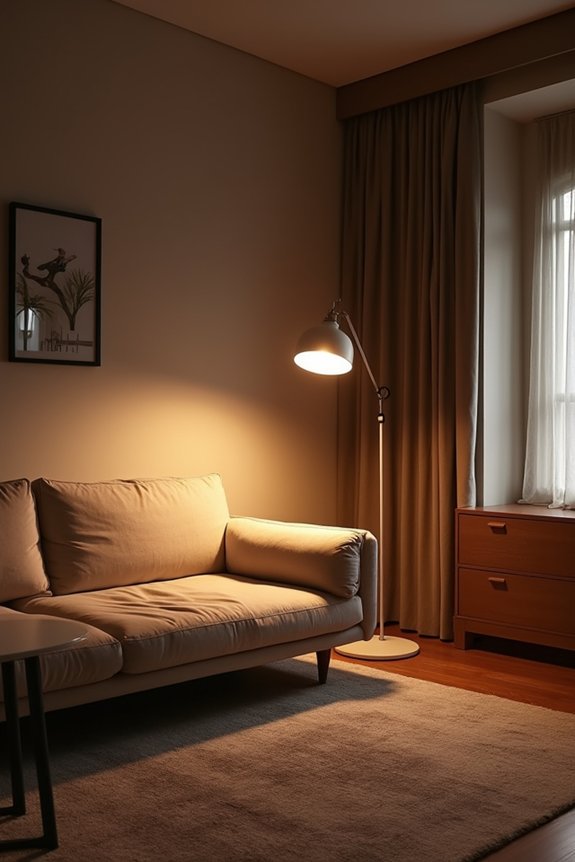
I’ve learned that getting your floor lamp’s size right takes a bit of detective work with your existing furniture and ceiling height. You’ll want to think about three main things: how tall the lamp should be compared to nearby pieces, whether the base feels balanced with the rest of the room, and what your ceiling height demands. Let me walk you through each one so you don’t end up with a lamp that looks awkwardly tiny or oversized.
Matching Lamp Height Proportions
How do you know if your floor lamp actually fits your space? Matching lamp height proportions requires intentional planning and attention to detail.
For task lighting, position your lamp shade height around 60–66 inches. This keeps the lamp at eye level seating, which reduces glare and creates comfortable reading light. I always check by sitting down first—your eyes should align with the shade’s middle.
| Ceiling Height | Recommended Lamp Height | Purpose |
|---|---|---|
| Below 8 feet | 50–60 inches | Prevents overwhelming |
| 8–9 feet | 58–70 inches | Balanced proportions |
| 9+ feet | 65–80 inches | Fills vertical space |
| Variable rooms | Adjustable-height lamp | Maximum flexibility |
| Task areas | Eye level seating | Optimal functionality |
An adjustable-height lamp gives you options. You’ll switch between ambient distribution and focused task lighting without buying extra fixtures. Ceiling height balance and proportional harmony work together—respecting both improves how welcoming your room feels.
Balancing Base Width Dimensions
You’ve nailed the height, but here’s where many people trip up—literally. Base width matters more than you’d think. I’ve learned that matching your lamp scale to nearby furniture prevents an awkward, cramped feeling. A wider base works beautifully beside a long, low sofa, while compact chair nooks need slimmer bases instead.
Here’s the practical part: aim for at least 6–12 inches of clear space on both sides. Your floor lamp base diameter should maintain roughly 36 inches of clearance around seating and traffic paths. This breathing room keeps your walking space accessible and your visual footprint balanced.
Think furniture pairing as a conversation between pieces. When your base dimensions align with surrounding pieces, the room feels cohesive and welcoming. Those few inches of planning matter.
Ceiling Height Considerations Matter
Ever notice how a too-short lamp in a tall room feels oddly lost? That’s because ceiling height dramatically affects your floor lamp placement and overall room scale. I’ve learned that matching lamp height to your ceiling creates proportional balance throughout the space.
For standard 8–9 foot ceilings, I aim for lamps around 60–70 inches tall. This positions your shade near eye level when seated, eliminating glare while providing quality ambient lighting. Lower ceilings under 8 feet? I stick with 50–60 inch lamps instead.
High ceilings above 9 feet need taller options—65–80 inches works best. Your shade position should place light roughly 36–42 inches above the floor. This approach keeps your floor lamp placement balanced with the room, making everything feel purposefully designed rather than randomly placed.