
Your kitchen sink’s gurgling after draining means air’s getting trapped in your pipes—usually from partial clogs or blocked vents. Hair, grease, and soap buildup slow water flow and trap air pockets that create that annoying noise.
Sometimes your vent pipes are blocked, preventing air from escaping properly.
You can often fix this yourself with a plunger or drain snake. But if the gurgling persists across multiple drains, you’ll want professional help to rule out deeper sewer line issues.
Read on to learn exactly how to diagnose and fix your specific problem.
Common Causes of Kitchen Sink Gurgling After Draining
So why’s your sink making that weird gurgling sound? I’ve dealt with this myself, and it’s usually one of several culprits. Air trapped in your pipes creates that annoying noise as water drains. A partial clog from hair, grease, or soap buildup slows water flow and traps air. Blocked vent pipes can’t let air escape, causing pressure buildup that produces gurgling sounds. Sometimes the issue runs deeper—a sewer line issue or blockage farther down creates similar problems. Improper plumbing installation can also disrupt everything. Before you panic, try drain cleaning with a plunger or snake. If that doesn’t work, you might need a professional to inspect your vent pipes and check for sewer line damage.
How to Diagnose Your Specific Problem
Now that you know what’s probably causing the gurgling, let’s figure out exactly what’s happening in your specific situation. Start by checking if your gurgling sink is solo or if multiple drains sound off too. Multiple affected sinks? That points toward a vent obstruction or main sewer line issue rather than just a partial clog in one pipe.
Next, listen carefully to your drain vent. Does the gurgle happen seconds after draining, or while water’s still flowing? Timing matters here—it helps narrow things down.
Finally, inspect your P-trap under the sink to verify it’s properly installed and water-filled. Check your roof vent for debris or nests blocking airflow. These simple diagnostics will guide you toward the right fix without unnecessary guesswork.
Clear Partial Clogs With a Plunger or Snake
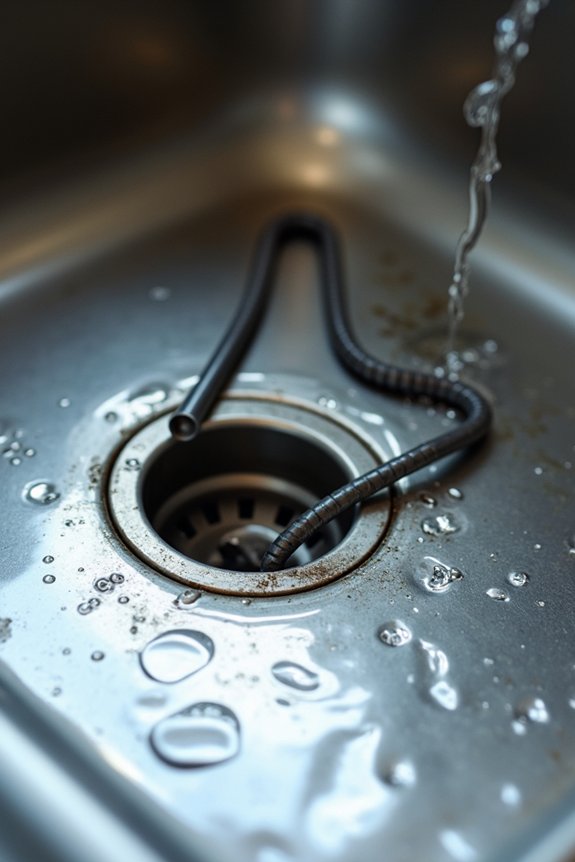
I’ve found that a plunger’s tight seal can force air and water through partial clogs, restoring drainage and stopping that annoying gurgling. If the plunger doesn’t work, I’ll grab a drain snake to reach deeper into the pipe and break up stubborn debris that’s trapping air. Knowing when to stop DIY efforts—like if nothing budges after a couple tries—saves you from making things worse.
Plunger Technique For Clogs
Want to skip the plumber’s bill? I’ve found that mastering the plunger technique works well with partial clogs. Here’s what works for my kitchen sink drainage gurgling issues.
First, I fill the sink with 1–2 inches of water. This submerges the plunger cup completely, creating the seal we need. Then I plunge steadily and forcefully for 15–30 seconds using firm up-and-down strokes.
| Step | Action | Why It Works |
|---|---|---|
| 1 | Add water to sink | Creates strong seal |
| 2 | Position plunger cup | Covers drain opening fully |
| 3 | Plunge 15–30 seconds | Builds pressure past blockage |
After each round, I pause and check if water drains better. If the plunger technique doesn’t fully clear that partial clog, I grab a drain snake next. This two-step approach handles most kitchen sink issues I encounter.
Snake Method For Blockages
When the plunger doesn’t fully clear that stubborn clog, a drain snake (also called an auger) becomes my go-to tool. I’ve found that snaking deeper into the drain tackles partial blockages that surface plunging can’t reach.
Here’s what I do: I insert the drain auger into the opening, then rotate while pushing forward gently. This catches hair and grease trapped further down. When I feel resistance, I pull back slowly to snare the buildup and remove it.
After snaking, I run hot water through to flush loosened debris and verify my gurgling sink is quiet again. A basin auger sized for sinks works well without needing harsh chemicals. It’s honestly one of those skills that saves me money and frustration regularly.
When To Stop DIY
How do you know when it’s time to call a professional instead of tackling another round of plunging or snaking?
I’ve learned the hard way that certain warning signs indicate DIY stops here. If your gurgling persists after repeated attempts, that’s your cue. When water backs up worse or multiple drains slow simultaneously, you’ve hit a limit. These symptoms suggest deeper blockages or vent blockages that reach beyond what you can handle alone.
I used to keep snaking until pipes got damaged. That’s when I realized professional inspection saves money long-term. A plumber can identify whether your partial clog stems from tree roots, collapsed pipes, or ventilation issues. Knowing when to call professionals protects your home and your wallet.
Fix Trapped Air by Cleaning Your P-Trap
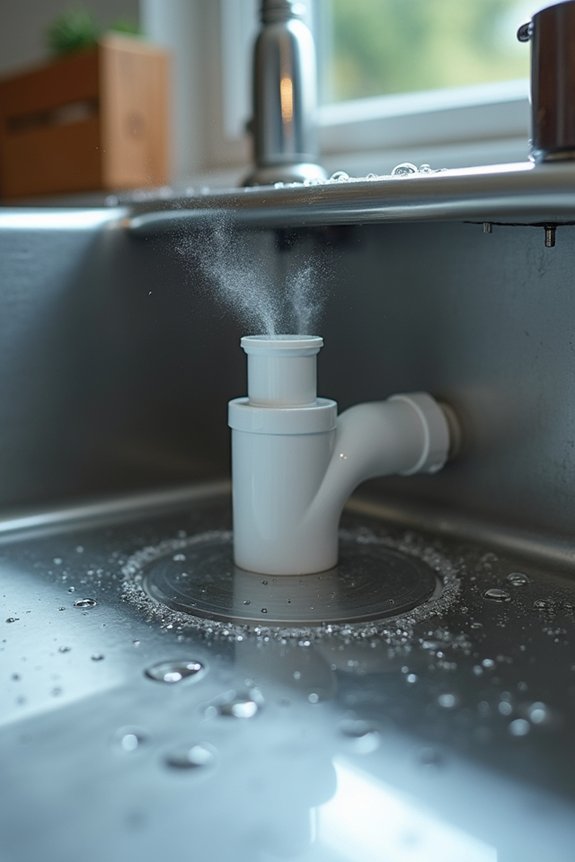
I’ve found that your P-trap—that U-shaped pipe under your sink—is often the culprit behind that annoying gurgling sound. Understanding how it works and keeping it clean helps solve the problem, and I’ll walk you through exactly how to do it. Let’s tackle this together so your sink drains quietly again.
Understanding The P-Trap
Ever wonder why your sink gurgles right after the water drains? Your P-trap is working harder than you realize.
Here’s what’s happening inside that U-shaped pipe beneath your sink:
| P-Trap Function | What Goes Wrong | The Sound You Hear |
|---|---|---|
| Holds water to seal sewer gases | Air gets trapped inside | Gurgling noises |
| Maintains consistent air seal | Blockage disrupts water flow | Suction sounds |
| Prevents drain backup | Debris accumulates | Bubbling when draining |
Your P-trap’s water seal acts as a barrier keeping sewer gases out. When hair, grease, or soap scum builds up, it creates partial blockages. These blockages trap air pockets, and that’s what causes the gurgling you’re hearing.
Think of it this way: a healthy P-trap keeps everything balanced. Regular cleaning every 6–12 months keeps your drain functioning properly and quietly.
Step-By-Step Cleaning Process
Ready to silence that annoying gurgle once and for all? I’ve found that cleaning your P-trap directly tackles trapped air causing those frustrating sounds. Here’s what I do: place a bucket underneath, then unscrew the slip nuts carefully. Remove the trap and inspect for clogs or debris—you’ll likely find hair, soap scum, and grease buildup.
Rinse everything with hot water to dissolve stubborn residue. When reassembling, keep washers in their proper positions to maintain an unobstructed air seal and prevent future gurgling. Finally, run hot water through your drain, then flush with baking soda and hot water for thorough drainage cleaning.
This simple process restores proper drainage and eliminates that annoying sound.
Remove Grease, Hair, and Soap Buildup From Your Drain
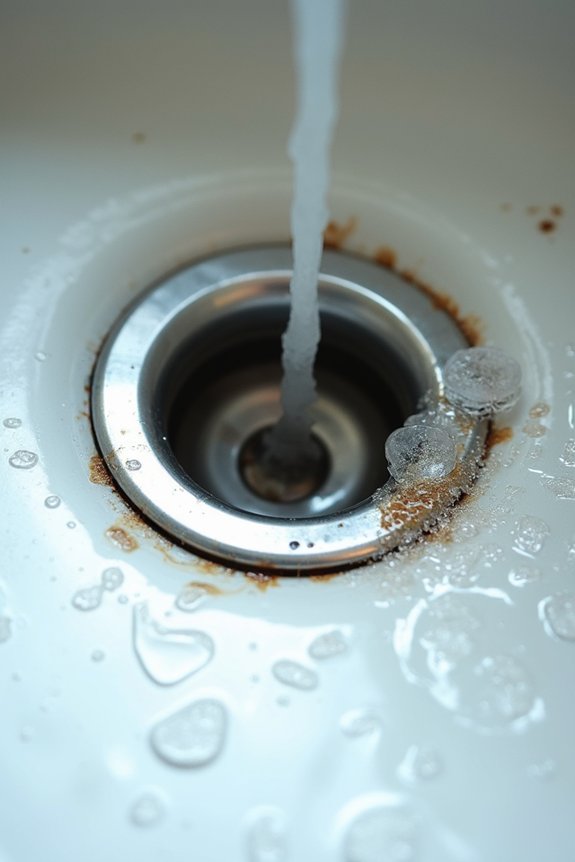
One of the sneakiest culprits behind that annoying gurgle? Grease buildup, hair, and soap scum silently accumulating inside your drain pipes.
I’ve learned the hard way that these deposits gradually narrow your pipes and create a partial blockage. The grease traps hair and food particles, while soap scum forms a slippery film that restricts water flow. This imbalance causes air to get trapped, which is exactly what’s making that gurgling sound.
Here’s what I do: I grab a drain snake and manually remove these deposits. It’s honestly easier than you’d think. You’ll notice your slow drainage improves immediately, and that annoying gurgle disappears. Regular hand-cleaning beats chemical cleaners because you’re actually removing the problem—not just masking it. Your sink will benefit from this approach.
Unblock Vent Pipes to Restore Proper Air Pressure
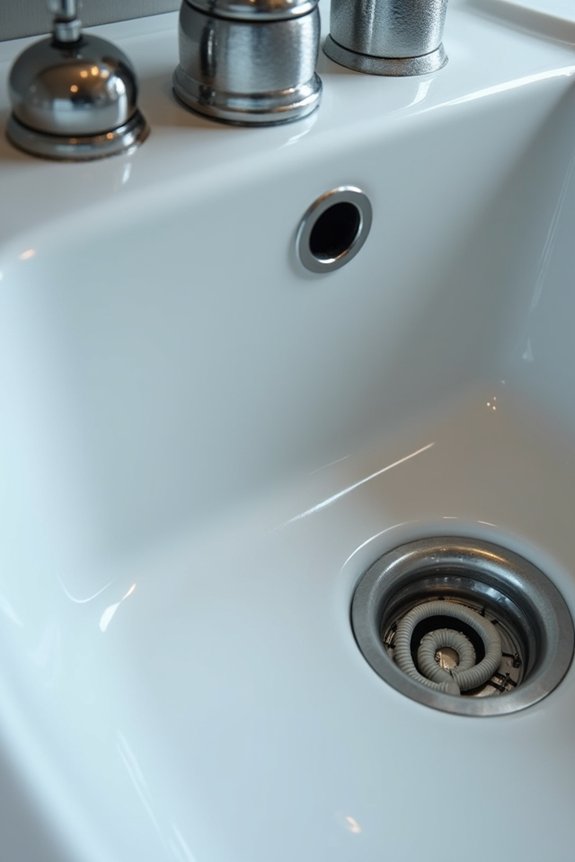
What’s happening inside your walls while you’re draining that sink? A vent blockage is likely the culprit behind your drain gurgling. Here’s why: vent pipes allow air to escape as water drains, maintaining proper air pressure. When a blockage occurs, air gets trapped, creating that annoying gurgling sound.
Common causes include:
- Debris and leaves accumulating in vent pipes
- Bird nests restricting airflow
- Obstructions hidden behind walls or cabinets
- Years of buildup limiting ventilation
I’ve learned that clearing a vent often means locating the vent stack, which may extend to your roof. If you’re not comfortable with heights, professional plumbers can handle this safely. Regular snaking or inspection prevents recurring issues and restores normal drainage. You’ll notice the difference immediately once air pressure normalizes.
When to Call a Professional Plumber
When should you stop troubleshooting and call in backup? Knowing your limits saves time and money.
If you’re experiencing persistent gurgling after drainage, it’s time to call a licensed plumber. When DIY attempts fail or multiple fixtures are affected, don’t keep guessing—professional intervention becomes necessary.
Persistent gurgling after drainage signals time to call a licensed plumber instead of continuing DIY attempts.
A blocked vent or vent pipe issues require proper inspection that you can’t do yourself. If clogs extend beyond your under-sink drain to the main sewer line, you’ll need specialized equipment and expertise.
Here’s my honest take: recurrent gurgling suggests escalating problems demanding comprehensive assessment. Rather than spending weeks troubleshooting, schedule a professional inspection. They’ll identify what’s really happening, whether it’s venting problems or deeper issues. Calling a licensed plumber early actually saves you frustration and prevents bigger repairs down the road.
Prevent Future Gurgling With Daily Drain Maintenance
Now that you’ve got a handle on when to bring in the pros, let’s talk about keeping your sink in working order before problems start. I’ve learned that simple drain maintenance prevents those annoying gurgling sounds we all dread.
Here’s what I do regularly:
- Flush my kitchen drain with hot water and half-cup baking soda, then add vinegar
- Run water during and after use to maintain my P-trap water seal
- Clear exterior vent blockage by removing leaves and debris
- Avoid pouring grease, oils, and food solids down the drain
Honestly, these habits took me a few weeks to establish, but they’ve saved me from expensive plumber visits. Kitchen drain care doesn’t require fancy equipment—just consistency. Your clog prevention efforts now mean fewer headaches later.